
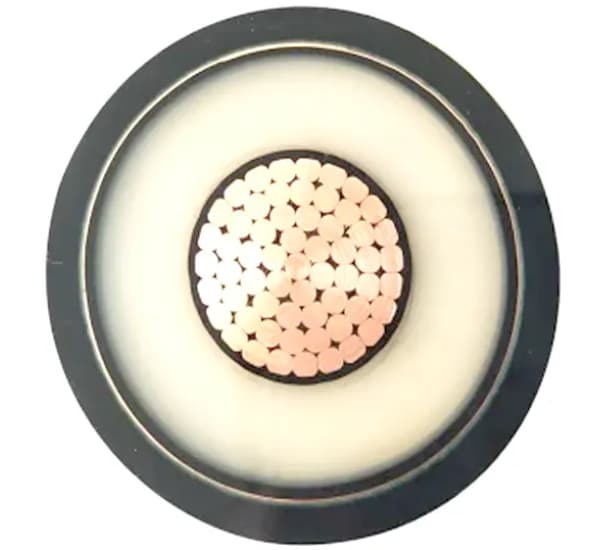
Introduction to CU/EPR/PVC/SWA/PVC cable
In modern electrical distribution systems, Choosing the right cable is key to ensuring safety and efficiency. CU/EPR/PVC/SWA/PVC cable has become a widely adopted option thanks to its combination of mechanical strength, thermal stability and excellent conductivity.
This type of cable is specially designed for demanding environments such as industrial facilities, underground networks and energy infrastructure projects.
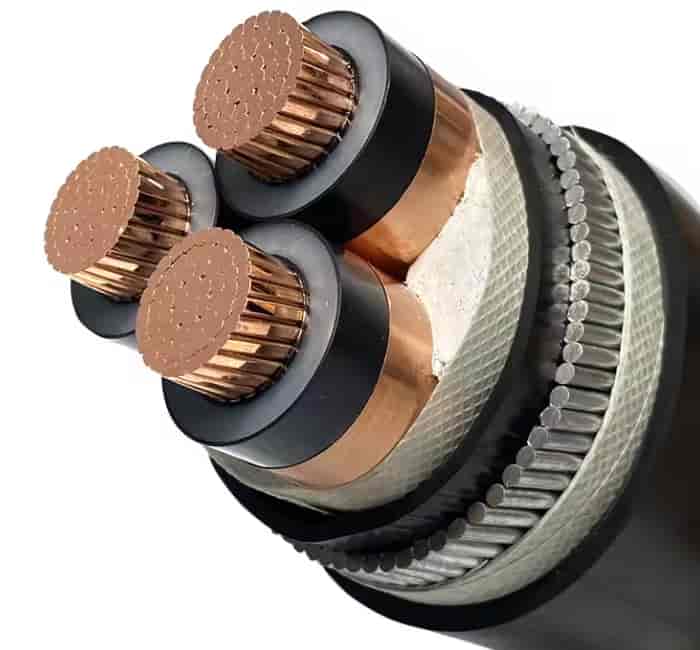
The technical name describes its composition:
- CU: copper conductor
- EPR: high performance synthetic rubber insulation
- PVC: protective inner cover
- SWA: steel armor
- PVC: outer cover
Each layer performs a specific function that contributes to the overall performance of the cable.
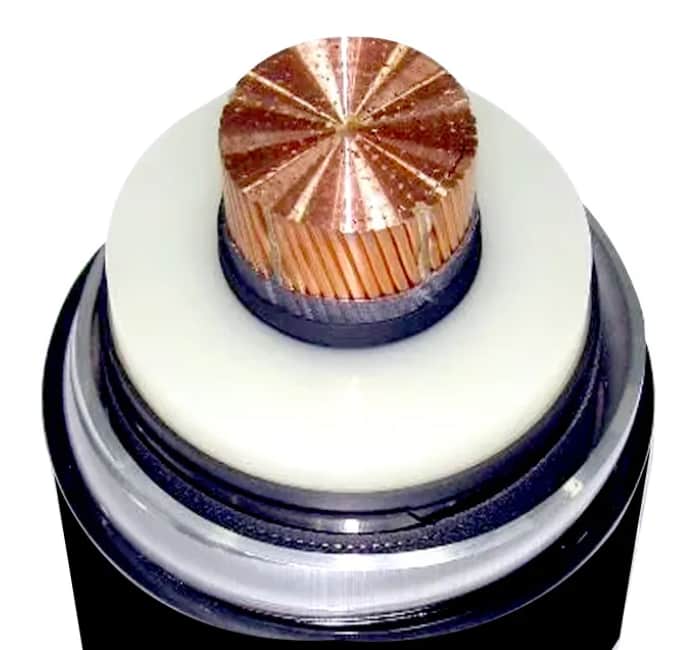
Keywords and terms related to CU/EPR/PVC/SWA/PVC Cable
Main terms
- Cable CU/EPR/PVC/SWA/PVC
- Copper armored electrical cable
- Cable with EPR insulation and SWA armor
- Power cable with mechanical protection
- Industrial copper cable with PVC jacket
Technical structure of the cable
copper conductor
The core of the cable is made of copper, a material that offers excellent electrical conductivity and guarantees efficient energy transmission.
EPR insulation
EPR is a flexible and resistant material that withstands high temperatures and humid environments without deteriorating..
PVC inner cover
This layer acts as additional protection, maintaining the integrity of the insulation and serving as a base for armor.
steel armor (SWA)
Armor provides impact protection, pressure and mechanical damage, especially in buried installations.
PVC outer sheath
Protects the cable against environmental factors such as humidity, abrasion and UV radiation.
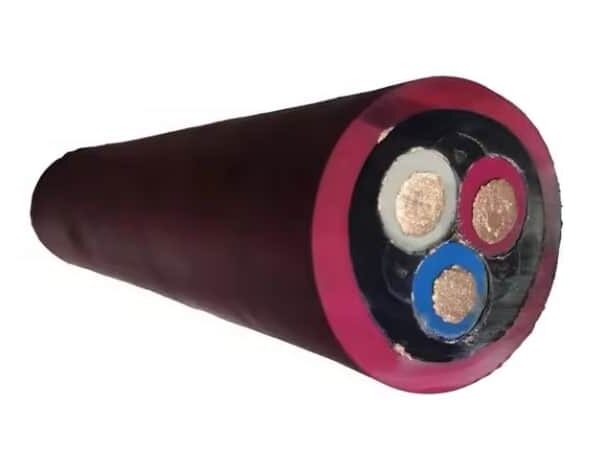
Gauge table: of 1.5 mm² a 2500 mm² and 18 AWG a 1000 MCM
The following table shows a complete overview of the available sizes:
| Section (mm²) | AWG | kcmil (MCM) | Application |
|---|---|---|---|
| 1.5 | 18 | — | Lightning |
| 2.5 | 14 | — | Home use |
| 4 | 12 | — | Small teams |
| 6 | 10 | — | Basic circuits |
| 10 | 8 | — | light engines |
| 16 | 6 | — | electrical panels |
| 25 | 4 | — | light industry |
| 35 | 2 | — | Machinery |
| 50 | 1 | — | Feeding |
| 70 | 2/0 | 70 | Transformers |
| 95 | 3/0 | 100 | Medium networks |
| 120 | 4/0 | 125 | Distribution |
| 150 | — | 150 | Feeders |
| 185 | — | 200 | High load |
| 240 | — | 250 | Substations |
| 300 | — | 300 | High power |
| 400 | — | 400 | Electrical networks |
| 500 | — | 500 | Generation |
| 630 | — | 600 | Large facilities |
| 800 | — | 750 | Transmission |
| 1000 | — | 1000 | Main networks |
| 1200 | — | — | High capacity |
| 1600 | — | — | Special projects |
| 2000 | — | — | High demand |
| 2500 | — | — | Maximum power |
Main technical specifications
Voltage level
The cable is available in different levels:
- Low voltage: 0.6/1 kV
- Medium voltage: until 33 kV
Operating temperature
- Continuous operation: up to 90 ° C.
- Short circuit conditions: up to 250 ° C.
Electrical properties
The cable offers low dielectric loss, high stability and excellent energy efficiency.
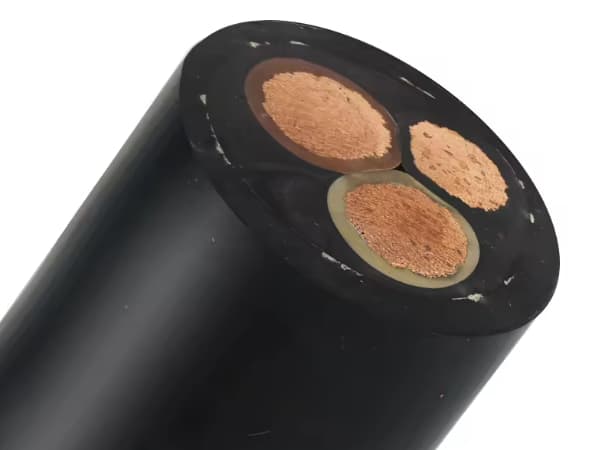
Application areas
Industry
Used in industrial plants, factories and energy sectors where resistance and safety are required.
Infrastructure
Used in underground networks, tunnels and urban electrical projects.
Commercial sector
Applied in buildings, technological centers and complex electrical systems.
Featured advantages
High mechanical resistance
Thanks to the steel armor, cable withstands demanding conditions.
Stable thermal performance
EPR insulation allows operation in high temperatures without degradation.
Environmental protection
The cable resists humidity, chemicals and adverse external conditions.
Wide range of applications
Available in multiple sizes to meet different energy needs.
Installation methods
Underground installation
Can be installed directly buried or in ducts.
Surface installation
It is placed in trays or pipes in industrial facilities.
Guide to selecting the right cable
Key factors
- Electrical requirements
- Environmental conditions
- Installation type
- Charge level
Sorting by size
- Little: 1.5–10 mm²
- Half: 16–120 mm²
- Grande: 150–1000 mm²
- Extra Large: 1200–2500 mm²
Factors that determine the price
Raw material
Copper is the main cost component.
Driver size
Larger sections imply greater investment.
Protection level
The armor and quality of the insulation influence the final price.
Frequently asked questions
Is it suitable for underground use?
Yeah, It is designed specifically for this type of installation.
Does it resist aggressive environments?
Yeah, Its structure allows it to withstand humidity and chemical agents.
Can it be customized?
Many manufacturers offer options tailored to specific needs.
Conclusion
CU/EPR/PVC/SWA/PVC cable is a reliable and versatile solution for modern electrical systems. Its robust design guarantees protection, efficiency and long life.
With a wide range of calibers that ranges from 1.5 mm² up to 2500 mm² and equivalents 18 AWG a 1000 MCM, This cable can adapt to any type of project, from basic installations to large electrical transmission systems.
We are cable manufacturers CU/EPR/PVC/SWA/PVC. If you need something, feel free to contact us.