
He 13.8kV submarine cable It is a reliable solution to transmit electrical energy underwater. It is used in seas, rivers and lakes. Its special design allows it to work in harsh conditions, like high blood pressure, constant humidity and corrosion. Thanks to its multi-layer structure and modern materials such as XLPE and EPR, this cable offers security, efficiency and long life.
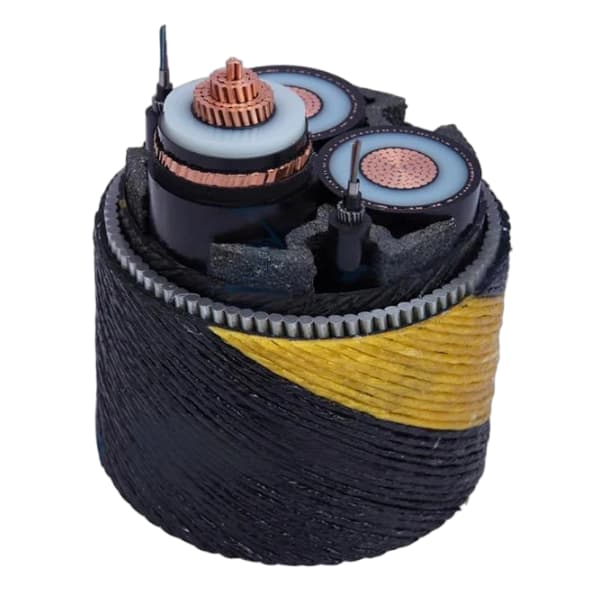
Definition of 13.8kV submarine cable
A 13.8kV submarine cable is a medium voltage cable prepared to operate in aquatic environments.. Its voltage level is common in industrial systems and electrical distribution networks..
This type of cable is used when it is not possible to install overhead lines. For example:
- Connection between islands
- river crossing
- Feeding of marine platforms
- Offshore wind energy
Submarine cable structure
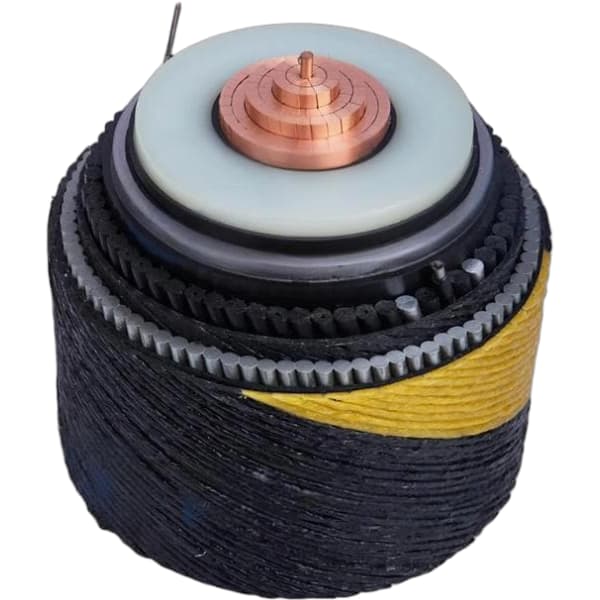
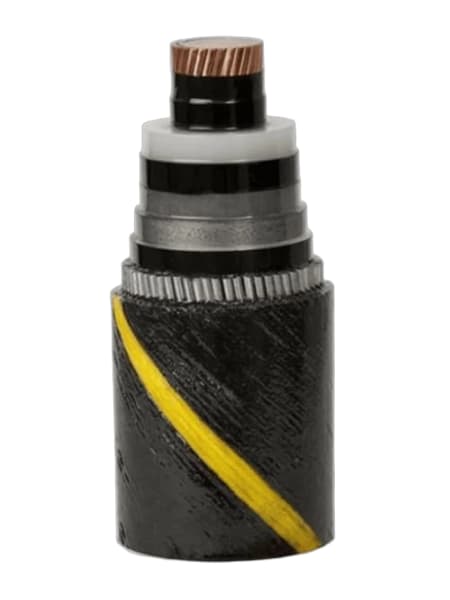
The submarine cable has several layers. Each one fulfills a specific function.
Conductor
The conductor carries the electric current. It can be made of copper or aluminum.
- Copper has better conductivity
- Aluminum is lighter and cheaper
Internal semiconductor screen
Allows uniform distribution of the electric field and reduces the risk of shock.
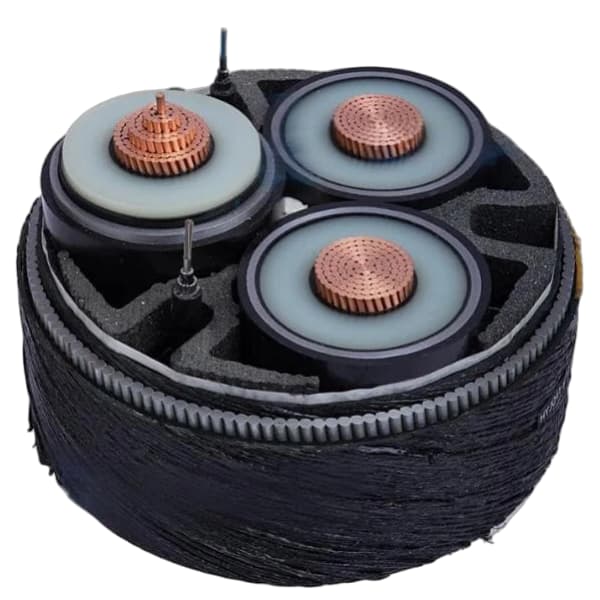
XLPE or EPR insulation
Isolation prevents current leakage and ensures system safety.
External semiconductor screen
Controls the electric field outside the insulation.
Metal screen
Usually copper. Serves as protection and grounding.
Water barrier
Prevents water from entering. It can be made of lead or aluminum tape.
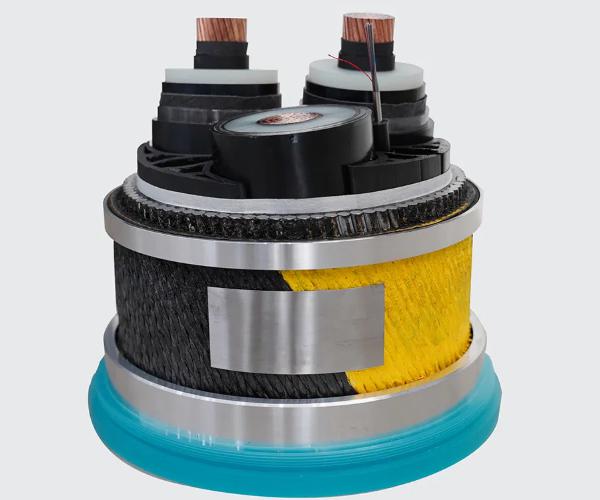
Armor
Made with galvanized steel. Protects against mechanical damage.
External cover
Protects against corrosion, abrasion and external agents.
XLPE insulation
XLPE is one of the most used materials in electrical cables..
Advantages
- High electrical resistance
- Low energy loss
- Excellent thermal performance
- Long lifespan
EPR insulation
EPR is a flexible material with excellent water resistance.
Advantages
- High flexibility
- Excellent performance in humidity
- Vibration resistant
- Good thermal stability
Comparison between XLPE and EPR
| Feature | XLPE | EPR |
|---|---|---|
| Rigidity | Alta | Media |
| Flexibility | Baja | Alta |
| Water resistance | Buena | Excellent |
| Temperature | 90°C | 90–105°C |
| Typical use | Fixed installation | dynamic environments |
Driver table (25 mm² a 800 mm²)
Below is a typical table of conductor sections for 13.8kV submarine cable:
| Section (mm²) | Driver type | diameter approx. (mm) | Estimated current (A) |
|---|---|---|---|
| 25 | Copper/Aluminum | 6.0 | 120 – 140 |
| 35 | Copper/Aluminum | 7.0 | 150 – 170 |
| 50 | Copper/Aluminum | 8.5 | 180 – 210 |
| 70 | Copper/Aluminum | 10.0 | 220 – 260 |
| 95 | Copper/Aluminum | 11.5 | 260 – 300 |
| 120 | Copper/Aluminum | 13.0 | 300 – 340 |
| 150 | Copper/Aluminum | 14.5 | 340 – 380 |
| 185 | Copper/Aluminum | 16.0 | 380 – 430 |
| 240 | Copper/Aluminum | 18.0 | 430 – 500 |
| 300 | Copper/Aluminum | 20.0 | 500 – 570 |
| 400 | Copper/Aluminum | 23.0 | 570 – 650 |
| 500 | Copper/Aluminum | 26.0 | 650 – 750 |
| 630 | Copper/Aluminum | 29.0 | 750 – 860 |
| 800 | Copper/Aluminum | 32.0 | 860 – 1000 |
Main applications
The 13.8kV submarine cable has multiple applications.
Connection between islands
Allows transportation of electrical energy from the continent.
offshore wind energy
Transfers energy generated at sea to land.
Plataformas offshore
Supplies electricity to industrial equipment.
water crossings
It is used in rivers and lakes where an overhead line is not viable..
Ports
Powers electrical systems, lighting and machinery.
Typical technical parameters
| Parameter | Typical value |
|---|---|
| Rated voltage | 8.7/15 kV |
| Isolation | XLPE / EPR |
| Conductor | Copper / Aluminum |
| Operating temperature | 90°C |
| Short circuit temperature | 250°C |
| Armor | Galvanized steel |
| Protection against water | Yeah |
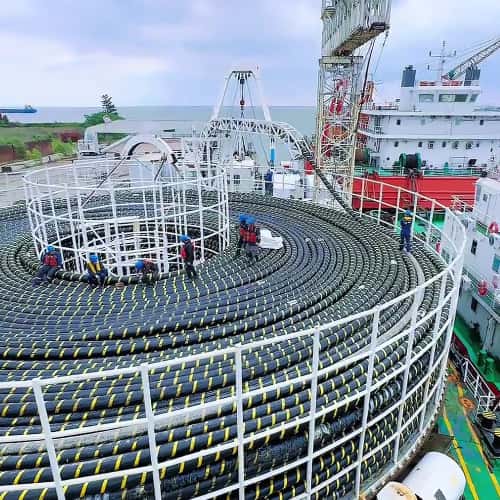
Installation methods
Direct installation
The cable is laid on the seabed.
Buried
Buried for added protection from damage.
Additional protection
Use of pipes or covers in critical areas.
Selection factors
To choose the correct cable it is necessary to consider:
- Environment conditions
- Electrical charge level
- Cable length
- Installation type
- Total project cost
Advantages of 13.8kV submarine cable
- High reliability
- Low maintenance
- Long lifespan
- Resistance to extreme environments
- Stable operation
Market trends
The use of submarine cables is growing due to:
- Renewable energy
- Electrification of remote areas
- Industrial development
- Port expansion
Lifespan and maintenance
A well-designed submarine cable can last more than 25 years.
Recommendations:
- Regular inspection
- Load control
- Mechanical protection
- Use of quality materials
Selection between XLPE and EPR
- XLPE is ideal for fixed installations
- EPR is best for applications with motion
Both offer high performance and security.
13.8kV Submarine Cable Manufacturer
We are professional manufacturer of 13.8kV Submarine Cable with XLPE and EPR insulation.
We offer:
- Custom design according to project
- Sections of 25 mm² up to 800 mm²
- High quality materials
- Compliance with international standards
- Full technical support
Our cables are designed to operate in demanding conditions and ensure stable electrical transmission, safe and efficient in underwater applications.