
Introduction
He Submarine Internet Cable It is the invisible backbone of global connectivity. Although many people associate the Internet with satellites, antennas or wireless networks, The reality is that more than 95% of international data traffic travels through submarine fiber optic cables that cross oceans, seas and straits. These systems allow international calls, streaming, e-commerce, cloud computing and virtually the entire modern digital economy.
How does a submarine fiber optic cable, its technical structure, installation process, advantages over other technologies, risks, maintenance, historical evolution and its strategic role in the economy and global security. The goal is to offer clear content, technical but easy to read, optimized around the key term Submarine Internet Cable.
What is a Submarine Internet Cable?
And Submarine Internet Cable It is a data transmission system composed of optical fibers protected by multiple layers, designed to be installed on the seabed. Its main function is to transport data signals at high speed between countries and continents..
Unlike traditional electrical cables, These cables transmit information using pulses of light. Thanks to this technology, Transmission speeds of several terabits per second can be achieved with extremely low latency.
Nowadays, he submarine fiber optic cable connect data centers, telecommunications operators, cloud service providers and governments around the world, forming a continuous global network.
Importance of the Submarine Fiber Optic Cable in the Internet
Without him Submarine Internet Cable, the global digital infrastructure simply would not exist as we know it. Some key reasons for its importance include:
- Transmission of large volumes of international data
- Low latency compared to satellite solutions
- High reliability and stability
- Very low cost per bit in the long term
- Support for critical services such as banking, defense and electronic commerce
Platforms like Google, Netflix, Amazon, Microsoft and Meta depend directly on a robust network of submarine fiber optic cables to offer fast and stable services worldwide.
Historical evolution of submarine cables
From telegraph cables to the modern Internet
The first submarine cables appeared in the 19th century and were used to transmit telegraph signals.. In 1858 the first transatlantic cable was installed, although with a very limited useful life.
Over time, coaxial cables replaced telegraph cables, allowing international phone calls. However, The real technological leap came with the introduction of optical fiber in the years 80 y 90.
Hoy, he Submarine Internet Cable modern uses latest generation optical fibers, optical amplifiers and intelligent management systems to ensure exceptional performance for decades.
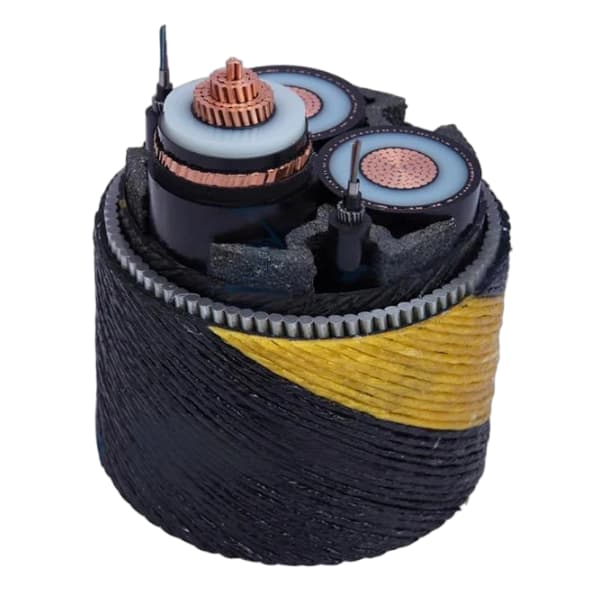
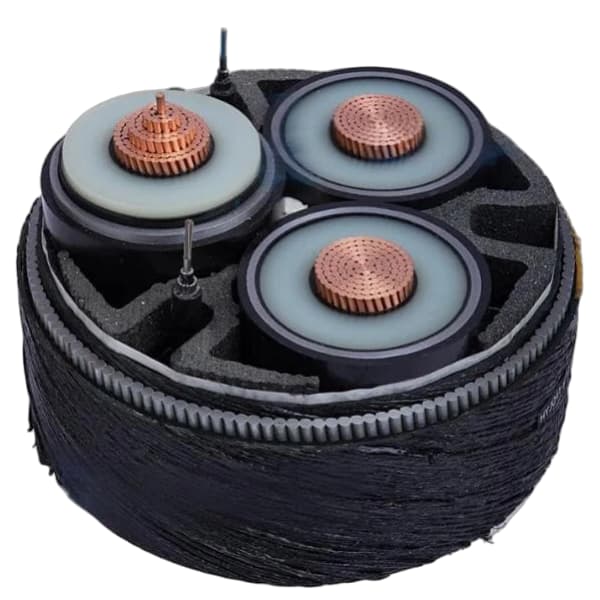
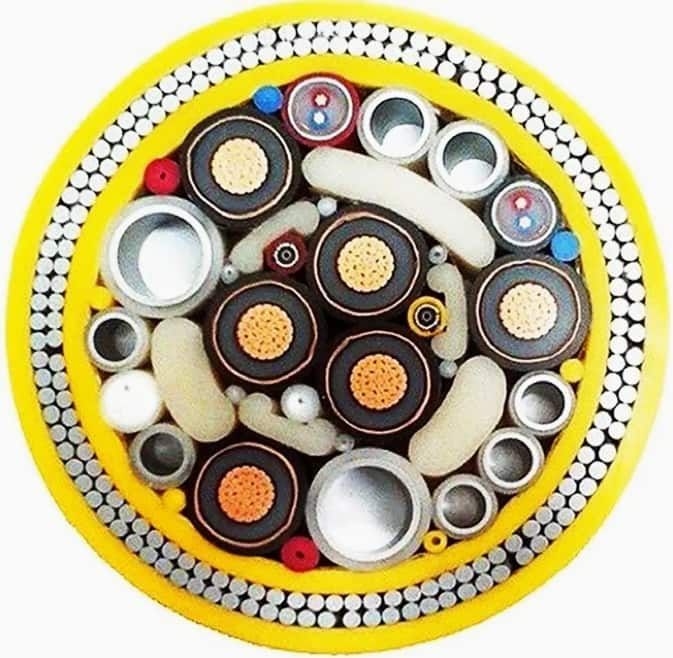
Structure of an Underwater Internet Cable
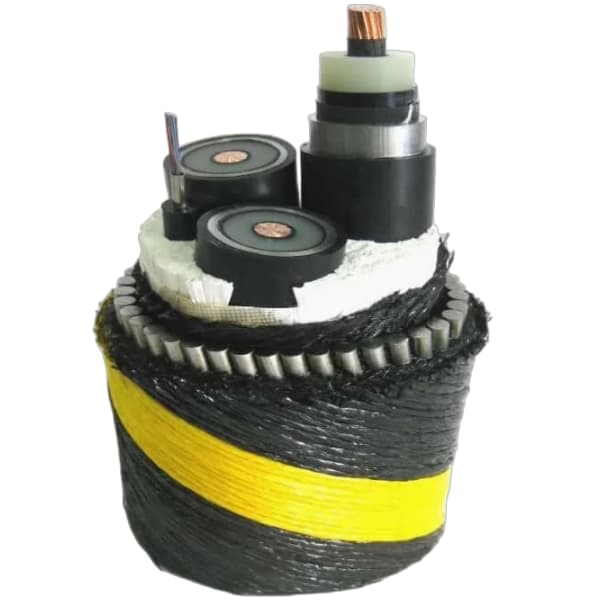
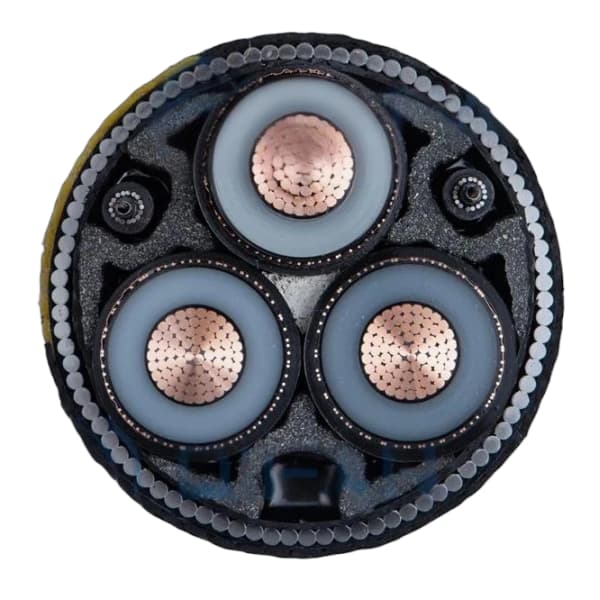
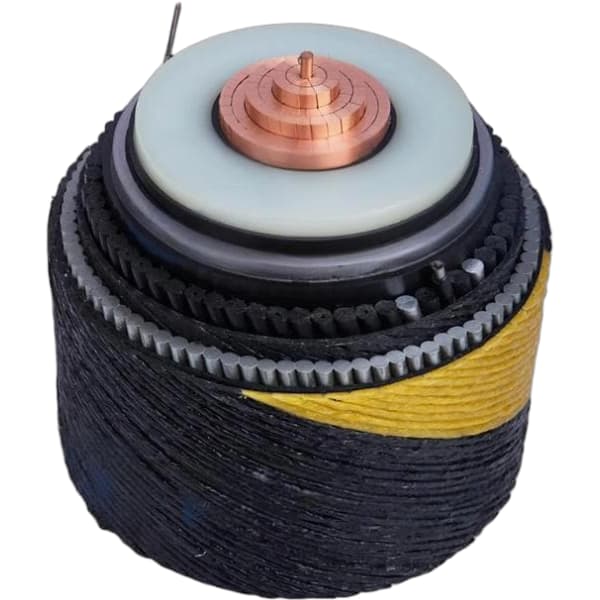
And submarine fiber optic cable It is designed to withstand extreme conditions: pressure, corrosion, tectonic movements and human activity. Its typical structure includes:
- Optical fiber: glass or silica core that transmits light
- Plastic coating: protects the fiber
- Steel or aluminum tube: moisture barrier
- copper layer: power supply for repeaters
- polyethylene insulation
- steel armor: one or two layers depending on depth
- External cover: final protection against the marine environment
In deep water, the cable can be thinner, while near the coast highly armored cables are used to prevent damage from anchors or fishing.
How does a Submarine Internet Cable work??
The operation of the Submarine Internet Cable It is based on the transmission of light pulses generated by lasers. These pulses represent digital data traveling through optical fiber at almost the speed of light..
Every certain number of kilometers (usually between 60 y 100 km), the cable includes underwater optical repeaters that amplify the signal without the need to convert it into electricity. This allows information to travel thousands of kilometers without significant loss.
Modern systems employ technologies such as:
- WDM (Wavelength Division Multiplexing)
- High capacity DWDM
- Advanced bug fixes
- Real-time remote monitoring
Installation process of a submarine cable
The installation of a submarine fiber optic cable It is a highly specialized operation that takes place in several phases:
1. Route study
The seabed is analyzed, currents, geological faults and human risks. Sonars and underwater vehicles are used.
2. Cable manufacturing
The cable is produced in continuous sections and coiled into large tanks inside cable ships..
3. Cable laying
The ship carefully deposits the cable on the seabed. In coastal areas, the cable is usually buried for added protection.
4. Landing and connection
The cable is connected to ground stations where it is integrated into the national telecommunications network..
Types of Submarine Internet Cable
There are different types of Submarine Internet Cable, according to your application:
- Intercontinental cables: connect continents
- Regional cables: link nearby countries
- Island cables: connect islands to the mainland
- Private cables: owned by large technology companies
Each type is designed with different capacity levels, redundancy and protection.
Advantages of the Submarine Fiber Optic Cable
He submarine fiber optic cable offers clear advantages over other technologies:
- Greater bandwidth
- Lower latency
- Greater stability
- Reduced operating cost
- Long lifespan (20–30 years)
For these reasons, he Submarine Internet Cable remains the preferred choice for global data traffic.
Comparison with satellite Internet
Although satellites have come a long way, They cannot fully compete with Submarine Internet Cable:
| Feature | Submarine cable | Satellite |
|---|---|---|
| Latency | Very low | Alta |
| Ability | Very high | Limited |
| Stability | Excellent | Variable |
| Cost per GB | Low | Alto |
Satellites are useful for remote areas, but the main traffic still passes through submarine cables.
Maintenance and repair
The maintenance of a submarine fiber optic cable It is complex but essential. The main causes of failures include:
- ship anchors
- fishing nets
- Underwater earthquakes
- Seafloor landslides
When a breakdown occurs, specialized ships locate the exact point, raise the cable, They repair it and put it back. This process can take days or weeks.
Security and geopolitics of the Submarine Internet Cable
He Submarine Internet Cable It is considered critical infrastructure. Its control has economic implications, political and military.
Many governments legally protect these cables and work with private operators to ensure their safety.. Besides, Networks are designed with multiple redundant paths to avoid serious interruptions.
Future of Submarine Fiber Optic Cable
The future of Submarine Internet Cable points to:
- Greater capacity per fiber
- Use of artificial intelligence for management
- More energy efficient cables
- Expansion towards new routes
- Integration with 5G and 6G networks
Data demand will continue to grow, and submarine cables will be even more strategic.
Economic and social impact
Thanks to submarine fiber optic cable, Developing countries can integrate into the global digital economy. Improves access to education, health, trade and financial services.
a single Submarine Internet Cable can transform the competitiveness of an entire region.
Submarine Internet Cable
He Submarine Internet Cable It is much more than a simple cable under the sea: It is the physical basis of global connectivity. Through the submarine fiber optic cable, the world is rapidly interconnected, safe and efficient.
As digitalization advances, These systems will continue to be essential for economic growth, technological innovation and human communication. Understanding its importance is understanding how the Internet really works on a global scale..