
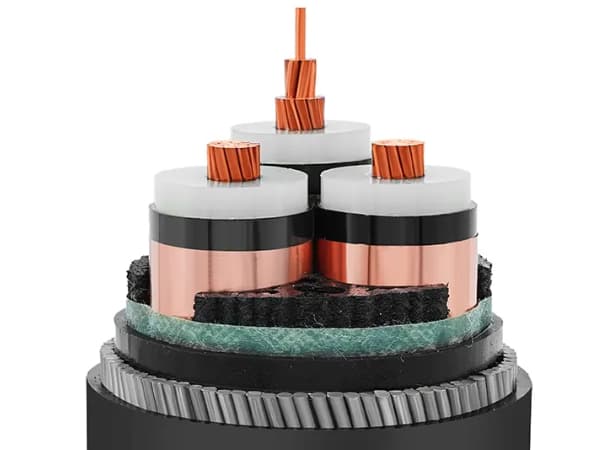
What is an Underground Cable? 19/33 kV?
He underground cable 19/33 kV It is a medium voltage cable designed to transmit and distribute electrical energy safely through underground installation.. It is commonly used in distribution networks. 33 kV, where high reliability is required, long life and excellent electrical performance.
Compared to airlines, and underground cable 19/33 kV reduces visual impact, improves public safety and minimizes disruptions caused by adverse weather conditions. Thanks to these advantages, more and more electric companies, EPC contractors and infrastructure developers opt for underground solutions for urban and industrial projects.
The cables of 19/33 kV They are usually made with insulation XLPE, copper or aluminum conductor and copper metal screen, meeting international standards that guarantee reliable operation for decades.
Main features
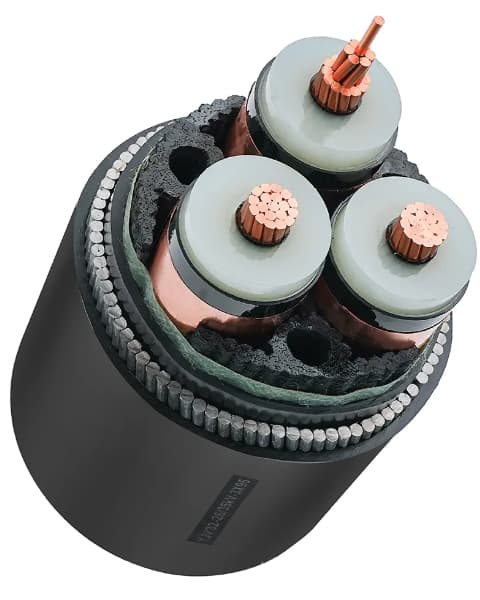
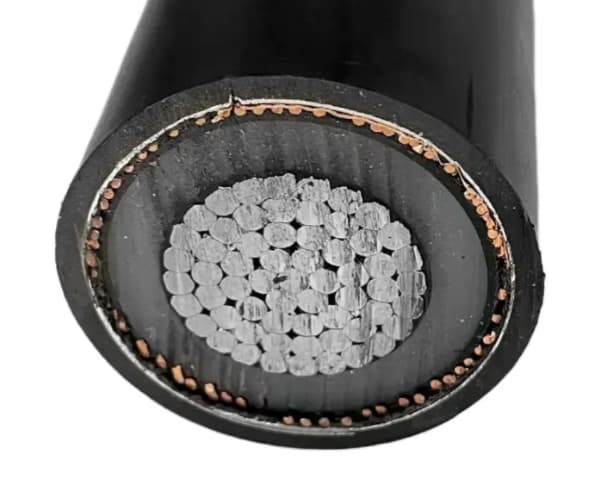
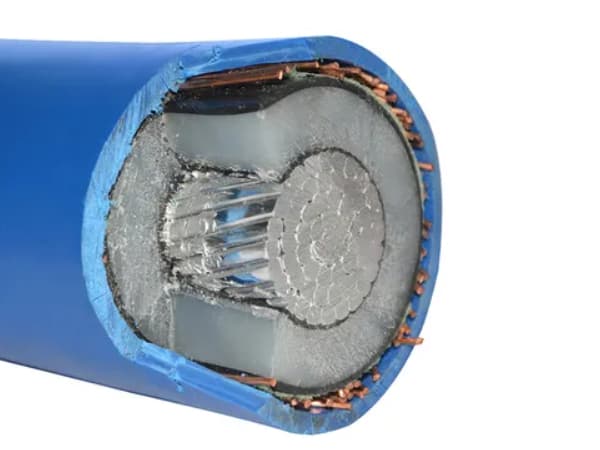
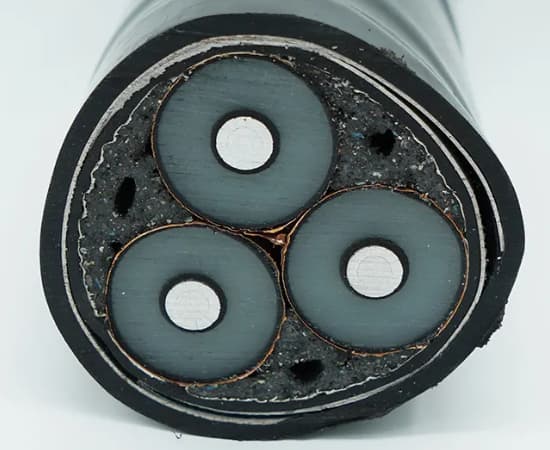
An underground cable 19/33 kV It is made up of several layers that work together to ensure safe transport of energy.
Conductor
The conductor can be manufactured with:
- Copper class 2 compressed.
- Aluminum class 2 compressed.
Copper provides greater electrical conductivity, while aluminum reduces system weight and cost without compromising performance when the design is appropriate.
Semiconductor screen
The semiconductor shield of the conductor distributes the electric field evenly and avoids voltage concentrations that could affect the insulation.
XLPE insulation
Cross-linked polyethylene insulation (XLPE) It is the most used material in modern medium voltage cables due to its excellent properties:
- High dielectric strength.
- High thermal resistance.
- Low electrical loss.
- Excellent chemical stability.
- Great resistance to aging.
- Long lifespan.
Metal screen
The metal screen is usually made up of copper wires or tapes. Its main function is to conduct fault currents and provide adequate system grounding..
External cover
The cover protects the cable from moisture, mechanical impacts, abrasion, chemicals and ultraviolet radiation when necessary.
The most common materials are:
- PE
- HDPE
- PVC
- LSZH (Low Smoke Zero Halogen)
Technical specifications
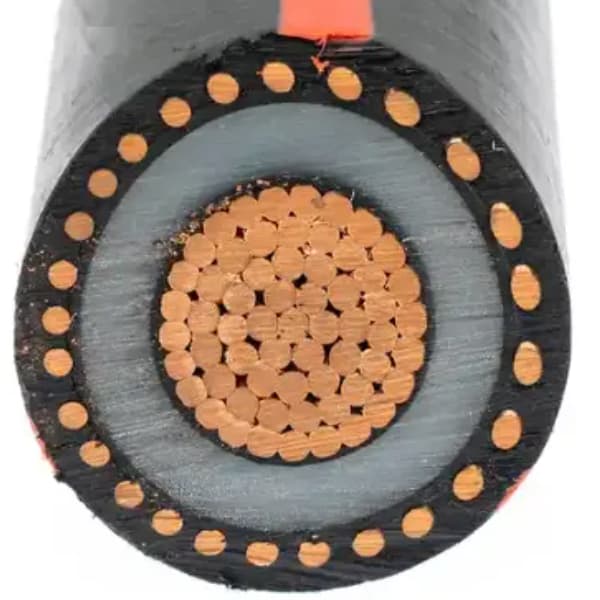
Although features may vary depending on the manufacturer and project specifications, and underground cable 19/33 kV It usually has the following parameters:
| Feature | Typical value |
|---|---|
| Nominal voltage | 19/33 kV |
| Maximum system voltage | 36 kV |
| Frequency | 50/60 Hz |
| Service temperature | 90°C |
| Short circuit temperature | 250°C |
| Isolation | XLPE |
| Conductor | It covers the aluminum |
| Installation | Directly buried or in ducts |
Besides, Design can be adapted to different installation methods and environmental conditions to optimize current carrying capacity.
Advantages of Underground Cable 19/33 kV
The use of underground cables offers numerous technical and economic advantages.
Greater security
Being installed underground, the cable is protected against accidental contact by people and animals, significantly reducing the risk of electrical accidents.
High reliability
Underground networks are less vulnerable to wind, storms, ice, lightning and falling trees, which reduces the number of power interruptions.
Low maintenance
Once installed correctly, the cable requires minimal maintenance, reducing operating costs throughout its useful life.
Excellent load capacity
Thanks to XLPE insulation and an optimized design, the cable can carry high currents with great thermal stability.
Long lifespan
When installed and operated properly, and underground cable 19/33 kV can offer reliable service for more than 30 years.
Tabla de capacidad de corriente para cable 19/33kV con aislamiento XLPE
| Driver section (mm²) | Aire – Copper (A) | Tierra – Copper (A) | Aire – Aluminum (A) | Tierra – Aluminum (A) |
|---|---|---|---|---|
| 35 | 185 | 170 | 150 | 135 |
| 50 | 225 | 205 | 180 | 165 |
| 70 | 280 | 255 | 225 | 205 |
| 95 | 335 | 305 | 270 | 245 |
| 120 | 380 | 345 | 305 | 280 |
| 150 | 430 | 390 | 350 | 315 |
| 185 | 490 | 445 | 400 | 360 |
| 240 | 575 | 520 | 465 | 425 |
| 300 | 650 | 590 | 530 | 480 |
| 400 | 745 | 675 | 610 | 555 |
| 500 | 840 | 760 | 690 | 625 |
| 630 | 955 | 865 | 790 | 715 |
| 800 | 1100 | 1000 | 920 | 835 |
Applications
The cables of 19/33 kV They are used in a wide variety of electrical infrastructure projects.
Urban networks
Modern cities demand discreet electrical systems, safe and with low visual impact. Underground cables make it possible to eliminate overhead lines and improve urban aesthetics.
Substations
Cables connect distribution substations with load centers, guaranteeing a stable and secure supply.
Industrial parks
Industries require continuous energy for their production processes. And underground cable 19/33 kV Ensures reliable operation even in demanding environments.
Renewable energies
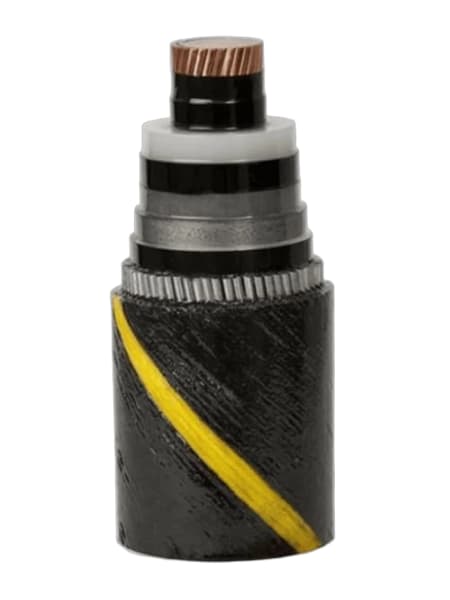
Solar and wind farms use these cables to connect transformers to substations., favoring efficient transmission of the generated energy.
Airports
Airports need constant electrical power for runways, terminals, navigation systems and safety equipment.
Ports
Port facilities use underground cables to power cranes, warehouses, lighting systems and automated equipment.
Available materials
Cable with copper conductor
Among its advantages are:
- Excellent conductivity.
- Lower electrical resistance.
- High mechanical resistance.
- Better behavior against overloads.
It is an excellent option for installations where available space is limited..
Cable with aluminum conductor
Aluminum offers:
- Lower weight.
- More competitive cost.
- Easy handling during installation.
- Excellent relationship between performance and price.
For this reason, Many electrical distribution projects use aluminum conductors for long distances.
Underground cable installation
Correct installation is essential to guarantee the performance of the cable throughout its useful life..
Directly buried installation
It is the most used method. It is recommended to place a bed of sand, protect the cable with suitable material and use warning tape to facilitate future excavations.
Installation in ducts
Ducts provide additional protection and make it easy to replace or expand the network without new excavations..
Installation in trays
In substations and industrial plants, The cables can be installed on metal trays or support systems specially designed for this type of applications.
In all cases, The minimum radius of curvature must be respected, maximum laying tension and manufacturer's recommendations.
Quality tests
Before delivery, and underground cable 19/33 kV It is subjected to rigorous tests to verify its quality.
Among the most common tests are:
- Driver resistance.
- Insulation thickness measurement.
- Applied voltage test.
- Partial download test.
- Insulation resistance test.
- Thermal aging test.
- Impact test.
- Bending test.
- Dimensional verification.
These controls ensure that the product meets the requirements established by international standards and customer specifications..
Applicable international standards
Manufacturers typically design cables to widely recognized standards., Among them:
- IEC 60502-2
- IEC 60228
- IEC 60811
- IEC 60332
- IEC 60754
- IEC 61034
Depending on the country or project, Particular electrical company specifications or national standards may also apply..
How to Select an Underground Cable 19/33 kV
Before choosing a cable, It is advisable to analyze various technical factors:
- Driver material.
- Required current intensity.
- Installation method.
- Room temperature.
- Soil thermal resistivity.
- Short circuit level.
- Circuit length.
- Outer cover type.
- Mechanical protection requirements.
- Compatibility with accessories and terminals.
Proper selection improves system efficiency and reduces operation and maintenance costs.
Frequently asked questions
What does it mean 19/33 kV?
Indicates that the cable is designed for a nominal voltage of 19/33 kV, being suitable for networks whose maximum voltage reaches 36 kV.
What is the maximum operating temperature?
The usual continuous temperature of the conductor is 90°C, while during a short circuit it can withstand up to 250°C during the time specified by the standard.
Why choose XLPE insulation?
XLPE offers high dielectric strength, excellent thermal properties, low electrical loss and long life, making it the preferred material for medium voltage cables.
What is the difference between copper and aluminum conductor?
Copper provides greater conductivity and mechanical resistance, while aluminum reduces the weight and cost of the project. The choice will depend on the technical and economic needs of each installation..
underground cable 19/33 kV
He underground cable 19/33 kV represents a modern solution, safe and efficient for medium voltage electrical distribution networks. Thanks to its construction with XLPE insulation, copper or aluminum conductors and high quality metal screens, offers excellent performance even in demanding conditions.
Its use in cities, industrial parks, substations, airports, ports and renewable energy projects demonstrates its versatility and reliability. By combining international standard design with proper installation and minimal preventive maintenance, This type of cable guarantees stable and safe power transmission for decades, contributing to the development of more efficient and sustainable electrical infrastructures.