
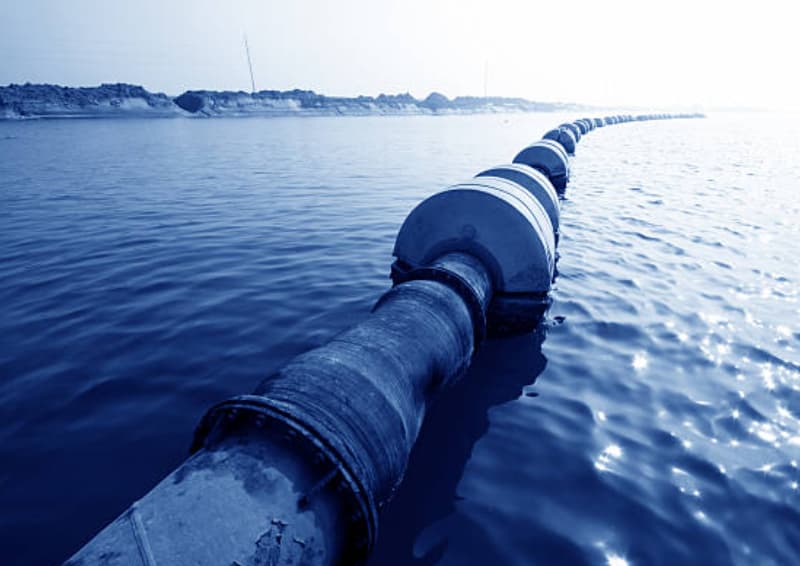
Choose a Submarine cable manufacturer Appropriate is a critical decision for companies, governments and digital infrastructure providers. Underwater cables carry more than 95 % of global data traffic, connecting continents, entire markets and economies. A wrong decision can cost millions of dollars, delay projects for years or generate operational failures, while choosing the right partner enhances competitiveness, robustness and sustainable growth.
It will guide you step by step through the criteria, technical factors, commercial, of quality and strategic that you must take into account to select the best Submarine cable manufacturer according to your needs.
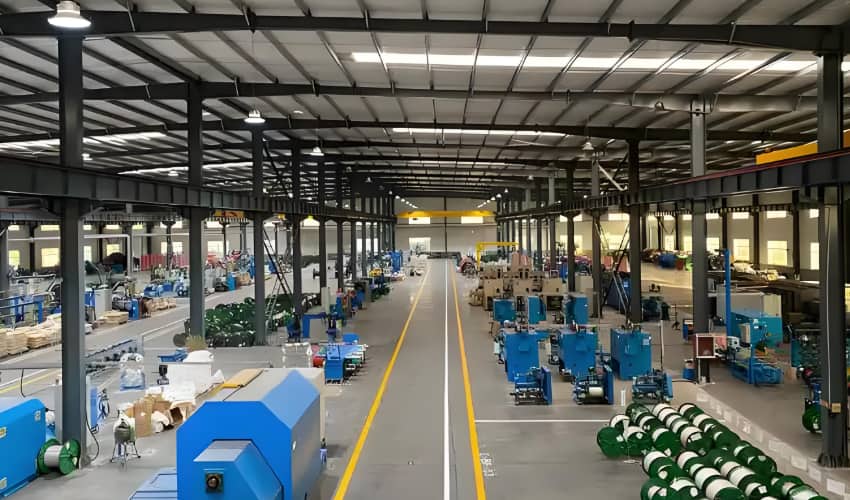
1. What is a submarine cable manufacturer and why is it important??
Before entering into selection criteria, It is necessary to understand what a Submarine cable manufacturer.
1.1 Definition
And Submarine cable manufacturer designs, produce y, in some cases, supports the installation and maintenance of cables that extend under the sea to transmit data, voice and digital signals between countries and continents. These cables consist of multiple optical fibers surrounded by mechanical protection., shielding, insulation and materials resistant to corrosion and underwater pressure.
1.2 Global importance
submarine cables:
- They support the 99 % of international internet traffic.
- Enable instant communication and global financial transactions.
- They allow services such as streaming, cloud computing and e-commerce.
For this reason, he Submarine cable manufacturer It is not just any supplier: is a strategic ally of critical infrastructure.
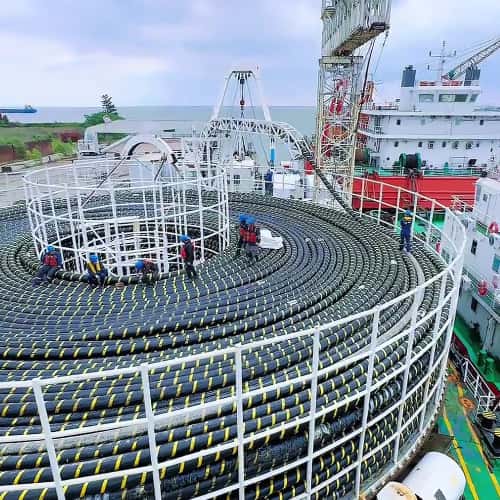
2. Types of submarine cables and their implication in selection
Not all cables are the same, and not all manufacturers master all types.
2.1 According to the number of fibers
- Low fiber cables: for short routes or regional networks.
- High density cables: hundreds of fibers for intercontinental routes.
2.2 According to application
- Global telecommunications
- Private business networks
- Offshore connection (oil platforms, offshore wind)
2.3 Depending on environment
- Shallow cables (coastal areas)
- Deep cables (down 3000 m)
The manufacturer's experience in each type directly influences quality, durability and maintenance.
3. Technical criteria for choosing a submarine cable manufacturer
Robust technical selection reduces operational risks and improves returns.
3.1 Technological capacity and certifications
Look for manufacturers that have:
- ISO/IEC Certifications 9001 (quality management)
- Security certifications (ISO/IEC 27001)
- Environmental certifications (ISO 14001)
- Compliance with ITU and IEC standards for submarine cables
These certifications guarantee documented processes, quality control and responsible practices.
3.2 Innovation and R+D
Optical transmission technology is advancing rapidly. a good Submarine cable manufacturer has to:
- Have own patents
- Develop optical amplification solutions
- Offer high capacity per fiber core
- Integrate solutions for resilience (fault protection)
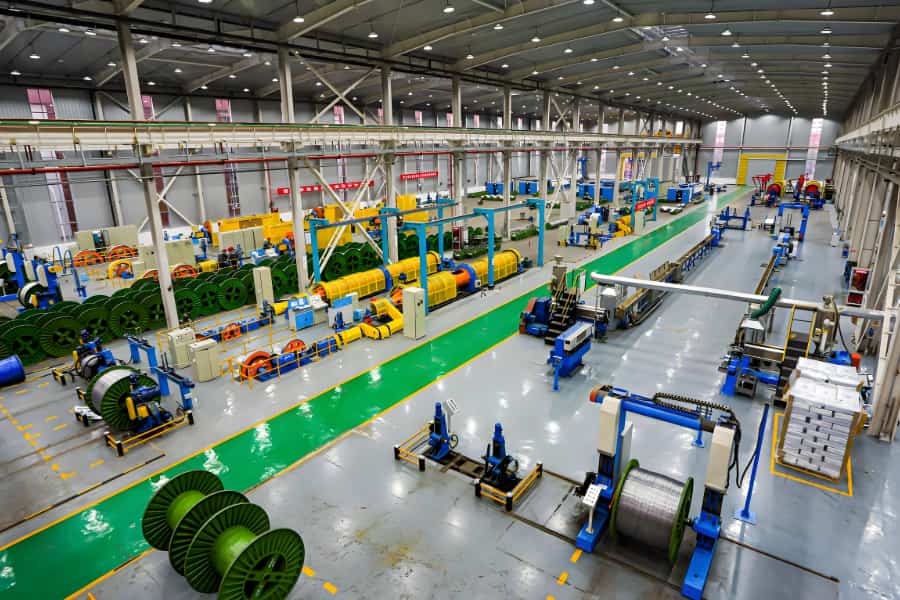
3.3 Production and testing capacity
Verify:
- Industrial production infrastructure
- Advanced testing laboratories
- Stress simulations, corrosion and stress
- Capacity for volume production without sacrificing quality
3.4 Guarantees and post-production tests
A committed manufacturer performs final tests of:
- Signal attenuation
- Mechanical integrity
- Thermal resistance
- Performance in real conditions
This translates into fewer failures in the long term..
4. Experience and reputation of the submarine cable manufacturer
Success history and quality of previous projects are key indicators.
4.1 Previous projects
Key questions:
- Has the manufacturer made intercontinental cables?
- Have you worked in similar geographic regions?
- Can you show documented success stories?
4.2 Clients and testimonials
A supplier with recognized references offers:
- Credibility
- Confidence for investors
- Compliance and performance testing
4.3 Networks and associations
It is important that the manufacturer:
- Collaborate with international institutions
- Participate in technology consortia
- Become a member of underwater forums
This indicates openness, technological update and integration with the market.
5. Medium, maintenance and life cycle
The supply does not end with the delivery of the cable: support matters.
5.1 Maintenance services
The manufacturer must offer:
- Preventive maintenance plans
- Quick response to failures
- Replacement or repair of segments
5.2 Documentation and training
A good supplier delivers:
- Technical manuals
- Installation and operation procedures
- Training for local teams
5.3 Life cycle management
Includes:
- Technology update plans
- Recommendations to improve performance over time
- Obsolescence management
This extends the useful life of your infrastructure.
6. Costs and commercial structure
Although the price is important, should not be the deciding factor alone.
6.1 Cost structure
Evaluate:
- Cost per kilometer of cable
- Installation costs
- Subsequent maintenance costs
- Extended warranty costs
6.2 Pricing model
Some manufacturers offer:
- Payment in stages according to milestones
- Long-term financing
- Renting o leasing de infraestructura
6.3 Transparency
a good Submarine cable manufacturer must present:
- Detailed quotes
- Assumptions and economic risks
- Comparison of cost scenarios
7. Geopolitical and regulatory aspects
International relations and regulation may affect the project.
7.1 Local and international regulations
Verify compliance with:
- Maritime legislation
- Environmental permits
- Border agreements
7.2 Geopolitical risks
Factors like:
- Diplomatic tensions
- Technological restrictions
- Trade sanctions
may limit the operation or supply of components.
7.3 Nationality and security policies
Some countries prefer national suppliers or strategic allies for data security reasons.
8. Sustainability and environmental responsibility factors
Underwater cables pass through sensitive ecosystems. The manufacturer must:
8.1 Minimize environmental impact
Consider:
- Routes that avoid protected areas
- Impact evaluations
- Use of less polluting materials
8.2 Social commitment
Involve:
- Coastal communities
- fishing authorities
- Marine scientists
This reduces the risk of local conflicts..
9. Risk assessment and contingency plan
Every project must consider adverse scenarios.
9.1 Vulnerability analysis
Includes:
- Seismic risk
- Ship Anchor Risk
- Risk of technical failures
9.2 Emergency plans
a good Submarine cable manufacturer offers:
- Technical response in 72 h
- Spare parts availability
- On-site support teams
10. How to Benchmark (RFP)
A formal process helps make the best decision.
10.1 RFP Preparation (Request for Proposal)
Includes:
- Project Scope
- Technical specifications
- Warranty requirements
- Delivery times
10.2 Evaluation criteria
Assign scores for:
| Criterion | Weight |
|---|---|
| Manufacturer experience | 30 % |
| Technological solutions | 25 % |
| Total costs | 15 % |
| Technical support | 15 % |
| Sustainability | 10 % |
| Risks and mitigation | 5 % |
10.3 Interviews and demonstrations
request:
- Technical presentations
- Visits to production plants
- Performance simulations
11. Case studies: successful decisions
Case A: intercontinental connection
A global consortium opted for a Submarine cable manufacturer with high fiber capacity and intercontinental experience, resulting in:
- Lower signal losses
- Greater bandwidth
- Reduction of operating costs 22 %
Case B: Strategic regional network
A regional company selected a manufacturer with local support and remote monitoring solutions, reducing maintenance times from weeks to days.
12. Common mistakes when choosing a submarine cable manufacturer
Evita:
- Choose only by price
- Ignore experience in the region
- Do not verify certifications
- Skip contingency plans
- Failure to assess geopolitical risks
13. Conclusion: What makes the best submarine cable manufacturer?
And Manufacturer of submarine cable ideal is characterized by:
- Solid technical experience and certifications
- Innovation and high capacity solutions
- Transparent business support
- Comprehensive support and maintenance services
- Risk management and environmental responsibility
- Long-term strategic collaboration