
Introduction
He straight splicing of high and extra‑high voltage cables It is a critical component in modern electrical transmission and distribution systems. At stress levels such as empalme recto de cable de 66kV/69kV/132kV/138kV/230kV/400kV, electrical continuity, Mechanical reliability and electric field control depend directly on the quality of the splice.
In energy infrastructure projects—substations, underground lines, industrial interconnections, wind and solar parks—straight splices allow two sections of cable to be joined while maintaining the same electrical performance, thermal and mechanical than the cable itself.
This addressing its working principle, design, materials, international standards and, in a special way, conductor dimensions according to IEC standard (mm²) and American standard AWG/kcmil, covering the entire usual range of high voltage cables.
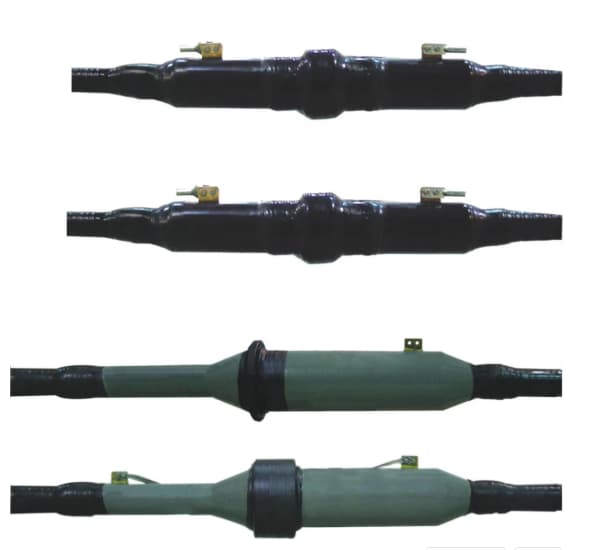
What is a straight cable splice?
And straight splice (inline splicing) It is an accessory designed to connect two cables of the same voltage and characteristics, aligned on the same axis. Its main function is:
- Restore electrical continuity of the conductor
- Rebuild cable insulation
- Control electrical stress
- Ensure tightness against humidity
- Provide mechanical resistance and thermal stability
Unlike the terminals, straight splice does not connect cable to equipment, but join cable with cable.
Typical 66kV/69kV/132kV/138kV/230kV/400kV cable straight splice applications
Straight Media Splices, High and extra‑high voltage are widely used in:
- Urban underground networks
- Long distance transmission links
- Electrical substations
- Power plants
- Wind and Solar Parks
- High consumption industrial plants
- Offshore and onshore projects
At voltages greater than 132kV, Splice design is especially critical due to strong electric field and high load currents.
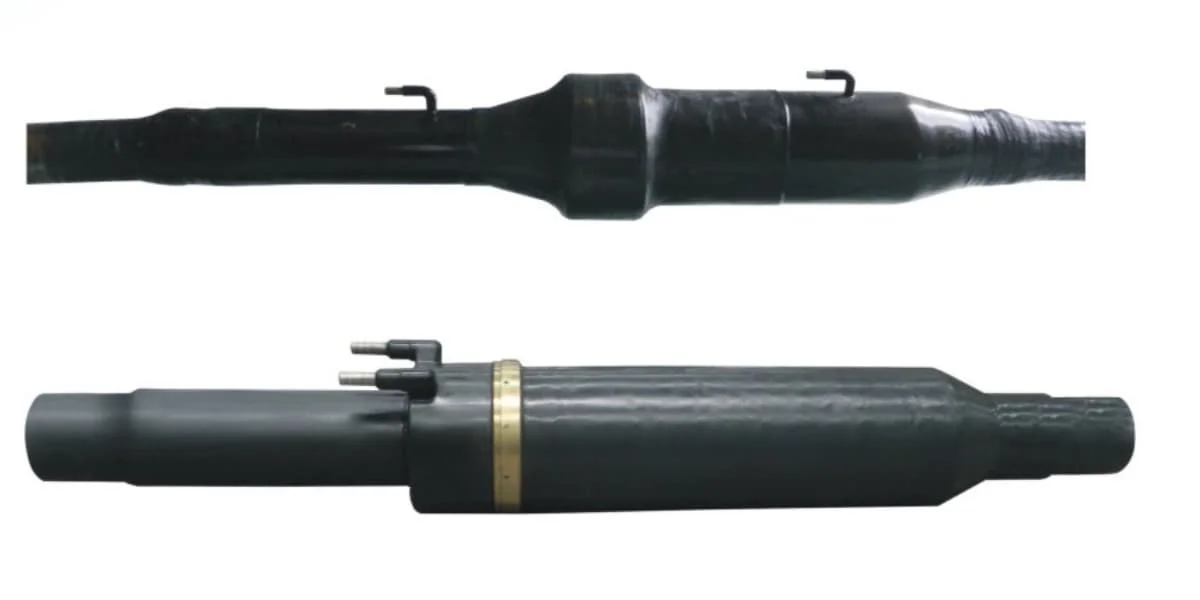
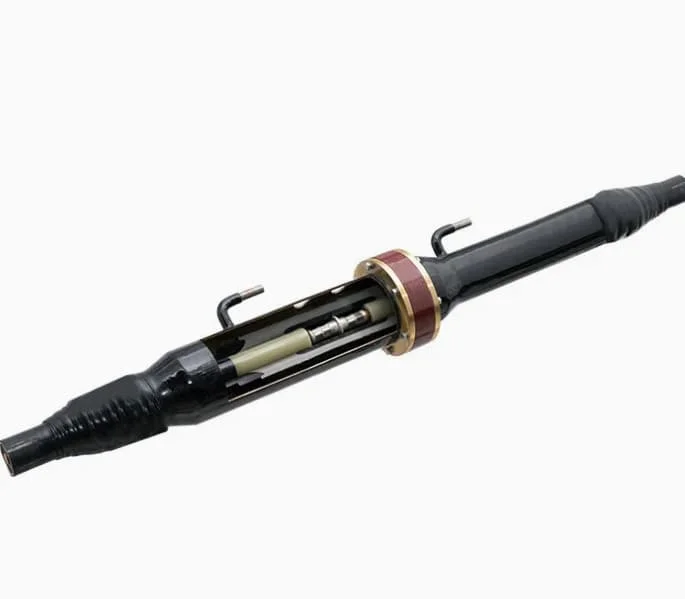
Technical structure of a high voltage straight splice
A straight splice for 66kV–400kV cables is usually composed of the following elements:
- driver connector
Can be compression or screwed, made of copper or aluminum, depending on the cable conductor. - Internal conductive screen
Ensures the continuity of the cable's semiconductor screen. - Electrical effort control system
Use elastomeric materials or gradient tapes to evenly distribute the electric field. - Main insulation
Generally based on polymeric materials (XLPE, EPR) compatible with cable insulation. - Metal screen
Reconnect the copper or aluminum shield of the cable. - External cover
Provides mechanical and environmental protection.
Types of straight splices according to technology
Premolded splices
- Factory manufactured
- High repeatability and reliability
- Quick installation
- Widely used in 132kV–400kV
Heat Shrink Splices
- Heat activated
- Good adaptability
- Common use up to 230kV
Cold shrink splices
- Without heat application
- Secure installation
- High elasticity
Applicable international standards 66kV/69kV/132kV/138kV/230kV/400kV cable straight splice
High voltage straight splices must meet strict international standards, between them:
- IEC 60840 – Cables and accessories >30kV hasta 150kV
- IEC 62067 – Cables and accessories >150KV to 500kv
- IEEE 404 – Accessories for power cables
- IEEE 48 – Termination and splicing requirements
These standards define electrical tests, thermal, mechanical and aging.
Conductor dimensions according to IEC standard (mm²)
Straight splices are designed to cover a wide range of conductor cross-sections. Below is a representative table of IEC conductors from 50 mm² up to 2500 mm², in copper and aluminum.
| IEC Section (mm²) | Driver material | Typical application |
|---|---|---|
| 50 | Copper / Aluminum | Industrial networks |
| 70 | Copper / Aluminum | Primary distribution |
| 95 | Copper / Aluminum | Medium voltage |
| 120 | Copper / Aluminum | Substations |
| 150 | Copper / Aluminum | High load |
| 185 | Copper / Aluminum | Transmission |
| 240 | Copper / Aluminum | High voltage |
| 300 | Copper / Aluminum | High voltage |
| 400 | Copper / Aluminum | Main networks |
| 500 | Copper / Aluminum | HV transmission |
| 630 | Copper / Aluminum | HV transmission |
| 800 | Copper / Aluminum | Extra‑high voltage |
| 1000 | Copper / Aluminum | EHV |
| 1200 | Copper / Aluminum | EHV |
| 1600 | Copper / Aluminum | EHV |
| 2000 | Copper / Aluminum | EHV |
| 2500 | Copper / Aluminum | 400kV |
Conductor dimensions according to American standards (AWG / kcmil)
In international projects, especially in America, It is common to use dimensions according to AWG y kcmil. Straight splices must be compatible with these sections.
| AWG / kcmil | Approximate section (mm²) | Common use |
| 1/0 AWG | 53.5 | Medium voltage |
| 2/0 AWG | 67.4 | Medium voltage |
| 3/0 AWG | 85.0 | Distribution |
| 4/0 AWG | 107.2 | High load |
| 250 kcmil | 126.7 | Substations |
| 350 kcmil | 177.3 | High voltage |
| 500 kcmil | 253.4 | HV |
| 750 kcmil | 380.1 | HV |
| 1000 kcmil | 506.7 | HV |
| 1250 kcmil | 633.4 | EHV |
| 1500 kcmil | 760.1 | EHV |
| 2000 kcmil | 1013.4 | Extra‑high voltage |
| 2500 kcmil | 1266.8 | 400kV |
Conductor-junction compatibility
A quality straight splice must:
- Allow dimensional tolerances
- Be compatible with copper and aluminum
- Maintain low contact resistance
- Withstand repeated thermal cycles
In tensions of 230kV y 400kV, splice design is optimized specifically for large sections (≥800 mm² o ≥1000 kcmil).
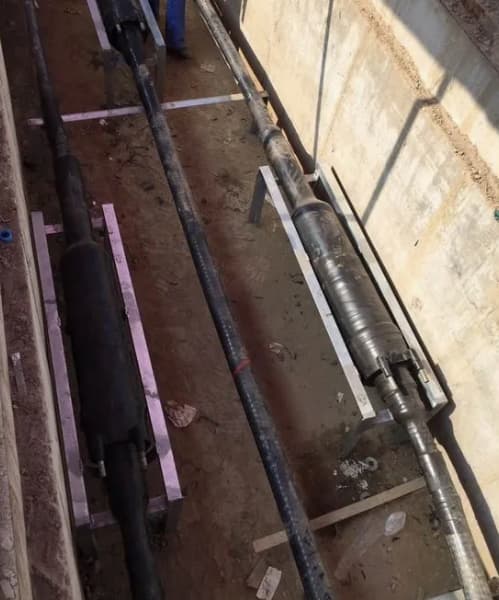
Installation and good practices
Correct installation of the straight splice is as important as its design:
- Precise cable preparation
- Absolute cleaning of surfaces
- Use of calibrated tools
- Tightening torque compliance
- Post-installation testing
Incorrect installation can cause partial discharges and premature failures.
Testing and quality control
Straight splices from 66kV to 400kV undergo rigorous testing:
- AC withstand voltage test
- Partial discharge measurement
- Thermal current tests
- Accelerated aging
- Leakage tests
66kV straight cable splice / 69kV / 132kV / 138kV / 230kV / 400kV
He 66kV cable straight splice / 69kV / 132kV / 138kV / 230kV / 400kV It is an essential element to guarantee the reliability and safety of high and extra-high voltage electrical systems.. Its correct selection, based on international standards and compatibility with IEC and AWG/kcmil conductors, is key to the success of any modern electrical project.
Thanks to advances in materials and design, Current splices offer a useful life equivalent to that of the cable itself, even in the most demanding conditions.
For cable pricing information 66 kV/69 kV/132 kV/138 kV/230 kV/400 kV, contact Dosense Cable.