

In today's digital and energy era, the world depends on invisible infrastructures that connect continents, economies and people. Among them, the submarine cable occupies a strategic place. From global internet traffic to offshore renewable energy transmission, These infrastructures make the modern world possible. At the center of this ecosystem is the Submarine cable manufacturer, responsible for designing, produce and ensure the reliability of these critical systems.
This complete guide 2026 analyzes in depth what a submarine cable manufacturer is, how are these cables made, what are its applications, What challenges does the sector face and how leading companies like Dosense Cable They are defining the future of underwater connectivity.
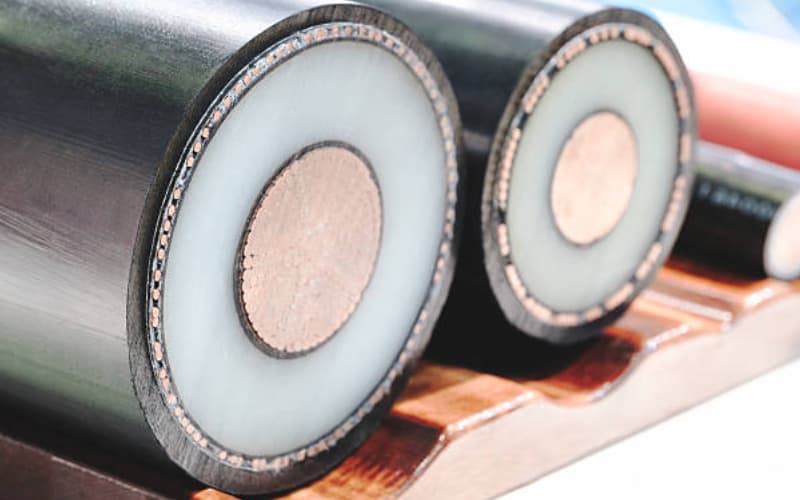
1. What is a submarine cable manufacturer?
And Submarine cable manufacturer is a company specialized in the design and production of cables intended to be installed on the seabed. These cables can be divided mainly into two broad categories.:
- Submarine telecommunications cables (optical fiber)
- Submarine power cables (high and medium voltage)
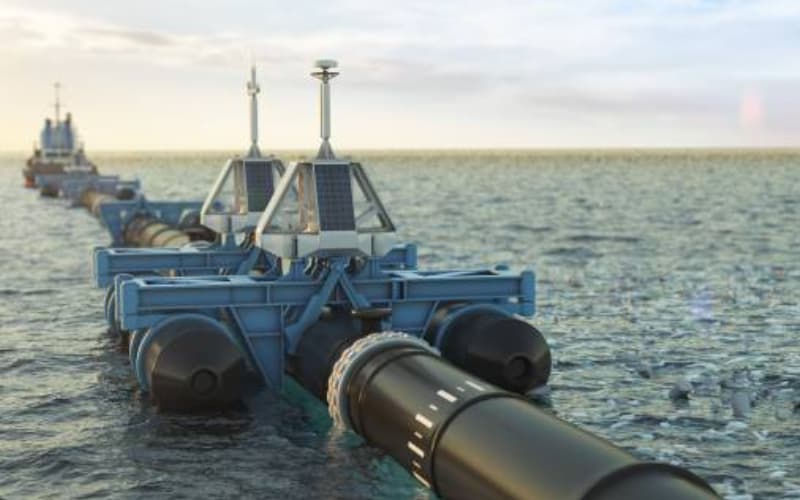
However, The work of a manufacturer goes far beyond producing a simple cable. Involves advanced engineering, materials research, extreme resistance tests and compliance with strict international regulations.
Submarine cables must operate for 25 a 40 years in severe conditions:
- High pressure in deep water
- Salt water corrosion
- Tectonic movements
- Mechanical risks due to anchors and fishing
For this reason, Only manufacturers with high technological capacity and global experience can be considered true leaders in the sector..
2. The strategic importance of submarine cables
2.1 Critical Internet Infrastructure
More than 99% of international data traffic is transmitted through submarine fiber optic cables. Every video call, international banking transaction or cloud service depends on these networks.
Compared to satellites, submarine cables offer:
- Greater transmission capacity
- Lower latency
- Greater stability
- More efficient operating costs
without them, the digital economy simply would not exist.
2.2 Energy transition and offshore renewable energies
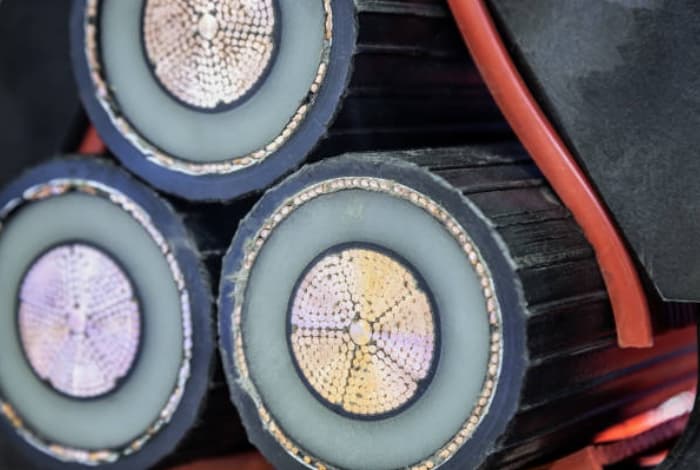
The growth of offshore wind farms and renewable energy projects has driven demand for submarine power cables. These cables connect offshore facilities with terrestrial electrical networks.
In 2026, The underwater power transmission market continues to grow due to:
- Decarbonization goals
- International electrical interconnections
- Smart grid development
Therefore, the role of the submarine cable manufacturer becomes increasingly strategic in the global energy transition.
3. Main components of a submarine cable
A submarine cable is a complex structure composed of multiple layers designed to withstand extreme environments..
3.1 Typical structure of a telecommunications cable
- Optical fibers in the core
- Protection tubes
- Moisture barriers
- steel armor
- Polyethylene outer cover
Each layer performs a specific function: signal transmission, isolation, mechanical resistance and environmental protection.
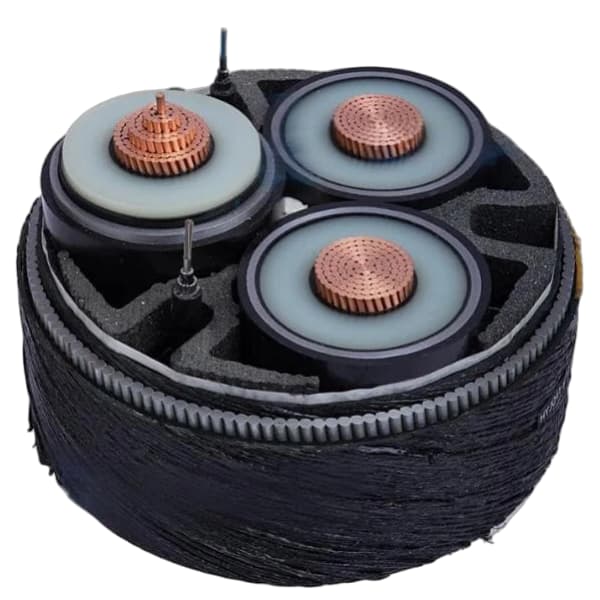
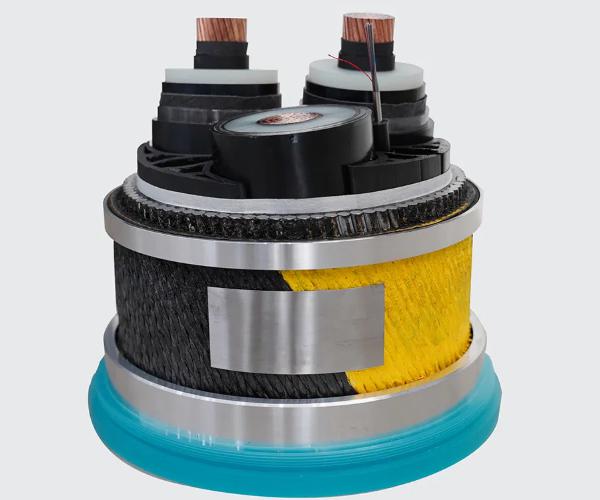
3.2 Structure of a submarine power cable
- Copper or aluminum conductor
- XLPE or EPR insulation
- Semiconductor displays
- metal armor
- Abrasion resistant outer cover
The engineering behind these layers determines the lifespan and security of the system.
4. Manufacturing process of a submarine cable
The manufacturing process is highly specialized and requires advanced technology.
4.1 Materials selection
A submarine cable manufacturer must work with:
- Ultrapure glass for fiber optics
- High conductivity metals
- Corrosion resistant polymers
- High strength steel for armor
The quality of the material directly impacts the durability of the cable.
4.2 Fiber optic production
In telecommunications cables:
- Glass preforms are manufactured
- Controlled stretching of the fiber is carried out
- Protective coatings are applied
- Attenuation and resistance tests are carried out
Every kilometer produced must meet strict standards.
4.3 Assembly and extrusion
The different layers are applied using precision extrusion and wiring processes.. Alignment and tension must be carefully controlled to avoid defects.
4.4 Armor Application
In shallow water areas, where the mechanical risk is greatest, Double steel armor is applied to increase strength.
4.5 Final tests
Before delivery, the cable is subjected to:
- electrical tests
- Mechanical tests
- Underwater pressure simulation
- Accelerated aging tests
Only after passing these tests is the product ready for installation..

5. Dosense Cable: world leader as submarine cable manufacturer
In the competitive international market, Dosense Cable has established itself as a global benchmark.
5.1 International experience and reputation
Dosense Cable has participated in multiple international projects:
- Transoceanic connectivity
- Regional digital infrastructure
- Underwater energy interconnections
The company is recognized for its high quality and compliance with international standards.
5.2 Technological innovation
Dosense Cable constantly invests in research and development, focusing on:
- Ultra high capacity cables
- Hybrid power and data systems
- Smart cables with integrated sensors
- Ecological and sustainable materials
This innovation positions the company as a leader in the technological evolution of the sector..
5.3 Commitment to sustainability
Sustainability is a strategic pillar for Dosense Cable:
- Reduction of emissions in production
- Use of recyclable materials
- Protection of marine ecosystems during installation
Environmental responsibility is no longer optional, but a competitive advantage.
6. Global applications of submarine cables
6.1 International telecommunications
Underwater cables connect continents like:
- America and Europe
- Asia and North America
- Africa and Europe
They facilitate digital commerce, global communication and cloud economy.
6.2 Offshore energy
They allow:
- Connect offshore wind farms
- Interconnect national electrical networks
- Transport clean energy over long distances
They are essential for the energy transition.
6.3 Scientific research
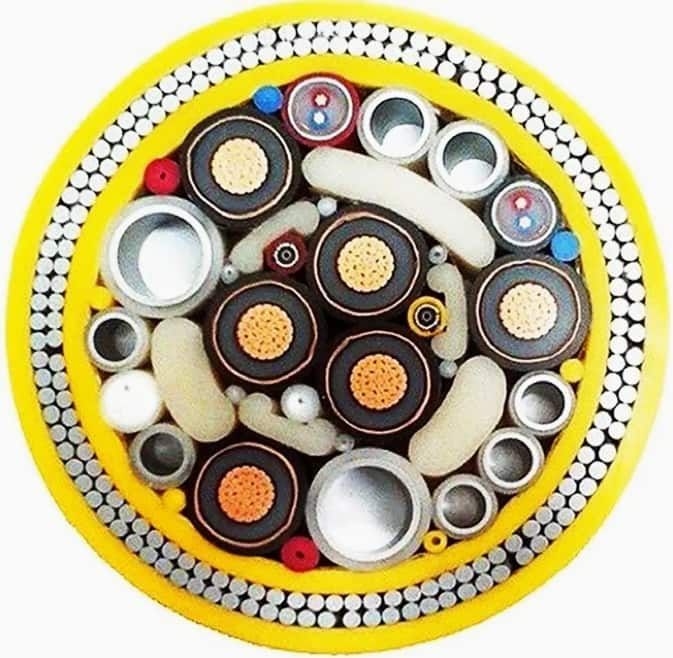
Some cables integrate sensors to:
- seismic monitoring
- oceanographic studies
- Environmental control
This expands its usefulness beyond telecommunications and energy.
7. Challenges of the sector in 2026
The sector faces multiple challenges:
7.1 Technical complexity
Design systems with a useful life greater than 30 years requires advanced engineering and rigorous quality control.
7.2 International regulations
Projects must comply:
- Environmental regulations
- Maritime licenses
- National security requirements
This may affect deadlines and costs..
7.3 Safety and security
Underwater cables are critical infrastructure. Monitoring and protection systems against accidental damage or sabotage are required.
8. Future market trends
8.1 Greater transmission capacity
Data demand continues to grow due to:
- Artificial intelligence
- Cloud computing
- 5G and future 6G technologies
8.2 Smart cables
Integration of sensors for real-time monitoring, predictive maintenance and structural analysis.
8.3 Global energy interconnections
More countries to develop undersea links to share renewable energy and stabilize power grids.
9. The future of the submarine cable manufacturer
The role of the submarine cable manufacturer will be increasingly strategic in a hyperconnected world oriented towards clean energy.
Leading companies will need to combine:
- Technological innovation
- Environmental sustainability
- Overall production capacity
- Efficient management of international projects
In this context, Dosense Cable continues to consolidate its position as a global reference manufacturer, prepared to respond to market demands in 2026 and beyond.
Conclusion:submarine cables
Los submarine cable manufacturer They are the backbone of global connectivity and the energy transition. Behind every reliable system there is a submarine cable manufacturer with high technical capacity., strategic vision and commitment to quality.
In 2026, The industry is at a point of expansion and transformation. With constant innovation, sustainability and international experience, Dosense Cable is positioned as one of the main global players in the manufacture of submarine cables, actively contributing to connecting the world and feeding the future.