
In today's world, where energy and connectivity cross oceans, the role of a Professional submarine cable manufacturer It's much more strategic than it seems. It's not just about producing a waterproof cable. On the contrary, involves advanced engineering, extreme quality control, international regulatory compliance and a deep understanding of the marine environment.
From offshore wind farms to electrical interconnections between countries, Underwater cables support critical infrastructure. That's why, choosing the right manufacturer is a technical and strategic decision.
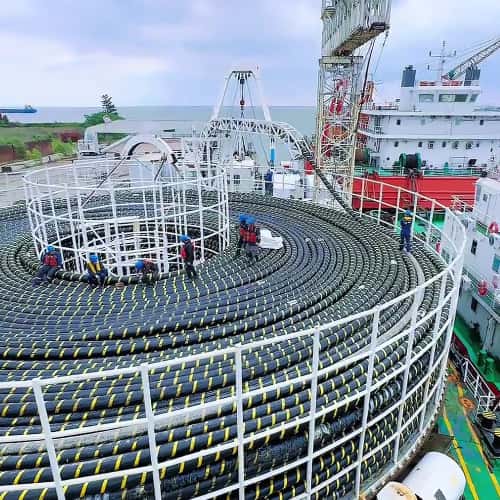
Design and engineering: the basis of all submarine projects
A professional submarine cable manufacturer begins with a detailed project analysis. Before producing, the technical team evaluates:
- Voltage level (15kV, 33kV, 66kV, 132kV, 220kV, 400kV o HVDC)
- Transmission distance
- Sea depth
- Geological conditions
- Thermal and mechanical requirements
Posteriorly, the electrical and mechanical design of the cable is developed. This design should ensure stable performance for more than 25 o 30 years under extreme conditions.
Compliance with international standards
A serious manufacturer works under recognized standards such as:
- IEC
- IEEE
These standards establish requirements on:
- Insulation thickness
- Dielectric tests
- Mechanical tests
- Verification procedures
Without proper certifications, cable cannot compete in international projects.
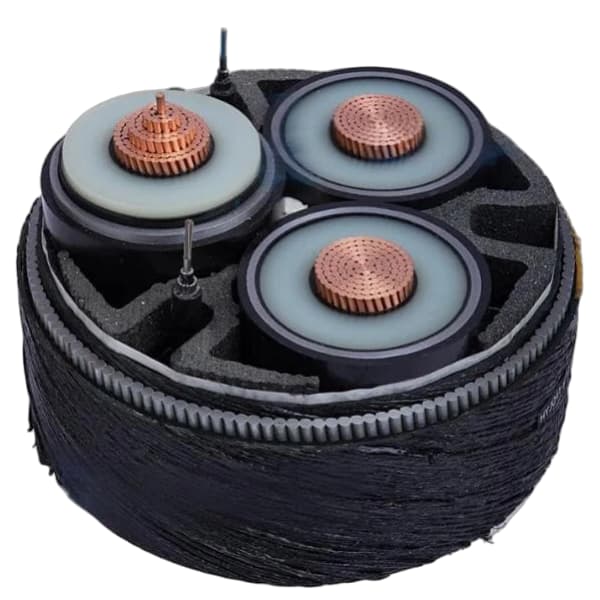
Materials selection: quality that makes the difference
The durability of the submarine cable depends directly on its components.
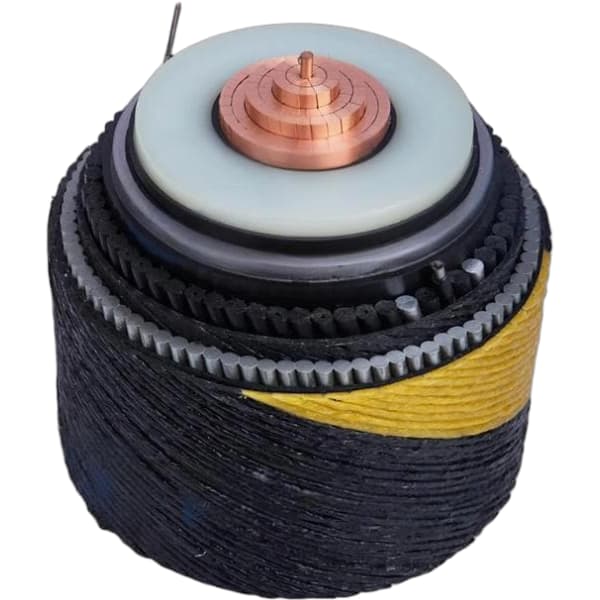
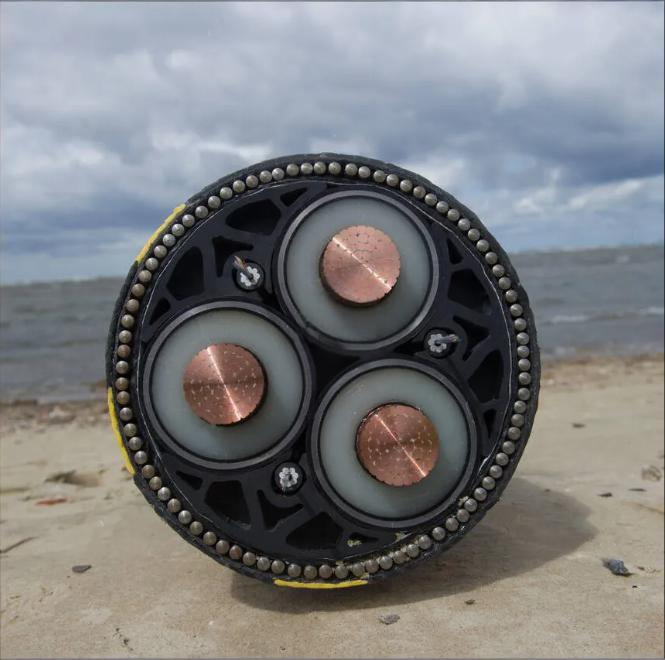
electrical conductors
Professional manufacturers use:
- High purity electrolytic copper
- Low resistance technical aluminum
Sections may vary between 50 mm² y 2500 mm², depending on the required current capacity.
Insulation systems
The most common insulation is XLPE (cross-linked polyethylene), due to its excellent thermal and electrical behavior. In specific applications, EPR can also be used.
Armor and external protection
To withstand harsh marine conditions, the cable includes:
- Galvanized steel armor
- Anti-corrosion protection
- Impact resistant outer coating
This allows it to withstand hydrostatic pressure, sea currents and possible mechanical damage.
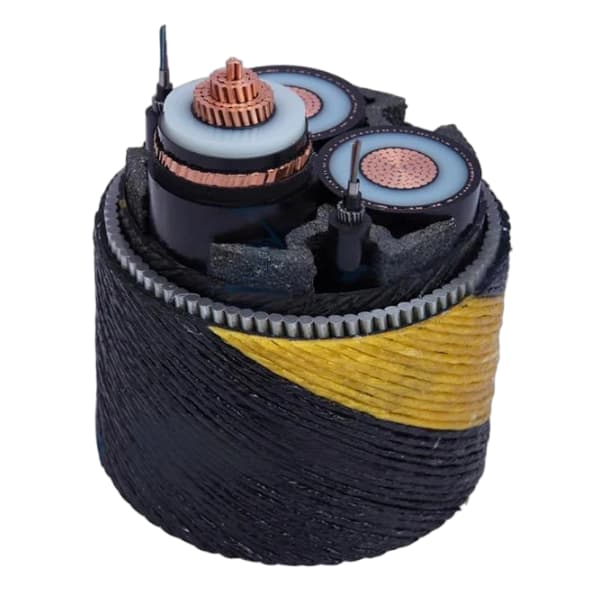
Specialized manufacturing process
Submarine cable manufacturing requires advanced technology and large-scale production lines.
Driver wiring
The conductor is first compacted to ensure low electrical resistance and good flexibility.
Insulation extrusion
The insulation is applied through triple extrusion processes under strict cleanliness and controlled temperature conditions..
Curing and cross-linking
Continuous vulcanization process ensures uniform cross-linking of XLPE, which improves thermal resistance.
Application of metal screens
These layers control the electric field and increase the security of the system.
Armor Installation
Finally, One or two layers of steel are applied depending on the depth of the project.
Each stage is monitored by digital systems to guarantee exact tolerances.
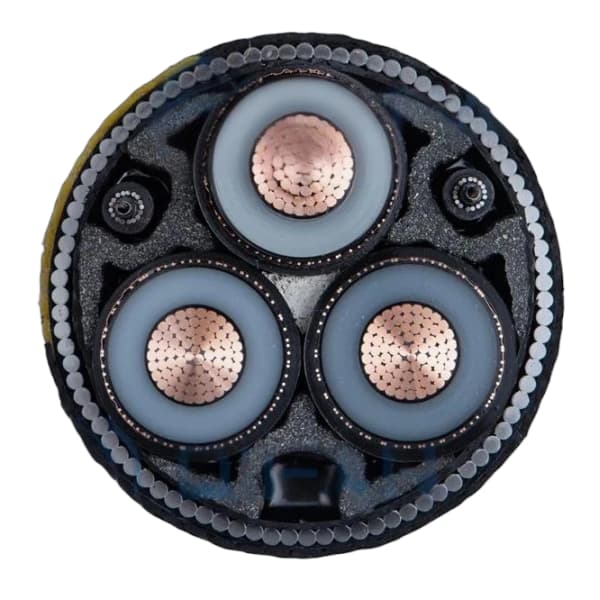
Testing and quality control
A professional submarine cable manufacturer not only produces; also performs rigorous testing.
Routine tests
- Conductor resistance measurement
- Electrical voltage tests
- Partial discharge control
type tests
Include:
- Lightning impulse test
- Long thermal cycles
- Mechanical tensile tests
These tests follow international standards defined by IEC.
Industrial capacity and large-scale production
Offshore projects require continuous lengths of tens or hundreds of kilometers. Therefore, a professional manufacturer must have:
- High Rise Vertical Lines
- Facilities near ports
- Equipment for direct loading on specialized vessels
Global companies like:
- Prysmian Group
- Nexans
- NKT
have developed coastal plants to optimize logistics and delivery.
Solutions adapted to each application
Each underwater project presents different challenges.
For example:
- In offshore wind energy, flexible inter-array cables required.
- In international interconnections, HVAC or HVDC systems are implemented.
- In supply to islands, Mechanical resistance and long-term reliability are prioritized.
A professional manufacturer adapts the design according to each scenario.
Technical support and accompaniment
Beyond manufacturing, a professional supplier offers:
- Detailed thermal calculation
- Current capacity studies
- Bidding assistance
- Complete technical documentation
This support reduces risks and increases customer confidence.
Offshore logistics and installation
Installation is a critical phase. For this reason, the manufacturer collaborates with:
- marine engineers
- Submarine laying companies
- Specialized vessels
Besides, can arrange post-installation testing to ensure optimal performance.
Innovation and sustainability
The energy market demands increasingly sustainable solutions. Therefore, modern manufacturers invest in:
- Energy efficient production processes
- Recyclable materials
- Carbon footprint reduction
Global energy transition drives demand for submarine cables for renewable energy, especially in Europe and Latin America.
International experience and reputation
Finally, a true professional submarine cable manufacturer demonstrates:
- proven experience
- ISO Certifications
- Contractual compliance
- References of executed projects
Experience reduces uncertainty and increases system reliability.
Professional submarine cable manufacturer
And Professional submarine cable manufacturer It is much more than an industrial producer. It is a strategic partner in energy infrastructure and electrical transmission projects under the sea..
From initial design to final installation, each stage requires technical precision, regulatory compliance and international experience. Consequently, when choosing a manufacturer, not only the price should be considered, but also the technical capacity, the offshore experience and comprehensive support offered.
Ultimately, The success of any submarine project depends directly on the manufacturer behind the cable..