
He submarine cable is a critical telecommunications and energy infrastructure that is installed on the seabed to enable data transmission, electrical signals or power between continents, islands and countries separated by oceans, seas or large bodies of water. Although many people associate the Internet exclusively with satellites or wireless networks, the reality is that more than 95 % of international data traffic travels through submarine fiber optic cables.
This offers a complete explanation, clear and deep about what a submarine cable is, how it works, what are its types, applications, advantages, installation process, maintenance, useful life and its strategic importance in the global digital economy. Related terms and synonyms such as submarine fiber optic cable, ocean cable, cable marino, underwater cable y submarine cable system.

Definition of submarine cable
And submarine cable It is a cable specially designed to be laid underwater, usually on the seabed, with the aim of transporting information (data, voice, video) or electrical power over long distances. These cables are made with multiple layers of protection to resist water pressure, salt corrosion, sea currents and possible mechanical damage.
There are two main categories:
- Submarine telecommunications cables, mainly fiber optic.
- Submarine power cables, used to transport electricity between territories.
In the context of the Internet and telecommunications, when talking about submarine cable, reference is almost always made to submarine fiber optic cable.
History and evolution of submarine cables
The history of the submarine cable dates back to the 19th century. The first submarine telegraph cable was installed in 1850 between France and England. Shortly after, in 1858, the first one was laid transatlantic cable, allowing for the first time almost instantaneous communication between Europe and America.
With the passage of time, technology evolved:
- 19th century: copper telegraph cables.
- 20th century: coaxial cables for international telephony.
- End of the 20th century until today: submarine fiber optic cables with massive data transmission capabilities.
At the moment, submarine cable systems can carry terabits per second, connecting data centers, countries and continents with very high reliability.
How does a submarine fiber optic cable work??
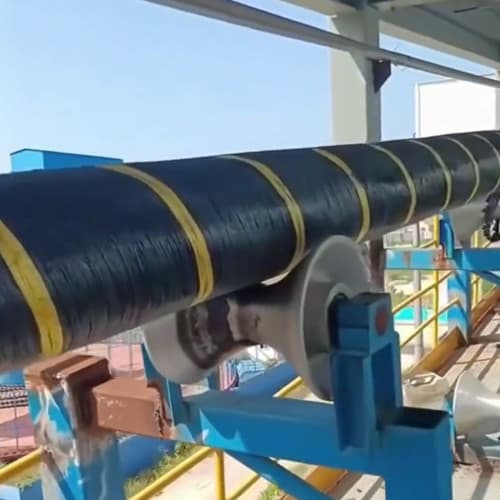
And submarine fiber optic cable transmits information in the form of pulses of light through extremely fine glass fibers. These fibers allow very fast transmission, stable and with minimal losses.
Main components
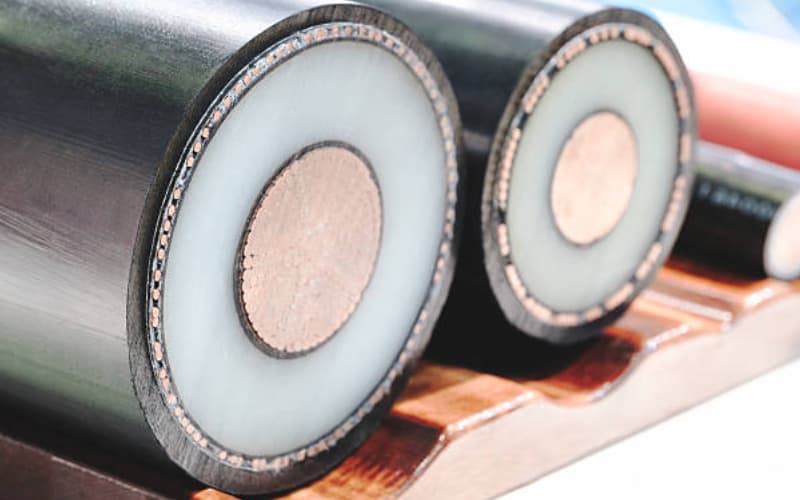
A typical submarine cable is composed of:
- Optical fibers: the core of the system, where the data travels.
- Protective coating: protects fibers from physical damage.
- metallic conductors: supply power to repeaters.
- Isolation: prevents water entry.
- steel armor: protects against impacts, anchors and fishing activity.
Submarine repeaters
Every certain number of kilometers (usually between 50 y 100 km), are installed underwater optical repeaters. These devices amplify the light signal so that it can travel thousands of kilometers without degrading.
Types of submarine cable
1. Submarine telecommunications cable
It is the most common and the most important for the global Internet. It is used for:
- International Internet Traffic.
- long distance telephony.
- Transmission of financial data.
- Video streaming and cloud services.
It is also known as:
- Submarine fiber optic cable.
- Ocean Data Cable.
- Marine telecommunications cable.
2. submarine power cable
This type of submarine electrical cable It is used to transport electricity between:
- Islands and the mainland.
- Offshore and onshore wind farms.
- Neighboring countries separated by sea.
It can be alternating current (AC) or direct current (HVDC).
Where are submarine cables installed??
Los ocean submarine cables They cover practically all the seas and oceans of the world. There are strategic routes that connect:
- North America with Europe.
- America with Asia.
- Europe with Africa.
- Asia with Oceania.
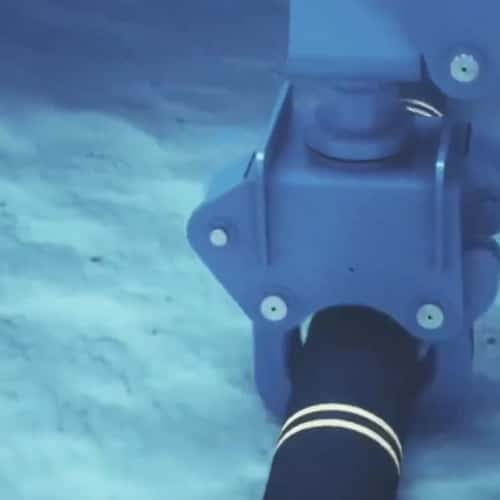
In areas near the coast, Cables are often buried under the seabed for added protection. In deep water, are placed directly on the background.
Installation process of a submarine cable
The installation of a submarine cable system It is a complex and highly specialized process.
Main stages
- Study of the seabed: geological and environmental analysis.
- Route design: volcanic areas are avoided, tectonic faults and heavy traffic areas.
- Cable manufacturing: in specialized factories.
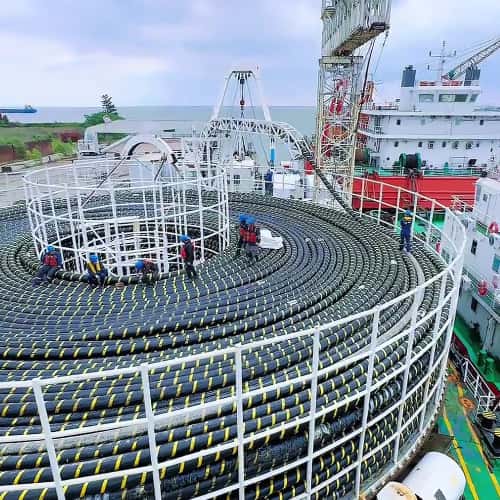
- Cable laying: by cable ships.
- Buried and protection: in coastal areas.
- Testing and commissioning.
A single project can take several years from planning to commercial operation.
Maintenance and repair
Despite its robustness, Submarine cables can be damaged due to:
- ship anchors.
- fishing nets.
- Underwater earthquakes.
- Seabed landslides.
When a failure occurs, is sent a submarine cable repair ship that locates the exact point, recover the cable, repair it and put it back.
Lifespan of a submarine cable
The average useful life of a submarine fiber optic cable is from 20 a 25 years. However, many systems continue to operate longer thanks to technological updates in terminal equipment.
Strategic importance of the submarine cable
The submarine cable is a critical infrastructure for:
- The global digital economy.
- international trade.
- financial markets.
- Government communications.
- The technological sovereignty of countries.
An interruption in a marine cable can affect millions of people and cause great economic losses.
Submarine cable vs satellite
Although satellites play an important role, he submarine telecommunications cable offers clear advantages:
- Lower latency.
- Greater transmission capacity.
- Lower cost per bit.
- Greater stability.
For this reason, satellites usually complement, but not replace, to submarine cables.

Major players in the submarine cable industry
Currently, large technology companies and telecommunications operators invest in submarine cables, between them:
- International telecommunications operators.
- Country consortia.
- Technology and cloud services companies.
This reflects the growing demand for high-speed global connectivity.
Future of the submarine cable
The future of submarine fiber optic cable is marked by:
- Greater capacity per fiber.
- New intercontinental routes.
- Integration with underwater data centers.
- Security and monitoring improvements.
As data traffic increases, artificial intelligence and the internet of things, submarine cables will continue to be the backbone of global connectivity.
submarine cable
He submarine cable It is much more than a simple cable under the sea: It is an essential infrastructure that sustains the Internet, global communications and the modern digital economy. Thanks to advances in fiber optics and submarine cable systems, Today it is possible to communicate in real time between continents.
Understand what a submarine cable is, How it works and why it is so important allows us to value one of the most invisible but most decisive technologies in the modern world.. Without the submarine cables, global connectivity as we know it simply would not exist.
To obtain information about the submarine cable manufacturers, contact us.