
The submarine optical fiber It is the infrastructure that allows the Internet to function on a global scale. Although many people imagine satellites when they think of international communications, actually more than 95% of data traffic between continents travels through cables installed on the bottom of the sea.
These cables connect countries, entire regions and continents, transporting enormous amounts of information at high speed. thanks to them, today it is possible to make video calls, access cloud services or watch streaming content from anywhere in the world.
In we will explain clearly and in detail what underwater fiber optics is., how it works, how it is installed and why it is so important in today's digital economy.
What is underwater fiber optics?
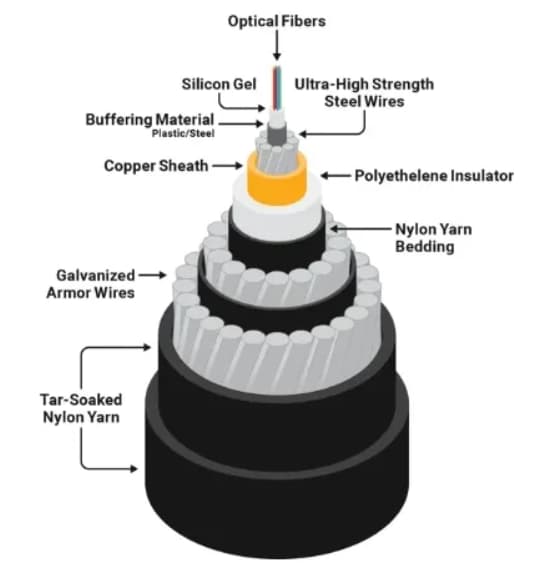
Submarine optical fiber is a type of cable specifically designed to transmit data over long distances underwater.. It is composed of extremely fine glass fibers that transmit signals in the form of light..
Unlike ground cables, These cables must withstand much more demanding conditions, as:
- High pressure at great depths
- Corrosive environments
- Seabed movements
- Risks of damage from anchors or fishing activities
Therefore, Its design includes multiple layers of protection that guarantee its durability for decades.
How does underwater fiber optics work??
The operating principle is relatively simple. The information is converted into pulses of light that travel through optical fibers.
Data transmission by light
inside the wire, Optical fibers transmit light signals generated by lasers. These signals represent digital data (ones and zeros). Thanks to total internal reflection, light can travel long distances with very little loss.
Use of underwater repeaters
However, the signal weakens with distance. For this reason, Underwater systems include devices called repeaters or optical amplifiers.
- They are installed every 50 a 100 km approximately
- They strengthen the signal without the need to convert it into electricity
- They work automatically and continuously
In this way, data can travel thousands of kilometers without interruption.
Structure of a submarine cable
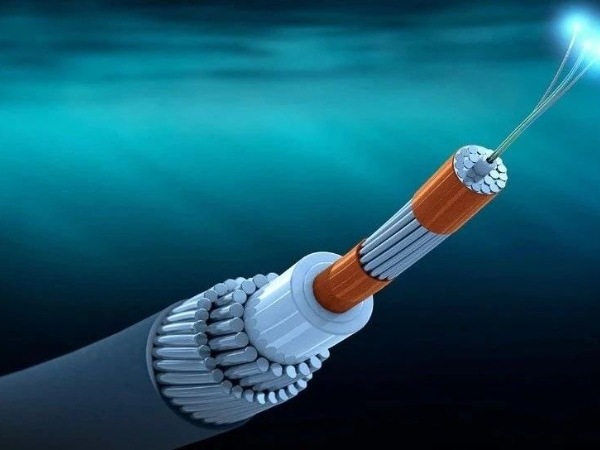
Although on the outside it looks like a thick cable, actually has a complex structure designed to withstand the marine environment.
Main components
A typical cable includes:
- Optical fiber core
- Stainless steel protective tube
- Waterproof gel coat
- Copper conductors for electrical power
- steel armor (in shallow areas)
- Polyethylene outer cover
Each layer performs a specific function, from data transmission to mechanical protection.
Differences depending on depth
- In deep water: the cable is lighter
- In coastal areas: additional armor is added to prevent damage
For example, near the coast the risk of impact is greater, so the cable is more robust.
How is underwater fiber optic installed??
Installing these cables is a highly specialized operation that requires detailed planning and advanced equipment..
Study of the seabed
Before installation, Engineers conduct geological and oceanographic studies to determine the best route. Areas with seismic activity or unstable bottoms are avoided.
Use of cable ships
The cables are transported on large ships specifically designed for this work.. During the installation:
- The cable is carefully unwound
- It is deposited on the seabed
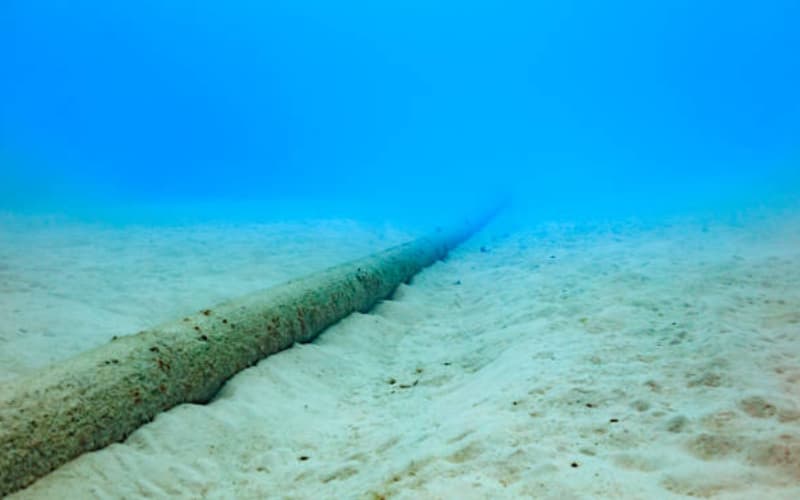
- In shallow areas, buried under the seabed
This process can take weeks or even months..
Importance of underwater fiber optics
Underwater fiber optics are essential to the functioning of the modern world.
Global connectivity
Allows instant communication between continents. Without these cables, Internet would be much slower and unstable.
Support for the digital economy
Services like:
- e-commerce
- Streaming platforms
- Social networks
- Cloud computing
They depend directly on this infrastructure.
Security and stability
Although there are satellites, submarine cables offer greater capacity, lower latency and greater stability.
Advantages over other technologies
Greater transmission capacity
Underwater cables can transport huge volumes of data at the same time.
Low latency
Fiber optic transmission is much faster than satellite communication.
Greater reliability
Despite being under the sea, These cables have a useful life of 20 a 25 years and have low failure rates.
Risks and challenges
Although they are very reliable, submarine cables are not risk-free.
Physical damage
The main causes of damage include:
- ship anchors
- fishing nets
- Submarine landslides
Complex repair
When a failure occurs:
- The exact point of damage is located
- A specialized ship is sent
- The cable is recovered and repaired
This process can be expensive and take several days..
Future of underwater fiber optics
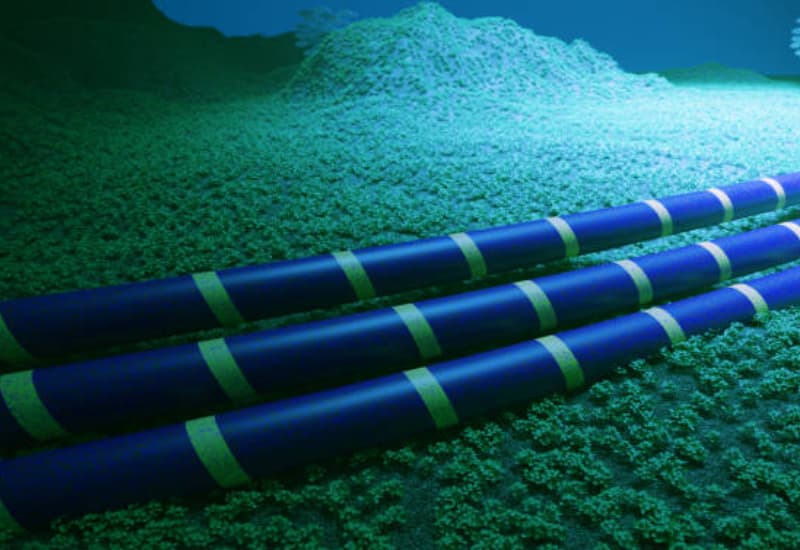
With the constant growth of data traffic, demand for submarine cables continues to increase.
New technologies
Cables are being developed with:
- Greater transmission capacity
- Better energy efficiency
- Greater resistance
Global expansion
Technology companies and operators continue to invest in new routes to improve global connectivity.
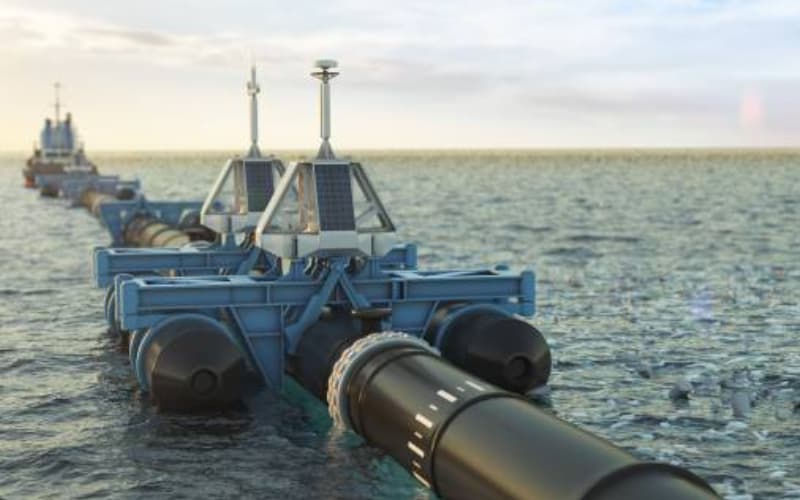
Submarine optical fiber
Underwater fiber optics are one of the most important infrastructures in the modern world., although it often goes unnoticed. Thanks to these cables, millions of people can communicate, work and access information in real time.
Ultimately, without underwater fiber optics, The Internet as we know it would not exist. For this reason, Its development and maintenance will continue to be key to the future of global connectivity.
If you are looking for a submarine fiber optic cable manufacturer, contact me.