
The expansion of underground electrical networks and the modernization of substations are increasing the demand for compact high voltage solutions, safe and reliable. In this context, he GIS Terminal for Cable 138 kV It is an essential component for connecting high voltage cables with GIS equipment and ensuring stable electrical transmission throughout the life of the installation.
The systems 138 kV are widely used in electrical transmission and subtransmission networks, especially in North America and other markets where this level of voltage is part of the electrical infrastructure. To connect a cable 138 kV with a gas insulated substation, a terminal specifically designed to control the electric field is needed, withstand thermal and mechanical stresses and maintain insulation integrity.
And Terminal GIS 138 kV high quality must be compatible with XLPE cables of different sections, metal screen configurations and different GIS interfaces. For this reason, the selection of the manufacturer and the correct coordination between the cable, The terminal and GIS equipment are fundamental factors to guarantee the security of the system.

What is a GIS Terminal for Cable 138 kV?
He GIS Terminal for Cable 138 kV is a high voltage accessory used to make the connection between a power cable 138 kV and a GIS system, known as gas insulated switchgear system.
In a high voltage installation, The connection point between the cable and the GIS requires a carefully controlled electrical and mechanical design. The terminal must provide a safe transition between the cable insulation system and the GIS equipment insulation system.
On high voltage cables with XLPE insulation, the distribution of the electric field is especially important. When the semiconductor screen ends inside the terminal, the distribution of the electric field changes. If this transition is not handled correctly, field concentrations may appear that increase the risk of partial discharges and premature aging of the insulation.
For this reason, and cable terminal 138 kV incorporates an electric field control system designed to distribute the potential evenly.
In addition to the electrical function, the terminal must provide a stable mechanical connection, withstand forces produced during operation and maintain a reliable connection to the GIS interface.
Why is the GIS Terminal important? 138 kV?
In a high voltage electrical system, the wire, The terminal and the GIS work as a single system. Although the cable 138 kV has excellent electrical properties, An incorrectly designed termination can become a weak point of the entire installation.
He Terminal GIS 138 kV performs several fundamental functions:
- Connect the cable conductor with the GIS.
- Control the electric field at the termination.
- Maintain a high insulation capacity.
- Reduce the risk of partial discharges.
- Ensure a stable electrical connection.
- Withstand thermal stress during operation.
- Withstand short circuit currents according to project requirements.
- Provide a secure mechanical connection.
- Maintain system reliability over long periods of operation.
The quality of the terminal has a direct relationship with the reliability of the substation. For this reason, the projects of high tension cable 138 kV require careful selection of termination accessories.
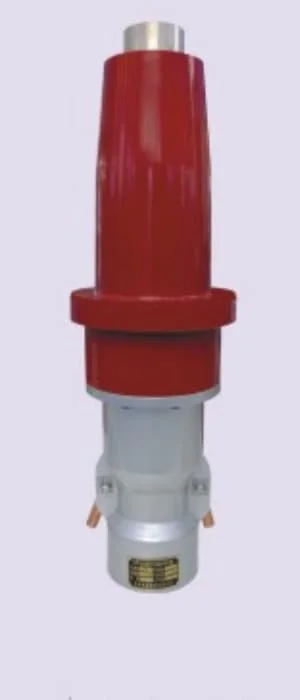
XLPE Cable Compatibility 138 kV
XLPE cables are one of the main solutions used in modern high voltage systems due to their excellent dielectric properties., thermal stability and aging resistance.
And GIS Terminal for XLPE Cable 138 kV should be designed taking into account the actual dimensions of the cable.
Among the main parameters that must be checked are:
| Parameter | Project requirement |
|---|---|
| System voltage | 138 kV |
| Insulation type | XLPE |
| Driver material | It covers the aluminum |
| Driver section | According to design |
| Driver diameter | according to cable |
| Insulation thickness | According to specification |
| Diameter over insulation | according to cable |
| Semiconductor screen | According to manufacturer's design |
| Metal screen | Copper, aluminum or other configuration |
| External cover | According to installation conditions |
| GIS interface | According to GIS manufacturer |
There is no single universal dimension for all cables. 138 kV. Two cables with the same nominal voltage can have different diameters, conductor sections, insulation thicknesses and screen structures.
For this reason, he Cable Terminal 138 kV should be selected according to the specific parameters of the cable and GIS interface.
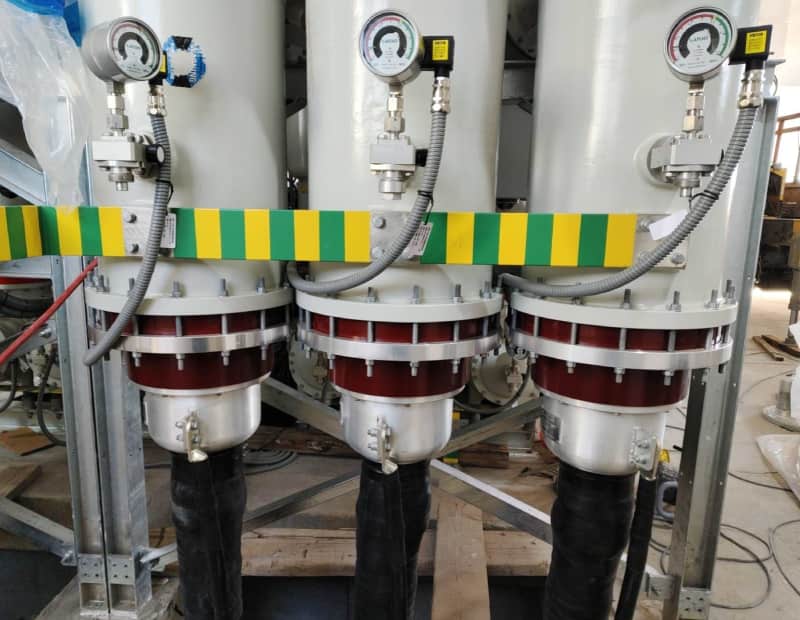
Control of the electric field in a GIS Terminal for Cable 138 kV
Control of the electric field is one of the most important aspects of a GIS Terminal 138 kV.
On a high tension cable, The electric field is mainly concentrated around the conductor. XLPE insulation is designed to withstand this field for long periods of operation. However, when the external semiconductor screen ends, the distribution of the field changes considerably.
The terminal uses a specially designed geometry to control this transition.
The objective is to reduce local concentrations of electric field and achieve a progressive distribution of the potential. Good design can reduce the risk of partial discharge and improve insulation stability.
The components used for field control must have stable electrical and mechanical properties.. Besides, Manufacturing must maintain appropriate dimensional tolerances to ensure that the electrical behavior anticipated during design is reproduced in the final product.
For a GIS Terminal for Cable 138 kV, the control of the electric field should not be considered an independent element. Must be integrated with cable design, terminal geometry and GIS interface.
Structure of a GIS Terminal 138 kV
Although the exact structure depends on the manufacturer and the project design, A high voltage GIS terminal normally includes different elements intended to fulfill specific electrical and mechanical functions..
The conductor connection system allows a low resistance electrical connection to be established between the cable conductor and the GIS contact.
The isolation zone provides the electrical separation necessary to withstand the specified operating voltage and surges..
The electric field control system allows the field to be distributed evenly around the insulation termination.
The connection of the metal screen allows establishing the corresponding grounding system and controlling the induced currents.
There are also mechanical components intended to guarantee the fixation of the assembly and maintain the stability of the connection during operation..
Each component must be designed considering the electrical conditions, thermal and mechanical system 138 kV.
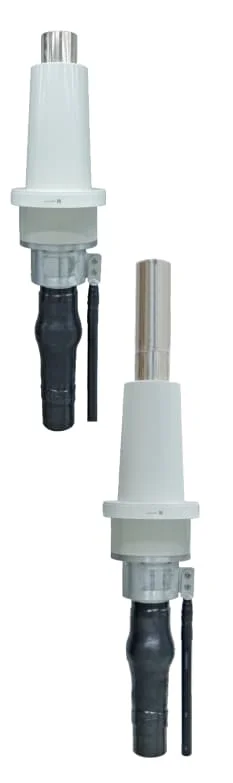
Cable Terminal Applications 138 kV
He GIS Terminal for Cable 138 kV can be used in different types of electrical installations.
One of the main applications is urban substations. In densely populated areas, The use of underground cables allows us to reduce the limitations associated with overhead lines and make better use of the available space..
It can also be used in industrial substations where a compact and reliable high voltage connection is required..
Power plants are another important application. Generation facilities need to evacuate large amounts of energy to the grid. Depending on the plant and substation configuration, the cables of 138 kV can be used to connect different parts of the system.
Besides, Renewable energy projects may require high-voltage cables to transport the generated electricity to a transmission substation.
In all these projects, he Terminal GIS 138 kV Allows for a compact connection between cable and GIS equipment.
Advantages of a GIS Substation 138 kV
GIS substations have important advantages in certain high voltage applications.
One of the main ones is the small space required.. When using a gas insulated system, equipment can be installed in more compact spaces than certain conventional configurations.
This feature is especially useful in urban areas, industrial facilities and projects where available land is limited.
Another advantage is the protection of internal components against certain environmental conditions.. GIS system provides a controlled environment for switching and isolation components.
When combined with a cable 138 kV, The system can form a compact solution for power transmission and distribution in areas where overhead lines are not suitable.
However, the connection between the cable and the GIS must be carefully designed. The terminal is the element that allows this transition to be carried out while maintaining the necessary electrical and mechanical properties..
Testing a GIS Terminal for Cable 138 kV
Electrical and mechanical tests are essential to verify the quality of high voltage terminals.
Depending on project specifications and applicable standards, different tests can be performed.
One of the most important tests is the measurement of partial discharges. This test allows us to detect possible defects or irregularities within the insulation system..
Withstand voltage tests can also be carried out to check the terminal's capacity against high electrical stresses..
Insulation tests allow the dielectric properties of the assembly to be verified., while dimensional inspections allow us to verify that the product characteristics correspond to the approved design.
Besides, tests related to tightness can be carried out, mechanical resistance, electrical connection and thermal behavior when required by project specifications.
The exact test values must be established according to the applicable standard, Customer specification and GIS system features.
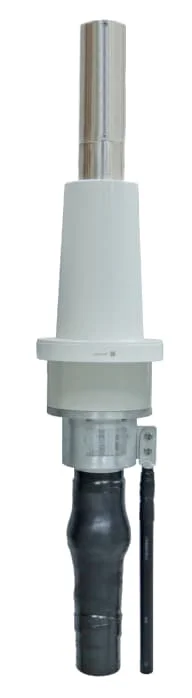
GIS Terminal Installation 138 kV
The installation of a GIS Terminal for Cable 138 kV requires precise technical procedures.
Preparing the end of the cable is one of the most delicate stages. Cable layers must be removed with proper tools and dimensions to avoid damage to the XLPE insulation.
The insulation surface must be kept clean and free of moisture., dust and polluting particles. Even small particles in a critical zone of the insulation can affect the electrical behavior of a high-voltage termination..
Special attention should also be paid to the preparation of the semiconductor screen. Treatment of this area must be carried out following the manufacturer's specific instructions..
During assembly, it is necessary to control the tightening torque of the connections and verify the position of the different components.
Once the installation is finished, Appropriate inspections and tests must be carried out before placing the system into service.
How to select a manufacturer of GIS Terminal for Cable 138 kV
Manufacturer selection is an important factor for any high voltage cable project.
A specialized supplier must have experience in XLPE cables, high voltage accessories, GIS terminations and electric field control.
Before placing an order, Customer should provide sufficient technical information about cable and GIS. This information allows the manufacturer to verify the compatibility of the terminal.
Among the aspects that should be evaluated are:
- Experience in projects 138 kV.
- High Voltage Accessories Design Capability.
- Experience with XLPE cables.
- Ability to adapt the terminal to different conductor sections.
- Compatibility with different GIS interfaces.
- Ability to perform electrical tests.
- Quality control during manufacturing.
- Material traceability.
- Complete technical documentation.
- Installation assistance service.
The manufacturer's experience is especially important when the project requires a GIS Terminal for Cable 138 custom kV.
GIS Terminal for Cable 138 kV for international projects
The demand for underground high voltage cables is growing in different international markets. The expansion of cities, The modernization of electrical networks and the integration of new generation sources are driving new transmission projects.
In this context, the systems of 138 kV represent an important opportunity for manufacturers of high voltage cables and accessories.
International projects may present different technical requirements. The design of Terminal GIS 138 kV must adapt to the characteristics of the cable, GIS specifications, environmental conditions and power company requirements.
For projects in North America, For example, It is especially important to review the client's technical specifications and applicable standards before selecting the final design..
Prior technical coordination allows you to avoid compatibility problems and reduce risks during installation.
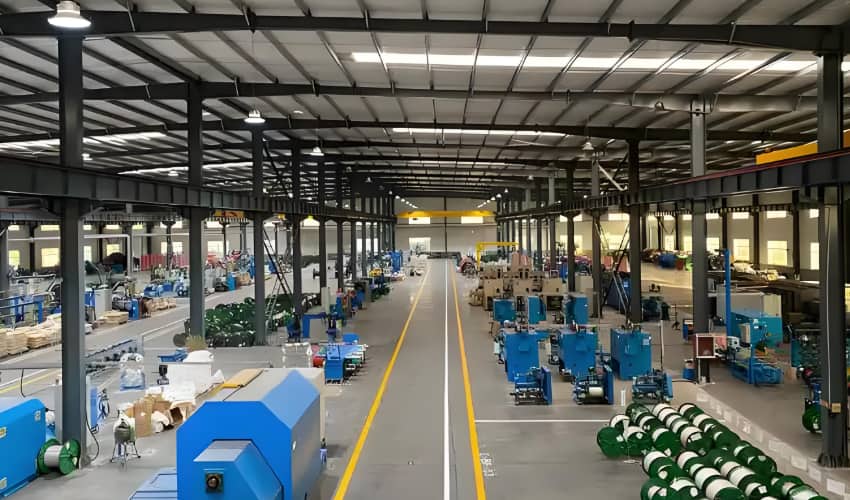
Dosense Cable: solutions for systems 138 kV
Dosense Cable offers solutions for electrical cables and accessories for power transmission and distribution projects.
For a project that requires a GIS Terminal for Cable 138 kV, coordination between the cable, GIS accessory and equipment is essential.
The technical team can evaluate parameters such as the conductor section, the diameter of the cable, XLPE insulation thickness, metal screen configuration and GIS interface characteristics to determine appropriate configuration.
A solution of Terminal for High Voltage Cable 138 kV It must be designed considering the entire system and not only the voltage level.
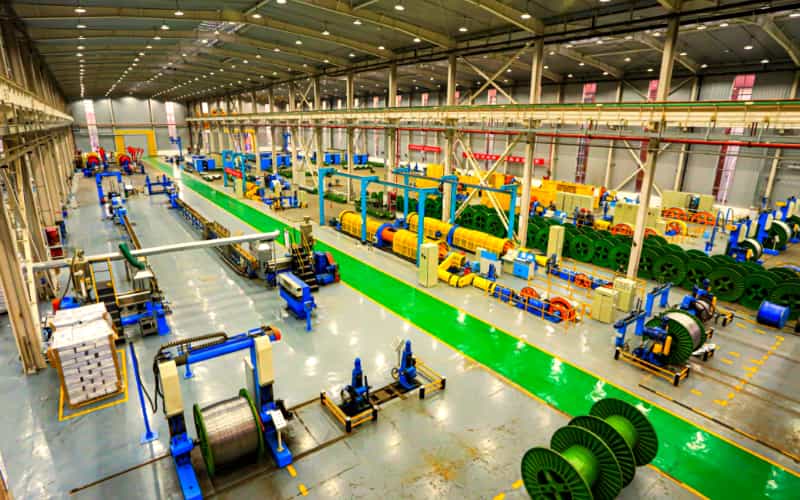
The integration between engineering, manufacturing and quality control allows us to offer solutions adapted to different international projects.
GIS Terminal Request for Cable 138 kV
To correctly select a GIS Terminal for Cable 138 kV, It is advisable to provide the manufacturer with the complete technical sheet of the cable and the GIS..
The main data required includes the nominal voltage, conductor section and material, diameter over insulation, metal screen structure, operating current, short circuit current, GIS type and interface dimensions.
With this information, The manufacturer can evaluate compatibility and develop a suitable solution for the project.
A properly selected GIS terminal can improve connection reliability, facilitate installation and contribute to a long useful life of the electrical system.
For projects of 138 kV Cable, GIS substations, High voltage XLPE cables and underground transmission systems, Having a specialized manufacturer allows you to obtain a safer technical solution, stable and adapted to the real needs of the installation.