
The expansion of modern electrical networks requires transmission systems capable of transporting large amounts of energy with the highest level of security, stability and efficiency. In this context, the systems of 345 kV They represent one of the most used voltage levels in energy transmission projects in North America and in various Latin American countries.. To ensure a secure connection between power cables and GIS substations, he GIS Terminal for Cable 345 kV plays a fundamental role, providing excellent electrical insulation, optimal control of the electric field and high operational reliability. Thanks to these features, This solution is widely used to supply large cities, industrial parks, data centers, mining facilities, power plants and other critical infrastructure where continuity of supply is essential.
For a cable system 345 kV operate safely for decades, It is not enough to have a high quality XLPE cable. Accessories play an equally important role, especially the GIS Terminal for Cable 345 kV, responsible for connecting underground cable with GIS equipment (Gas Insulated Switchgear) maintaining electrical continuity, isolation and control of the electric field.
In Dosense Cable, we develop comprehensive solutions for extra high voltage transmission systems, including XLPE cables, GIS splices and terminals designed to meet the requirements of the most demanding projects. Our products are designed to offer a long useful life, High reliability and excellent performance even in harsh environmental conditions.

What is a GIS Terminal for Cable 345 kV?
And GIS Terminal for Cable 345 kV is a high voltage accessory designed to connect an XLPE power cable of 345 kV with a GIS substation. Its main mission is to safely transfer energy between the cable and the gas-insulated switching equipment., avoiding concentrations of the electric field and guaranteeing reliable insulation throughout the useful life of the system.
Unlike a conventional termination for AIS substations, The GIS terminal works connected to completely encapsulated equipment, normally insulated with SF₆ gas or with new gases with lower environmental impact used by some manufacturers.
Thanks to this compact design, GIS substations require less space, They offer greater protection against environmental contamination and considerably reduce maintenance needs.
Why do networks 345 kV use GIS terminals?
The transmission lines of 345 kV carry enormous amounts of electrical energy. A small partial discharge or an excessive concentration of the electric field can affect the reliability of the entire system.
The GIS terminal is designed to solve these challenges through a combination of advanced insulating materials and optimized electric field control design..
Among its main functions are::
- Connect the cable conductor to the GIS equipment.
- Control the distribution of the electric field.
- Maintain insulation between conductor and ground.
- Avoid partial downloads.
- Withstand atmospheric and switching surges.
- Resist thermal and mechanical stress.
- Ensure decades of continuous operation.
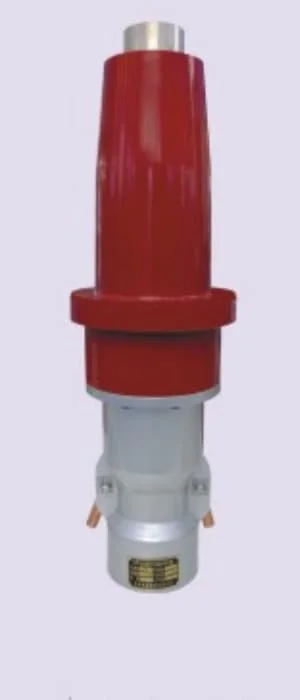
Applications of the GIS Terminal for Cable 345 kV
The GIS terminals of 345 kV are used in a wide variety of high-capacity electrical infrastructure projects.
Among the most common applications are:
- Urban GIS substations.
- National transmission networks.
- Hydroelectric power plants.
- thermal power plants.
- Nuclear power plants.
- High power wind farms.
- Large solar plants.
- Regional interconnections.
- Industrial centers.
- Minas.
- Refineries.
- Petrochemical complexes.
- International airports.
- Data centers.
- Railway infrastructure.
In all these projects, The reliability of the terminal is essential to guarantee a continuous electricity supply.

Main components of the GIS Terminal 345 kV
Although each manufacturer develops its own solutions, a GIS terminal for 345 kV usually incorporates various elements designed to work together.
driver connector
Establishes a secure electrical bond between the cable conductor and the GIS equipment, minimizing contact resistance and avoiding overheating.
Electrical stress relief cone
It is one of the most important components of the terminal.
Its function is to uniformly distribute the electric field, avoiding concentrations that could produce partial discharges.
main insulator
Normally manufactured with materials with high dielectric performance, Provides the insulation necessary to withstand the service voltage.
Sealing system
Prevents moisture from entering, dust and external contaminants, factors that can reduce the useful life of the accessory.
Metal screen
It allows maintaining a correct distribution of the electrical potential and improves the electromagnetic compatibility of the assembly.
Flanges and connection accessories
Ensure precise installation and reliable mechanical connection to GIS equipment.
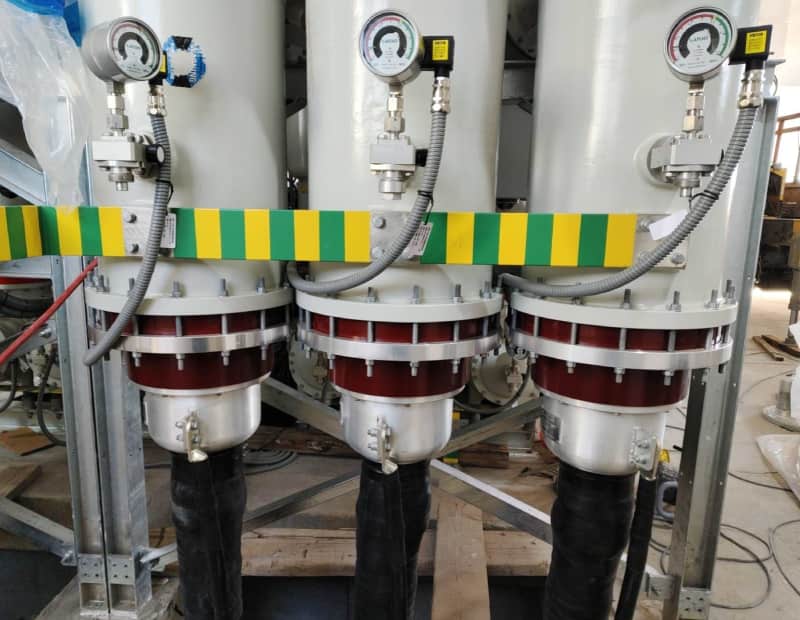
Advantages of using a GIS Terminal for XLPE Cable 345 kV
The use of a modern GIS terminal provides numerous advantages over conventional solutions.
High reliability
Optimized design significantly reduces the risk of partial discharge and dielectric failure.
Excellent control of the electric field
Semiconductor materials and relief cones ensure uniform electric field distribution.
Less maintenance
When working within fully encapsulated GIS equipment, The terminal remains protected against rain, dust, saline pollution and aggressive industrial environments.
Long lifespan
With proper design and professional installation, a system can operate for more than thirty years.
Security
GIS equipment significantly reduces the risk of accidental contact and improves the safety of operating personnel.
Compact design
GIS substations take up much less space than AIS installations, an especially important advantage in urban areas.
Compatibility with XLPE cables 345 kV
Current GIS terminals are designed to work with state-of-the-art XLPE insulated cables.
Advantages of XLPE include:
- Excellent dielectric strength.
- Low dielectric constant.
- High thermal resistance.
- Great chemical stability.
- Excellent behavior against aging.
- Low dielectric loss.
- Excellent moisture resistance.
Thanks to these properties, XLPE has become the predominant material for extra high voltage transmission systems.
Reliability-oriented design
In systems of 345 kV, Even a small imperfection can lead to a major failure.. For this reason, The design of a GIS Terminal must consider multiple technical aspects, as the uniform distribution of the electric field, compatibility between materials, resistance to thermal cycles, mechanical stability during short circuits and tightness against humidity.
In Dosense Cable, Each solution is developed with the goal of offering stable operation for decades, reducing the risk of outages and helping network operators reduce maintenance and operation costs.
The combination of engineering, selection of high quality materials and strict manufacturing controls allows us to supply GIS terminals prepared to meet the demands of the most important transmission projects.
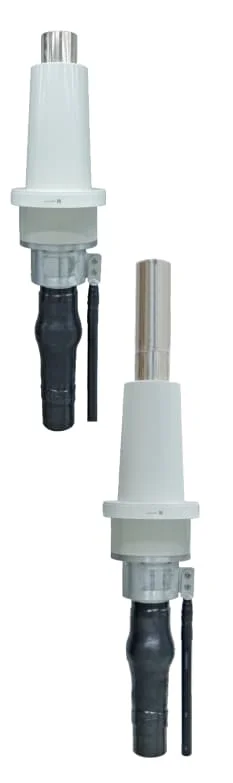
Manufacturing process of a GIS Terminal for Cable 345 kV
The quality of a GIS Terminal for Cable 345 kV It depends on both its design and the precision of its manufacturing process.. In extra high voltage applications, Each component must be manufactured to very tight tolerances to ensure consistent electrical behavior and long life.
In Dosense Cable, the production process is oriented to meet the requirements of the most demanding transmission projects.
Design and engineering
It all starts with the analysis of the electrical and mechanical parameters of the project, including:
- Nominal system voltage.
- Basic insulation level (WAS).
- Rated current.
- short circuit current.
- Conductor type and section.
- XLPE insulation diameter.
- Metal screen type.
- Environmental conditions.
- Installation altitude.
- GIS Equipment Manufacturer Compatibility.
Through finite element simulations (FEM), Engineers optimize electric field distribution to minimize stress concentrations at critical points.
Materials selection
The materials used directly influence the reliability of the terminal.
Among them stand out:
- High performance silicone rubber.
- Electrical Grade EPDM.
- Semiconductor materials.
- High conductivity aluminum and copper alloys.
- Corrosion resistant stainless steel.
- Long-lasting gaskets and sealing systems.
All materials are selected for their thermal stability, aging resistance and excellent dielectric behavior.
Precision manufacturing
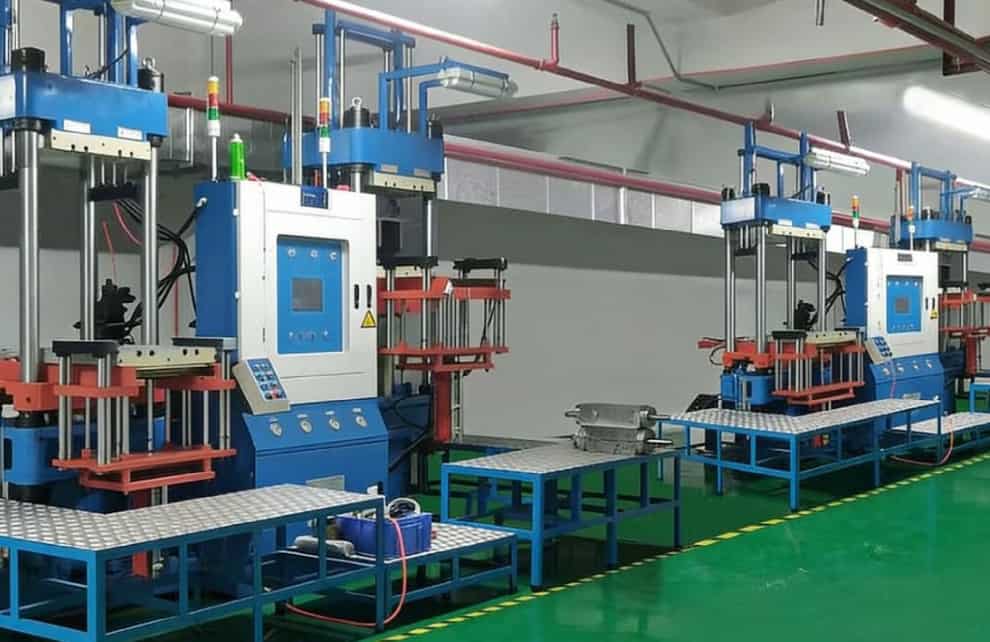
Each component goes through machining processes, molding and assembly under strict quality controls. Dimensional accuracy is essential to ensure reliable electrical contact and uniform electric field distribution.
Tests to guarantee maximum safety
GIS terminals intended for 345 kV must pass rigorous tests before being put into service. These tests verify both the design and manufacturing quality.
The most common tests include:
Partial download test
Detects possible internal defects before they can evolve into a breakdown.
Alternating current withstand voltage test
Checks that the terminal maintains its insulating properties under voltages higher than the service voltages.
Lightning impulse test
Simulates the effect of atmospheric discharges to verify the insulation resistance.
Maneuver impulse test
Evaluates the behavior against overvoltages produced during switching operations.
Thermal cycles
Reproduce years of operation through repeated heating and cooling, verifying the stability of all materials.
Mechanical tests
They check the resistance against vibrations, installation stresses and forces arising from short circuits.
Leakage check
Confirms that the sealing system prevents the entry of moisture and contaminants.
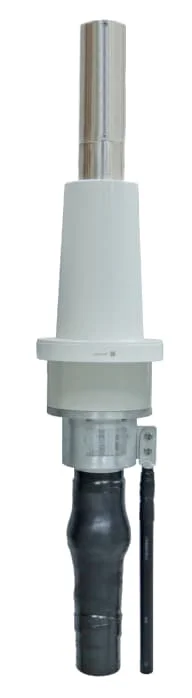
GIS Terminal opposite AIS Terminal
Although both accessories fulfill the same basic function, There are important differences between a GIS terminal and one intended for AIS substations.
| Feature | Terminal GIS | Terminal AIS |
|---|---|---|
| Required space | Very reduced | Mayor |
| Environmental protection | Very high | Depends on the environment |
| Pollution risk | Very low | Higher |
| Maintenance | Reduced | Superior |
| Urban applications | Excellent | Limited |
| Integration with encapsulated equipment | Total | Not applicable |
In urban projects, industrial or where available space is limited, GIS substations represent the preferred solution.
How to choose a manufacturer of GIS Terminal for Cable 345 kV?
Selecting a supplier should not be based solely on price. An extra high voltage terminal is designed to operate for several decades, so technical experience and quality control are decisive factors.
When evaluating a manufacturer, it is worth considering:
- Experience in high and extra high voltage projects.
- Engineering capacity and specialized technical personnel.
- Compatibility with different brands of GIS equipment.
- Availability of type and routine tests.
- Quality management system.
- Stable manufacturing capacity.
- Technical support during installation.
- After-sales service and spare parts availability.
An experienced supplier can significantly contribute to reducing risks during project execution and operation..
Why choose Dosense Cable?
In Dosense Cable, We understand that a transmission system 345 kV requires much more than individual components: you need comprehensive and reliable solutions.
Our offer includes:
- GIS terminals for systems 345 kV.
- Splices for high and extra high voltage XLPE cables.
- Power cables up to EHV levels.
- Technical assistance for international projects.
- Manufacturing under strict quality controls.
- Solutions adapted to the needs of each client.
We work with an approach focused on reliability, safety and durability, providing products designed to operate in demanding conditions for many years.
Frequently asked questions (FAQ)
What function does a GIS Cable Terminal have? 345 kV?
Allows you to connect an XLPE cable 345 kV to a GIS substation, ensuring reliable insulation and correct distribution of the electric field.
Is it compatible with different driver sizes?
Yeah. Depending on the project design, can adapt to different conductor sections and materials.
What is the expected useful life?
With correct installation and maintenance, A GIS terminal can offer a longer lifespan than 30 years.
Can it be used in coastal or industrial areas?
Yeah. Thanks to its encapsulated design and sealing systems, offers excellent resistance to humidity, saline pollution and industrial environments.
What advantages does a GIS substation offer??
Greater reliability, less space occupation, less maintenance and better protection against environmental factors.
Dosense Cable: Your partner for transmission projects 345 kV
The growth of electrical networks requires accessories capable of delivering stable performance for decades. And GIS Terminal for Cable 345 kV not just connect a cable with a GIS equipment; It also guarantees the continuity of the electrical supply, protects infrastructure and contributes to the security of the entire network.
In Dosense Cable, We combine engineering experience, High-precision manufacturing processes and a strong commitment to quality to supply reliable solutions for power transmission projects around the world. Our goal is to help electrical companies, EPC contractors and infrastructure developers to build more secure networks, efficient and future-proof.
If you are looking for a manufacturer of GIS Terminal for Cable 345 kV, our team is prepared to offer technical advice, customized solutions and products designed to meet the highest international standards.