
In modern electrical transmission networks, utilities are constantly looking for ways to increase power capacity without building entirely new infrastructure. One of the most effective technologies developed for this purpose is the Invar conductor, a type of high-performance overhead conductor designed to operate at higher temperatures while maintaining minimal sag.
Compared with traditional conductors such as ACSR (Conduttore in alluminio rinforzato in acciaio), Invar conductors provide superior thermal stability, higher ampacity, and better mechanical reliability. These characteristics make them an essential solution for upgrading existing transmission lines, especially in regions where new line construction is difficult due to environmental or urban constraints.
What Is an Invar Conductor
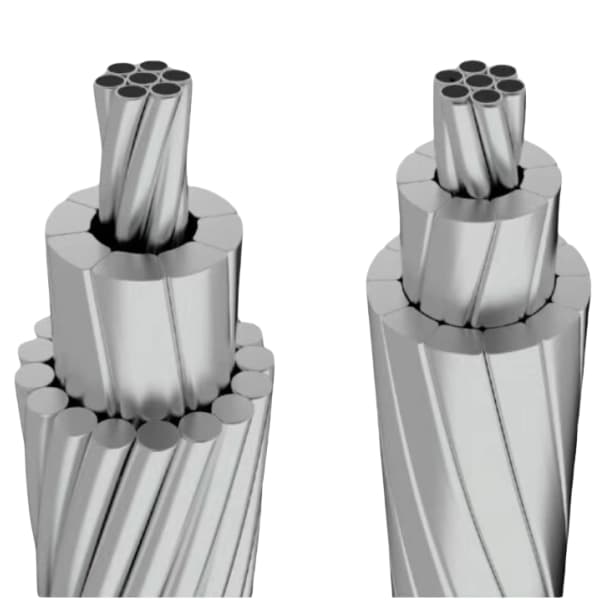
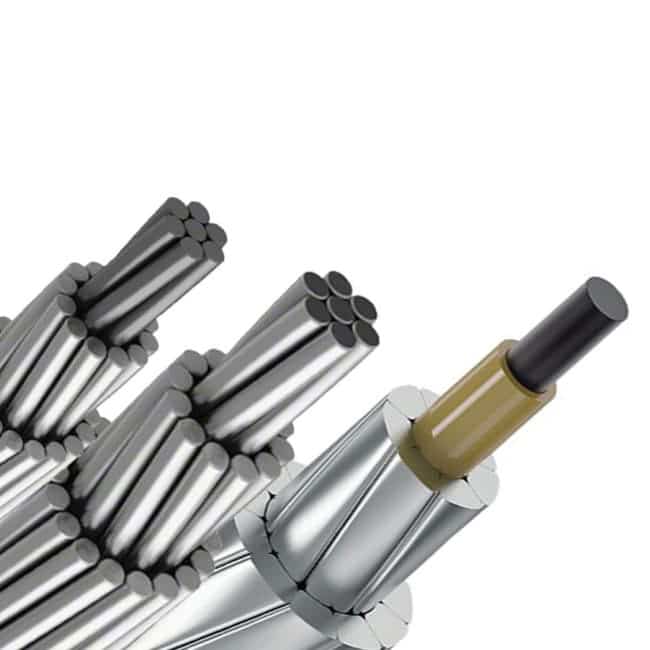
An Invar conductor is a special type of high-temperature low-sag (Htls) overhead transmission conductor that uses an Invar alloy core combined with aluminum strands.
The design of this conductor allows it to carry more electrical current while maintaining stable mechanical performance.
A typical Invar conductor structure includes:
- Invar alloy core
- Aluminum cladding around the core
- Outer aluminum or aluminum alloy strands
The outer aluminum strands are responsible for electrical conductivity, while the Invar core provides mechanical strength and extremely low thermal expansion.
Because the core expands very little when heated, the conductor maintains lower sag even at high operating temperatures.
What Is Invar Alloy
The key material used in these conductors is Invar alloy, a nickel-iron alloy known for its exceptionally low thermal expansion coefficient.
Typical chemical composition:
- Iron (Fe): about 64%
- Nickel (Ni): about 36%
This alloy was originally developed for precision instruments where dimensional stability is critical. Its low thermal expansion makes it highly suitable for overhead conductors exposed to large temperature variations.
Important properties of Invar alloy include:
- Very low thermal expansion
- High tensile strength
- Good mechanical stability
- Excellent durability
These characteristics allow Invar conductors to operate safely at higher temperatures compared with conventional conductors.
Structure of an Invar Conductor
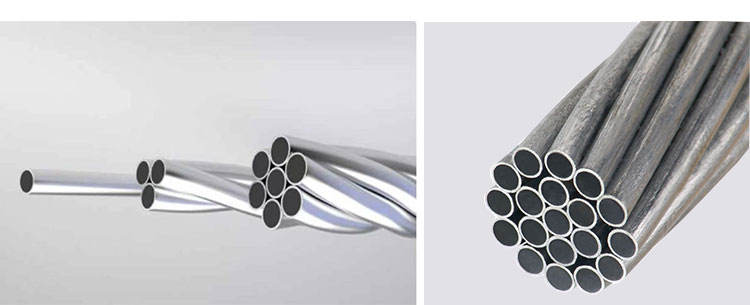
The structure of an Invar conductor is designed to balance electrical conductivity with mechanical strength.
Invar Core
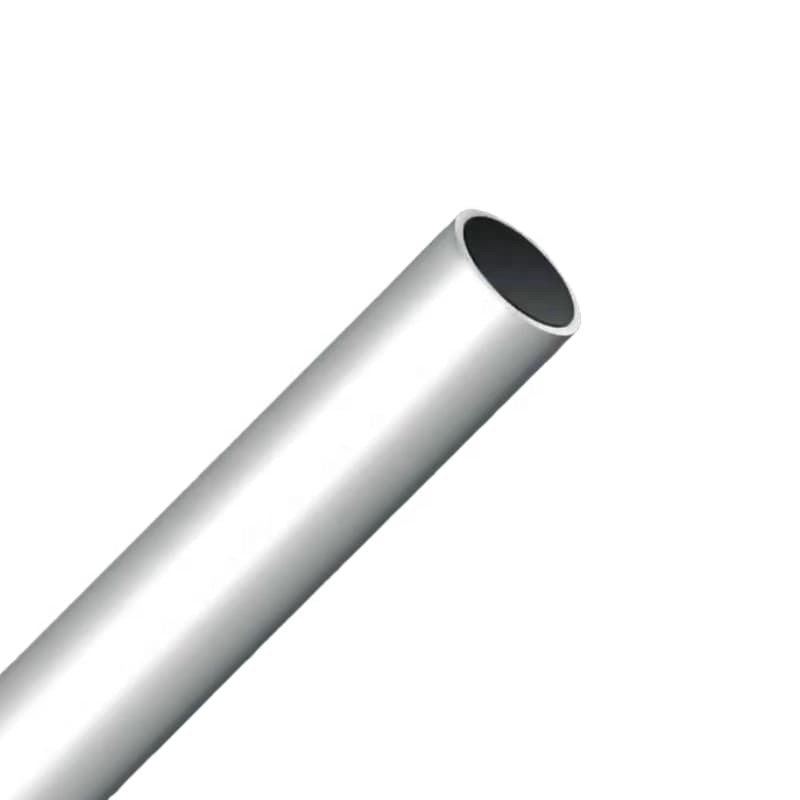
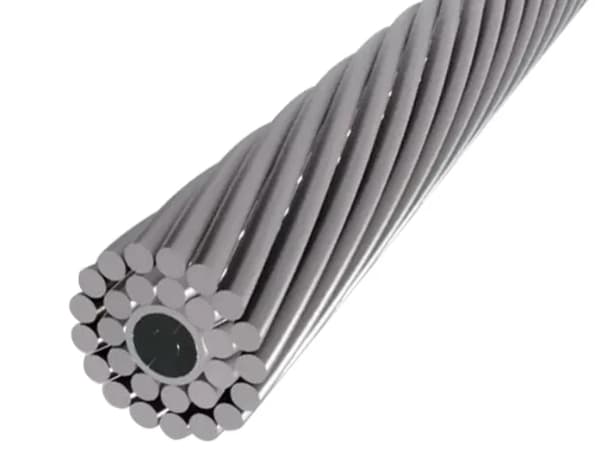
The central core is made of Invar alloy. This core carries most of the mechanical load of the conductor and provides resistance to thermal expansion.
Aluminum Cladding
The Invar core is usually coated with aluminum. This improves corrosion resistance and enhances compatibility with outer aluminum strands.
Aluminum or Aluminum Alloy Strands
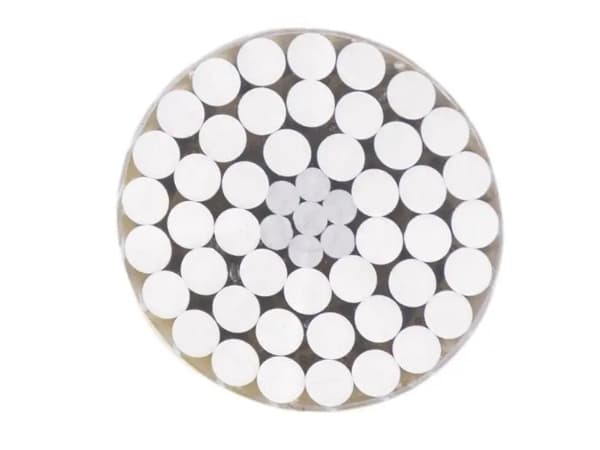
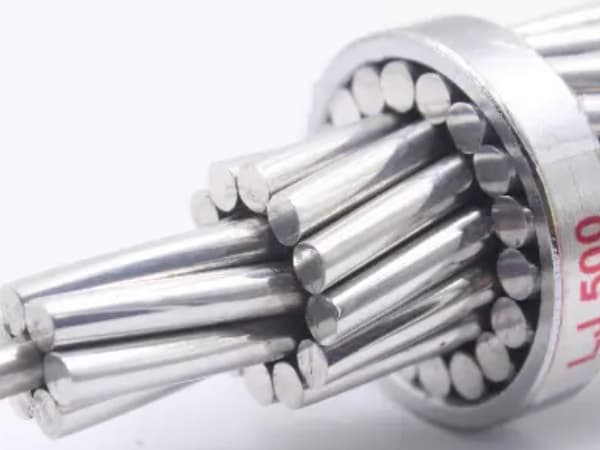
Multiple aluminum wires are stranded around the core in helical layers. These wires conduct electricity and determine the electrical performance of the conductor.
Heat-resistant aluminum alloys are often used to allow operation at temperatures exceeding 200°C.
Working Principle of Invar Conductors
In overhead power transmission lines, conductor temperature increases as electrical current flows through the wire. Higher temperatures normally cause significant expansion in conventional conductors.
This expansion leads to increased sag between transmission towers.
Excessive sag can create several problems:
- Reduced ground clearance
- Safety hazards
- Possible violation of electrical regulations
Invar conductors solve this issue because the Invar core has a very low thermal expansion coefficient.
When the conductor temperature increases:
- Aluminum strands expand slightly
- Invar core expands very little
- Overall conductor elongation remains small
This results in significantly lower sag compared with conventional conductors.
Types of Invar Core Conductors
Several HTLS conductor designs use Invar alloy cores.
STACIR Conductor
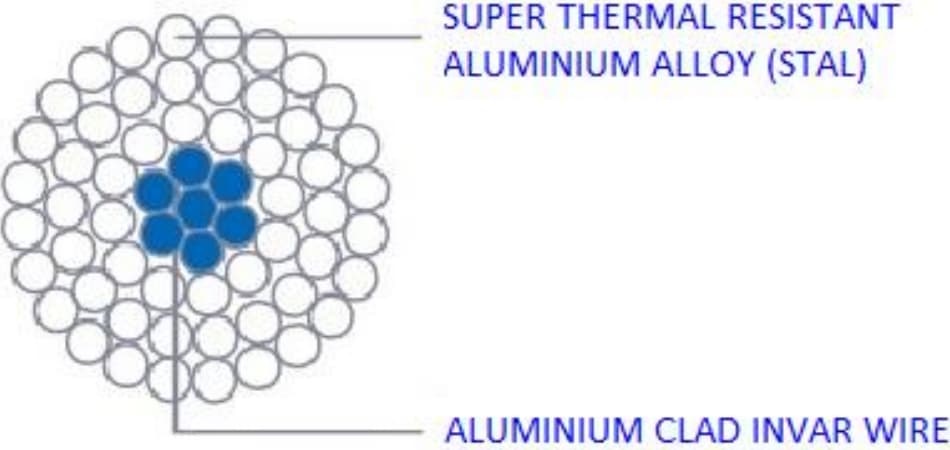
STACIR stands for Super Thermal Alloy Conductor Invar Reinforced.
It is one of the most widely used Invar core conductors in modern transmission systems.
Le caratteristiche principali includono:
- Aluminum-zirconium alloy outer strands
- Aluminum-clad Invar core
- High operating temperature up to 210°C
STACIR conductors are commonly used for upgrading existing transmission lines.
Autista ZTACIR
ZTACIR is another advanced HTLS conductor using an Invar core.
It provides higher ampacity and improved mechanical strength compared with conventional conductors.
This type of conductor is often used in large power grid expansion projects.
TACIR Conductor
TACIR conductors are also based on aluminum alloy strands combined with an Invar core.
They are designed to provide excellent sag performance and high reliability in long-distance transmission lines.
Technical Specifications of Invar Conductors
The technical specifications of an Invar conductor depend on the conductor size, aluminum alloy type, and manufacturer.
Typical parameter ranges are shown below.
| Parameter | Typical Value |
|---|---|
| Conductor cross section | 200 – 900 mm² |
| Temperatura di funzionamento massima | up to 210°C |
| Conduttività | about 60% SIGC |
| Tensile strength | very high |
| Service life | more than 40 years |
| Current capacity | up to 2× ACSR |
These conductors are usually produced according to international standards such as IEC and ASTM specifications for overhead conductors.
Advantages of Invar Conductors
Invar conductors offer several significant advantages compared with traditional conductors.
Low Thermal Expansion
The most important advantage is the extremely low thermal expansion of the Invar core. This allows the conductor to maintain stable sag even when operating at high temperatures.
High Current Capacity
Because Invar conductors can operate at higher temperatures, they can carry significantly more electrical current than conventional conductors.
In many cases, transmission capacity can increase by 50–100 percent.
High Temperature Operation
Traditional ACSR conductors typically operate below 90°C.
Al contrario, Invar conductors can safely operate at temperatures up to about 210°C.
Long Span Capability
Due to their high mechanical strength, Invar conductors are suitable for long span transmission lines such as:
- river crossings
- mountain valleys
- large infrastructure projects
Grid Upgrade Solution
One of the biggest advantages is that utilities can increase transmission capacity without replacing existing towers.
This reduces project cost and construction time.
Applications of Invar Conductors
Invar conductors are widely used in modern power systems.
Transmission Line Capacity Upgrading
Many existing power lines need higher capacity. Replacing the conductor with an Invar type allows the line to carry more power without major infrastructure changes.
Long Distance Transmission
The excellent sag characteristics make these conductors suitable for long span installations.
Urban Transmission Networks
In densely populated cities, building new transmission lines is difficult. Invar conductors allow utilities to upgrade existing lines.
Progetti di energia rinnovabile
Large wind and solar power plants require high capacity transmission lines to connect to the grid. Invar conductors are commonly used in these systems.
Invar Conductor Price
The price of an Invar conductor varies depending on several factors.
Important price determinants include:
- dimensione del conduttore
- aluminum alloy material
- Invar core cost
- production technology
- order quantity
- shipping and logistics
Because Invar contains nickel, the conductor price is influenced by global nickel market prices.
Typical market prices may range approximately from:
- $3 A $6 al metro for small sizes
- $6 A $12 al metro for medium sizes
- $12 A $18 al metro for large transmission conductors
Large power transmission projects usually negotiate prices based on tons or kilometers of conductor.
Invar Conductor Manufacturers
Several companies around the world manufacture Invar core conductors.
Japanese Manufacturers
Japan is considered a pioneer in Invar conductor technology. Japanese manufacturers have supplied many HTLS conductors for international power grid projects.
Indian Manufacturers
India has several major cable manufacturers producing advanced HTLS conductors for domestic and export markets.
Chinese Manufacturers
China has become one of the largest suppliers of overhead conductors, including Invar core conductors.
Chinese manufacturers offer:
- large production capacity
- competitive prices
- customized conductor designs
Many factories provide conductors for international power utilities and EPC contractors.
Comparison With Traditional Conductors
Compared with conventional ACSR conductors, Invar conductors provide significant performance improvements.
| Feature | Invar driver | ACSR |
|---|---|---|
| Core material | Invar alloy | Acciaio |
| Thermal expansion | extremely low | moderate |
| Maximum temperature | about 210°C | about 90°C |
| Sag performance | excellent | normal |
| Current capacity | much higher | standard |
| Upgrade capability | very suitable | limited |
Because of these advantages, Invar conductors are widely used for reconductoring projects.
Installation and Engineering Considerations
Installing Invar conductors is generally similar to installing conventional overhead conductors.
Tuttavia, engineers must consider several technical factors:
- sag and tension calculations
- conductor creep characteristics
- temperature rating
- stringing tension during installation
Most Invar conductors can be installed using standard transmission line equipment, which simplifies construction.
Future Market Trends
The demand for high-capacity transmission solutions continues to increase worldwide.
Several factors are driving the growth of Invar conductor technology:
- expanding electricity demand
- renewable energy integration
- aging power grid infrastructure
- need for cost-effective upgrades
HTLS conductors such as Invar types are expected to play a major role in future transmission networks.
Conclusion-HTLS Conductor
Invar conductors represent an important technological advancement in overhead power transmission.
By combining an Invar alloy core with high-conductivity aluminum strands, these conductors provide:
- extremely low thermal expansion
- higher current carrying capacity
- excellent sag control
- long service life
They enable power utilities to increase transmission capacity without constructing new lines, making them a highly cost-effective solution for modern electrical grids.
As global power demand grows and transmission infrastructure requires upgrading, the use of Invar conductors will continue to expand in power systems around the world.