
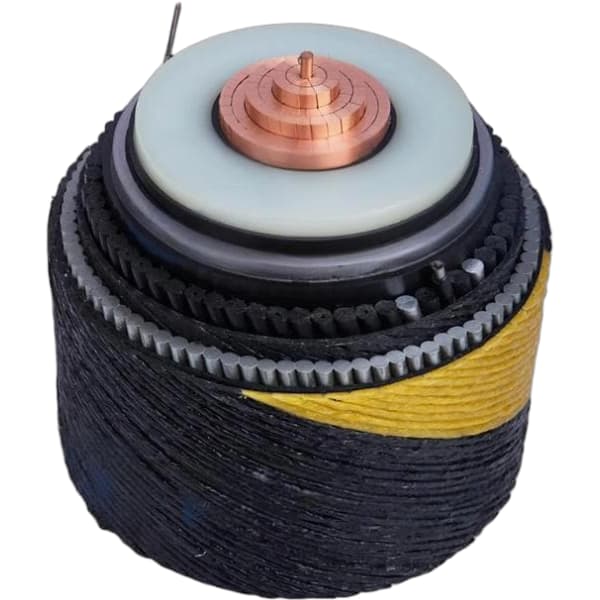
Modern electrical systems require cables capable of transporting large amounts of energy with maximum safety and efficiency.. Among the most used solutions for urban transmission networks, substations and industrial parks is the 115kV Cable, considered an essential component within the systems of Extra High Voltage (EHV, Extra High Voltage).
Thanks to the development of insulating materials such as XLPE (cross-linked polyethylene) and the EPR (ethylene propylene rubber), the cables of 115 kV offer long life, low electrical losses and excellent performance under demanding environmental conditions. Besides, allow replacing overhead lines in urban areas where space is limited or where greater environmental protection is required.
What is a 115 kV Cable?
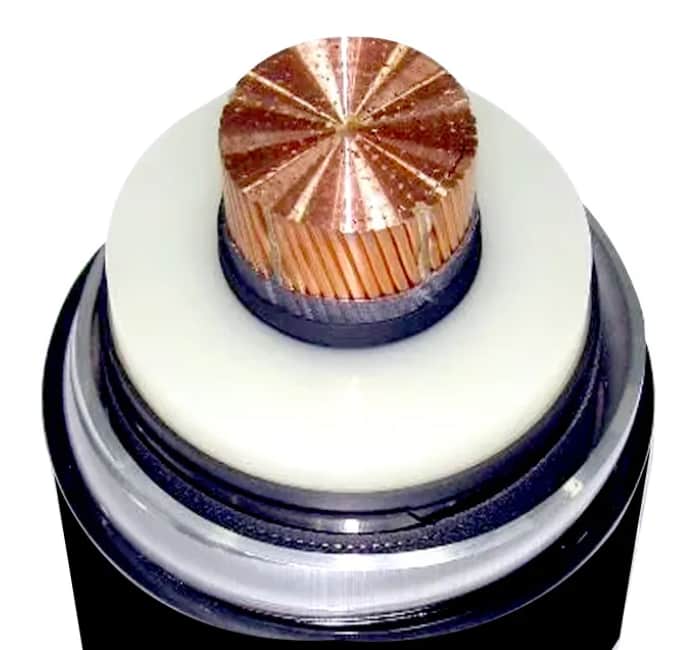
A cable 115 kV is a power cable designed to transmit electrical energy with a nominal voltage of 69/115 (123) kV, depending on the standard used. It belongs to the category of cables Extra High Voltage (EHV) and is used to connect substations, power plants, wind farms, solar plants and large industrial consumers.
Compared to medium voltage cables, An EHV cable incorporates a much more sophisticated design that ensures uniform electric field distribution and excellent dielectric strength over decades of service..
Its manufacturing normally follows international standards such as:
- IEC 60840
- IEC 62067
- ICEA S-108-720
- AEIC CS9
- IEEE 404
- IEC 60228
These standards establish the design requirements, manufacturing, testing and installation to ensure safe operation.
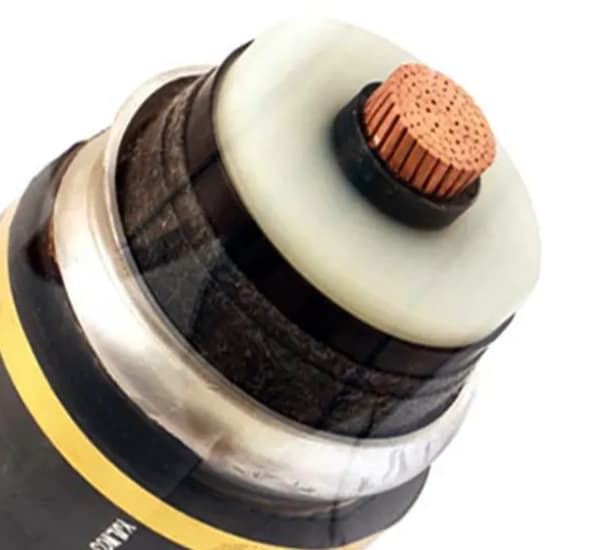
Structure of a cable 115 kV
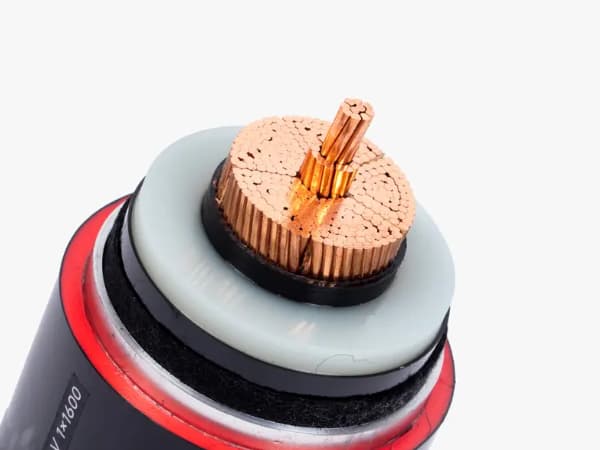
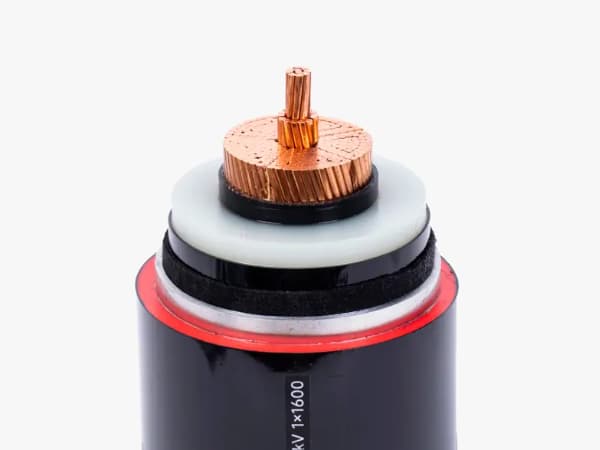
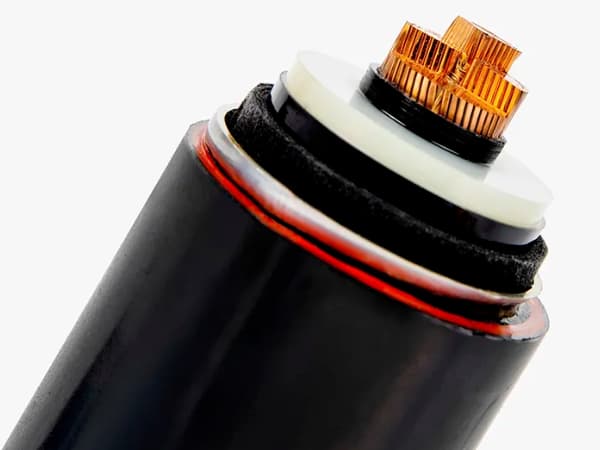
Although there are different configurations depending on the project, The typical structure includes several layers designed to fulfill specific functions.
Conductor
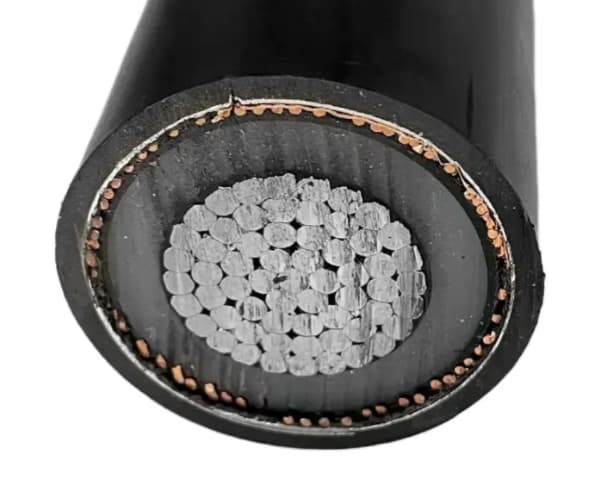
The conductor is usually made of copper or aluminum.
Copper provides greater electrical conductivity and allows the conductor diameter to be reduced, while aluminum offers a lighter and more economical solution for long distances.
Typical sections include:
| Material | Section (mm²) |
|---|---|
| Copper | 240-2500 |
| Aluminum | 300-2500 |
Conductors are often compacted to reduce losses and improve flexibility during installation.
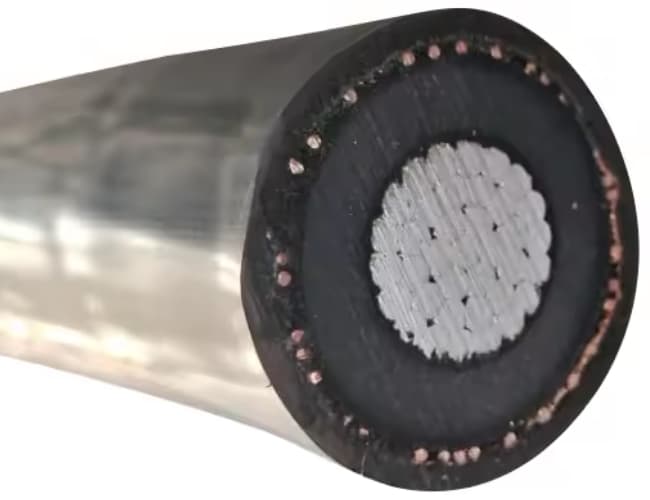
Driver semiconductor screen
This layer eliminates the points of concentration of the electric field around the conductor.
Its perfectly smooth surface prevents partial discharges that could deteriorate the insulation over time.
XLPE insulation
XLPE insulation currently represents the dominant technology in EHV cables.
Among its main advantages are:
- High dielectric resistance.
- Low dielectric constant.
- Excellent thermal performance.
- Continuous operating temperature up to 90°C.
- 130°C temporal overload.
- Short circuit up to 250°C.
Thanks to the cross-linking process, XLPE maintains excellent mechanical properties for decades.
Outer semiconductor screen
Installed over insulation to ensure uniform electric field distribution.
It also facilitates joining with the metal screen.
Metal screen
It is usually made up of copper wires or a copper sheet.
Its function is to:
- conduct fault currents;
- reduce electromagnetic interference;
- protect insulation against surges.
Moisture barrier
Many projects require protection against water ingress.
For this they can be used:
- water blocking tape;
- super absorbent powder;
- laminated aluminum barrier;
- lead jacket for special applications.
External cover
The cover protects the cable from:
- humidity;
- chemical products;
- abrasion;
- UV radiation;
- mechanical impacts.
The most used materials are:
- PE
- HDPE
- PVC
- LSZH (Low Smoke Zero Halogen)
Main technical characteristics
The cables of 115 kV stand out for combining high transmission capacity with excellent reliability.
Typical features:
- Nominal voltage: 69/115 (123) kV
- Frequency: 50/60 Hz
- Continuous temperature: 90°C
- Short circuit temperature: 250°C
- XLPE insulation
- copper metal screen
- Service life greater than 40 years
- Very low partial discharge
- High resistance to aging
Cable Applications 115 kV
These cables play a fundamental role in modern transmission networks..
Electrical substations
They connect power transformers with GIS equipment and distribution systems.
Its high reliability significantly reduces the risk of interruptions.
Urban networks
Many cities replace overhead lines with underground cables. 115 kV for:
- improve aesthetics;
- increase security;
- reduce maintenance;
- minimize environmental impact.
Power plants
Thermal power plant generators, Hydroelectric and nuclear plants use EHV cables to transport energy to main substations.
Renewable energy
Large-capacity wind and solar farms require high-voltage cables to connect the plants to the national grid..
The global growth of renewable energies has considerably increased the demand for power cables. 115 kV.
Large industries
Sectors like:
- mining;
- steel;
- petrochemistry;
- refineries;
- cement manufacturing;
require stable power supply via EHV cables.
Advantages of XLPE cable 115 kV
Technological advances have allowed XLPE cables to progressively replace old impregnated paper insulated cables..
Among its advantages are:
Less maintenance
XLPE does not need insulating oil, simplifying operation and reducing maintenance costs.
Higher current capacity
Its better thermal behavior allows it to transport more power.
Longer useful life
With proper installation, can easily overcome 40 years of operation.
Flexible installation
The cable supports relatively small bending radii, facilitating its installation in galleries and tunnels.
Excellent environmental performance
No oil leaks and reduces the risk of soil contamination.
Installation of cables 115 kV
Correct installation is as important as the quality of the cable itself.
Before installation it is necessary to verify:
- minimum radius of curvature;
- maximum tensile stress;
- room temperature;
- ground conditions;
- grounding system.
During laying, specialized equipment is used to control the drag tension and avoid mechanical damage..
Electrical tests are subsequently carried out to confirm that the system meets the project specifications..
Tests carried out
Before leaving the factory, Each cable goes through rigorous testing.
Among the most important are:
- applied stress test;
- Partial download test;
- electrical resistance measurement;
- dimensional verification;
- insulation test;
- cover test;
- aging test;
- mechanical tests;
- impact tests;
- complete visual inspection.
Type tests and routine tests according to IEC can also be carried out in EHV projects. 60840 o IEC 62067.
Cable accessories 115 kV
The performance of the system also depends on the quality of its accessories.
The main ones include:
- outer terminals;
- GIS terminals;
- transformer terminals;
- straight splices;
- transition splices;
- grounding boxes;
- screen links;
- monitoring systems.
All of them must be compatible with the nominal voltage of the system.
Factors for selecting a cable 115 kV
Choosing the right cable depends on many technical factors..
Among them stand out:
- required current capacity;
- circuit length;
- soil temperature;
- soil thermal resistivity;
- installation method;
- driver material;
- short circuit level;
- environmental conditions;
- mechanical protection requirements.
A detailed study guarantees efficient operation throughout the life of the system.
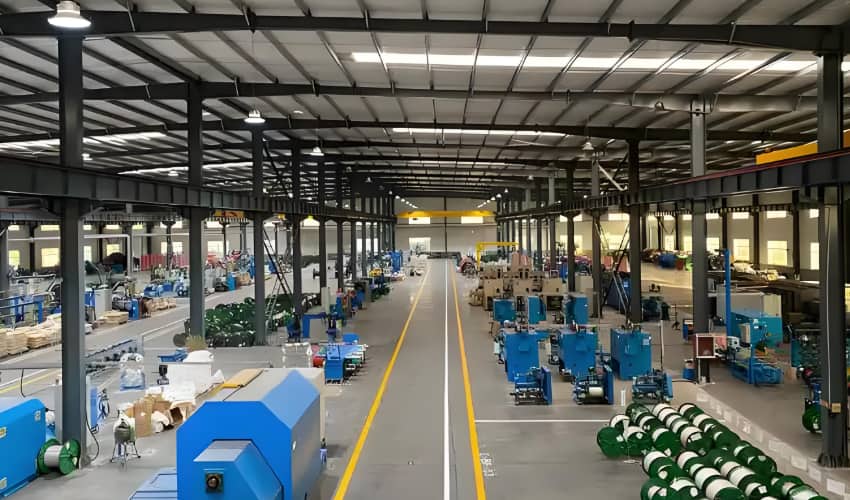
Why choose a specialized manufacturer?
Extra high voltage projects require a high level of engineering and quality control.
An experienced manufacturer offers:
- certified raw materials;
- automated production processes;
- complete testing laboratories;
- compliance with international standards;
- technical support during design;
- installation assistance;
- complete documentation for international projects.
The manufacturer's experience is decisive to guarantee the safety and reliability of electrical networks.
Frequently asked questions (FAQ)
What difference exists between a cable 69 kV and one of 115 kV?
The cable 115 kV supports a higher level of insulation and is designed to transmit greater amounts of energy in extra high voltage networks.
Which conductive material is better?
Copper offers greater conductivity, while aluminum reduces weight and project cost. The choice depends on the technical and economic requirements.
How long can a cable last? 115 kV?
With correct installation and maintenance, The useful life can exceed 40 years.
Can it be installed underground?
Yeah. In fact, Most urban projects use underground cables. 115 kV due to its safety, reliability and less visual impact.
What insulation is the most used?
At the moment, XLPE is the preferred option due to its excellent electrical performance, thermal resistance and long lifespan.