
He cable splice 145 kV It is one of the most important accessories of modern high voltage electrical transmission systems.. Its main function is to safely and permanently connect two sections of high voltage cable, maintaining electrical continuity, the isolation, control of the electric field and mechanical protection of the system.
In electrical networks of 145 kV, The cables usually use XLPE insulation and can have copper or aluminum conductors with different sections. When the total length of a line exceeds the length available on a spool, when a section of cable needs to be repaired or when there are different installation sections, it is necessary to use a splicing system.
Unlike a conventional connector, a splice for 145 kV must reconstruct virtually all electrical functions of the original cable. For this reason, Its design requires precise control of materials, the dimensions and distribution of the electric field.
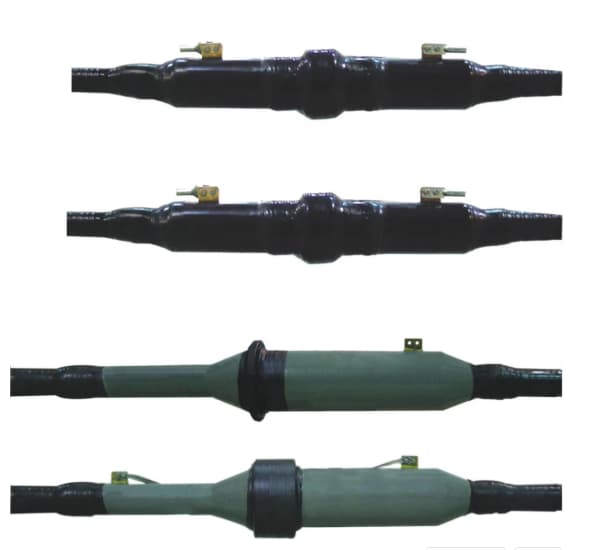
What is a cable splice 145 kV?
And cable splice 145 kV is an accessory used to join two high voltage cables and ensure that the connection can work stably throughout the intended life of the system.
A high voltage cable is usually made up of several layers:
- Conductor.
- Driver semiconductor screen.
- XLPE insulation.
- Outer semiconductor screen.
- Metal screen.
- Moisture protection layer.
- External cover.
When a splice is made, these layers are temporarily interrupted. The splice design must reconstruct them and ensure that the electrical properties of the connection are compatible with those of the cable.
For this reason, The splice must be considered as a complete system and not simply as a piece to connect two conductors.
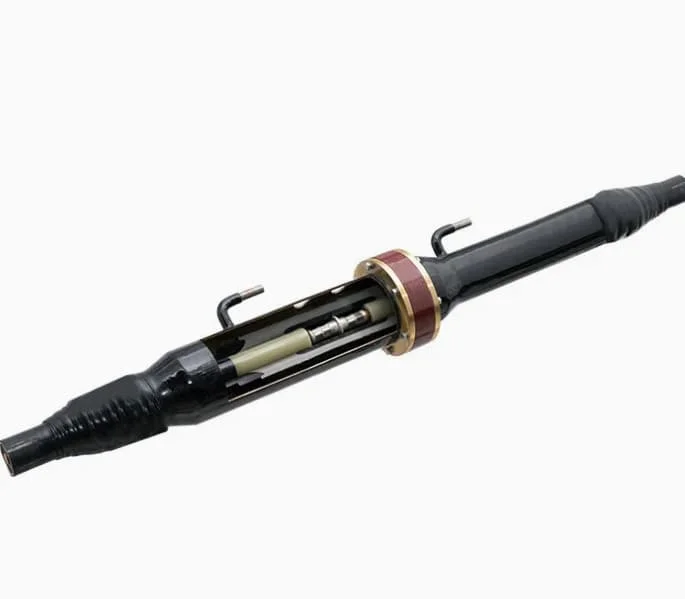
Structure of a splice 145 kV
The specific structure depends on the manufacturer and the project design., but a typical splice can include different components.
| Component | Function |
|---|---|
| driver connector | Connect the two conductors |
| insulation system | Recover electrical insulation |
| Electric field control | Evenly distributes the electric field |
| Semiconductor screen | Rebuild the insulation screen |
| Metal screen | Maintains screen continuity |
| Grounding system | Electrically connect the screen |
| Moisture protection | Prevents water entry |
| Exterior protection | Protects against mechanical and environmental damage |
Each component must work in a coordinated manner. Especially in systems 145 kV, any irregularity at the insulation interface can cause a local concentration of the electric field.
Electric field control
Control of the electric field is one of the fundamental elements of the design of a high voltage joint..
on the original cable, the semiconductor screen controls the distribution of the electric field around the conductor. When this screen ends in the junction area, the electric field can be concentrated if an appropriate control structure is not used.
For this reason, the splices of 145 kV incorporate elements specially designed to control this distribution.
The objective is to obtain a gradual transition of the electric field and reduce the possibility of excessive concentrations of electrical stress.
A correct distribution of the electric field contributes to reducing the risk of:
- Partial downloads.
- Insulation deterioration.
- Premature aging.
- Electric drilling.
- System failures.
XLPE insulation
The cables of 145 Modern kVs commonly use XLPE (cross-linked polyethylene) as main insulation material.
The splicing system must be compatible with this type of insulation and maintain stable electrical characteristics during operation..
Among the important properties of insulating materials are:
- High dielectric strength.
- Low dielectric loss.
- Good thermal stability.
- Aging resistance.
- Good moisture resistance.
- XLPE Compatibility.
- Dimensional stability.
The interface between different materials is especially important. In high voltage, small particles, humidity, Air cavities or surface irregularities can affect the electrical behavior of the splice..
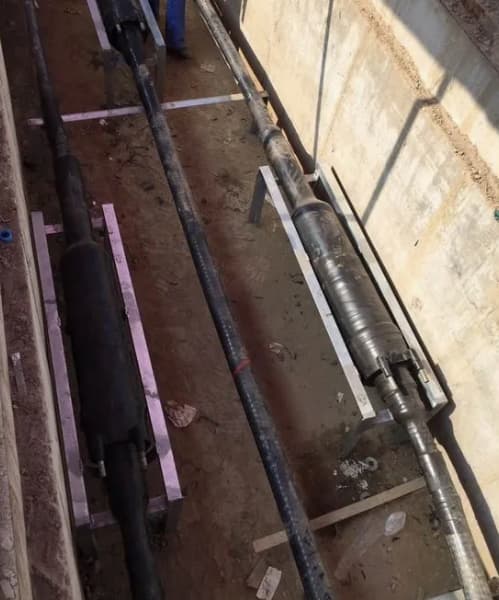
Types of cable splices 145 kV
Depending on the technology used, There can be different types of splices.
Premolded splice
Premolded splice uses a body previously manufactured under controlled industrial conditions.
The body can integrate different insulation layers and field control elements.
One of its main characteristics is the high dimensional precision, since the properties of the splice body are controlled during the manufacturing process.
Prefabricated splice
In prefabricated systems, certain parts of the splice are previously manufactured and subsequently installed on the prepared ends of the cables.
This method allows you to reduce certain operations carried out directly at the installation site.
Splicing with field control components
Some designs use different semiconductor and insulating components to progressively control the electric field..
Technology selection depends on cable characteristics, of system voltage, installation method and project requirements.
Splice Applications 145 kV
The splices of 145 kV are used in different types of electrical infrastructures.
Underground lines
One of the main applications corresponds to underground transmission lines..
Due to manufacturing limitations, transportation and laying, a circuit can be made up of several sections of cable. Splices allow these sections to be connected.
For example:
Substation A → Cable 145 kV → Splice → Cable 145 kV → Splice → Cable 145 kV → Substation B
Electrical substations
High voltage cables used in or around substations may require splicing depending on system configuration.
Wind farms
wind energy projects, especially those with large capacity, require electrical networks capable of transporting large amounts of energy. High voltage joints can be part of transmission connections.
Photovoltaic parks
Large solar projects may also use high-voltage cables to transport the generated power to a connecting substation..
Cable repair
Another important application is the repair of damaged cables.. When a section of cable needs to be replaced, Splices can be used to connect the new section to the existing cable.
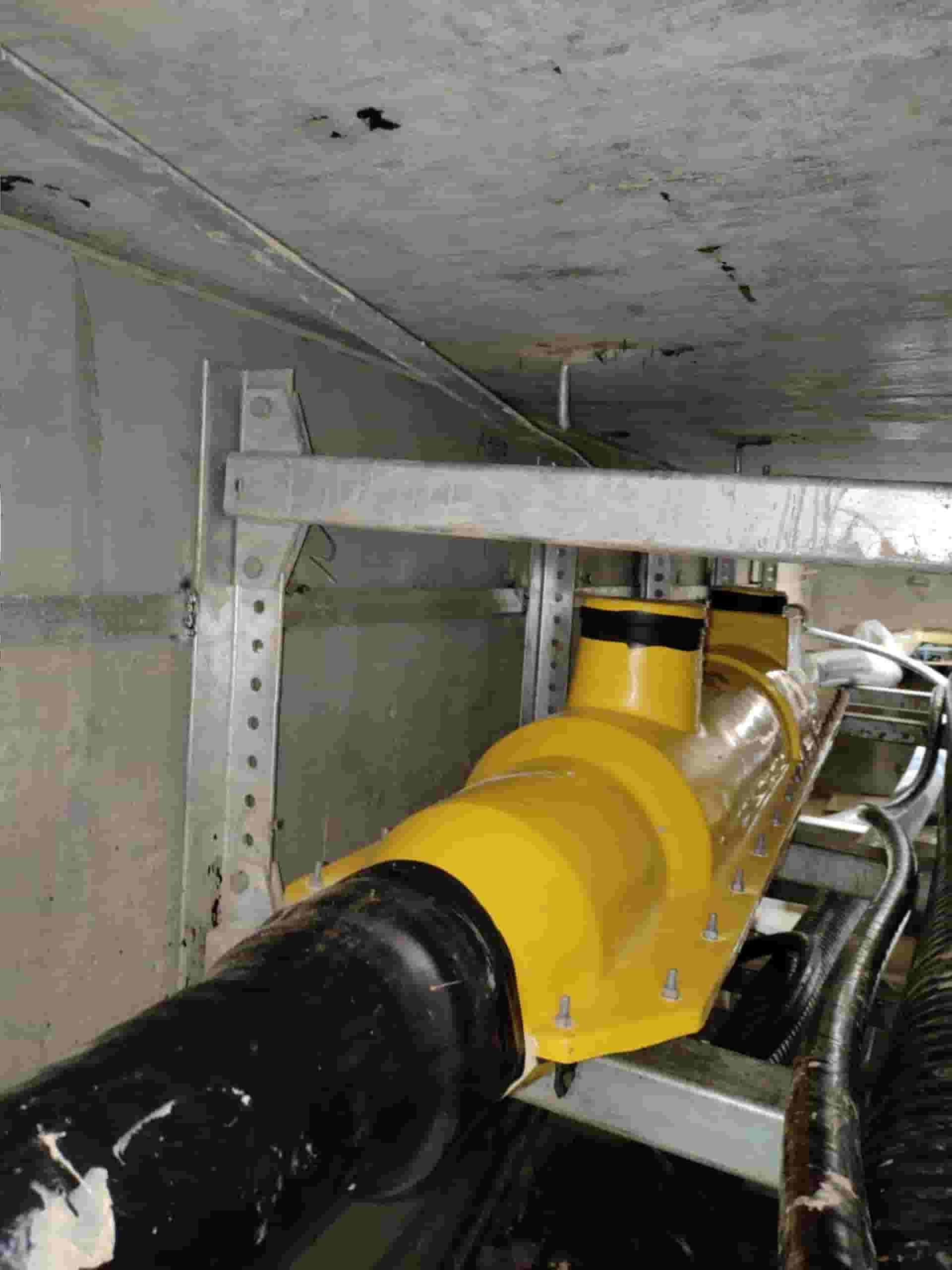
Splice installation
Installing a splice 145 kV requires qualified personnel and carefully controlled working conditions.
First, prepare the work area to reduce the presence of dust., humidity and other contaminants. Subsequently, the ends of the two cables are prepared according to the dimensions indicated by the manufacturer..
Preparation may include removing the outer covering, Metal screen, semiconductor layers and certain parts of the insulation.
The conductor is connected using a connector appropriate to its section and material.. Then the field isolation and control system is installed.
Once the main body of the splice is installed, The metal screen is rebuilt and the corresponding connection to the grounding system is made..
Finally the exterior protection is installed.
Preparation dimensions are critical. An error in the removal length of a layer or damage to the insulation surface can affect the electrical performance of the splice..
Parameters to be checked
Before selecting a splice 145 kV, it is necessary to know the exact characteristics of the cable.
The main parameters include:
| Parameter | Necessary information |
|---|---|
| Maximum system voltage | 145 kV |
| Insulation type | XLPE or other |
| Driver material | Copper / aluminum |
| Driver section | According to project |
| Driver diameter | according to cable |
| Diameter over insulation | according to cable |
| Metal screen | Type and section |
| External cover | Material and diameter |
| Rated current | According to design |
| short circuit current | According to system |
| Frequency | 50 Hz / 60 Hz |
| Installation | Tunnel, buried, canal, etc. |
| Grounding system | According to project |
Dimensional information is particularly important because the splice must physically fit the cable.
For example, a splice designed for a cable 1 × 500 mm² cannot be automatically considered compatible with a power cable. 1 × 1000 mm². The manufacturer must verify the actual cable dimensions before confirming the design.
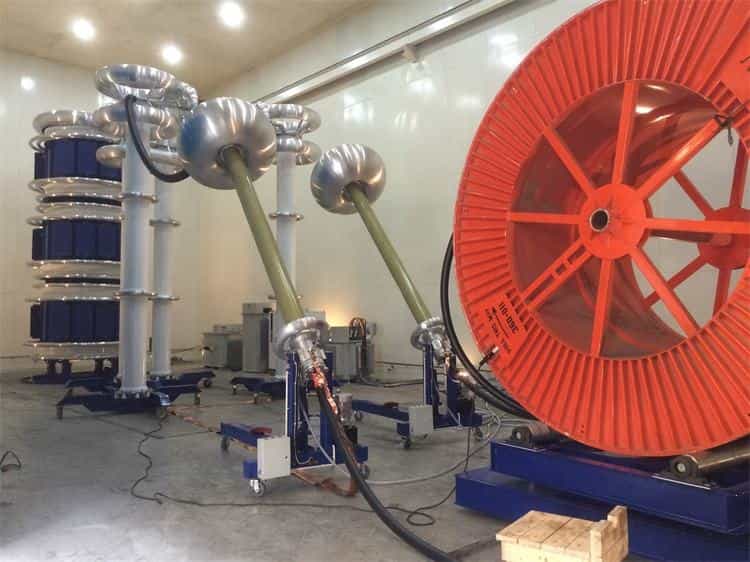
electrical tests
The quality of a splice 145 kV must be verified by appropriate tests.
Depending on the standard and project specifications, tests can be carried out such as:
- Withstand voltage test.
- Partial discharge test.
- impulse test.
- Warm-up test.
- Short circuit test.
- Aging test.
- Leakage test.
- Mechanical tests.
The partial discharge (PD) It is especially important in high voltage accessories. The existence of defects, cavities or concentrations of electric field can cause partial discharges and accelerate the aging of the insulation.
For this reason, quality control during manufacturing and installation is essential.
Importance of professional installation
The manufacturing quality of the splice is only part of the final result. Installation also has a direct influence on reliability.
Possible installation problems include:
- Contamination of the insulating surface.
- Moisture ingress.
- Incorrect insulation preparation.
- Incorrect peeling dimensions.
- Damage to the semiconductor screen.
- Incorrect positioning of field control.
- Incorrect connector installation.
- Improper tightening torque.
- Incorrect connection of the metal screen.
For this reason, for projects 145 kV it is advisable to use specific installation procedures and personnel with experience in high voltage accessories.
Selecting a splice manufacturer 145 kV
When requesting a bid for a project, the customer should provide the manufacturer with as much technical data as possible.
In addition to the tension of 145 kV and conductor section, It is advisable to provide the Data Sheet del cable, dimensional plans, metal screen features, short circuit current, installation conditions and applicable standards.
With this information, the manufacturer can check the compatibility between the cable and the splice and prepare a suitable technical solution.
It is also important to consider the technical documentation, installation procedures, Test reports and quality control specifications.
cable splice 145 kV
He cable splice 145 kV plays a fundamental role in modern electrical transmission networks. Its function is not limited to connecting two conductors, but must rebuild the isolation, control the electric field, guarantee the continuity of the metal screen and provide protection against humidity and mechanical stress.
The correct selection must jointly consider the system voltage, the section and material of the conductor, cable dimensions, XLPE insulation, the metal screen, short circuit level and installation conditions. Professional installation and proper testing are equally important for safe and stable long-term operation..
Dosense Cable is a manufacturer of cable splices 145 kV (145 kV Cable Joint), specialized in solutions for high voltage cables. Dosense Cable can provide 145 kV adapted to different types, sections and dimensions of XLPE cables, as well as technical solutions for electrical transmission projects, substations, underground networks and other high voltage projects.