
What is a 380kV Cable?
He 380kV Cable It is a high-voltage cable designed to transmit large amounts of electrical energy over long distances with minimal losses.. This type of cable is mainly used in national electrical transmission networks., GIS substations, power plants, EPC projects and large-scale industrial systems.
Due to the growth of cities, renewable energies and global electricity demand, 380kV transmission systems have become an essential part of modern infrastructure. Besides, 380kV cables allow replacing overhead lines in urban areas where space is limited or where safer and more aesthetic solutions are required.
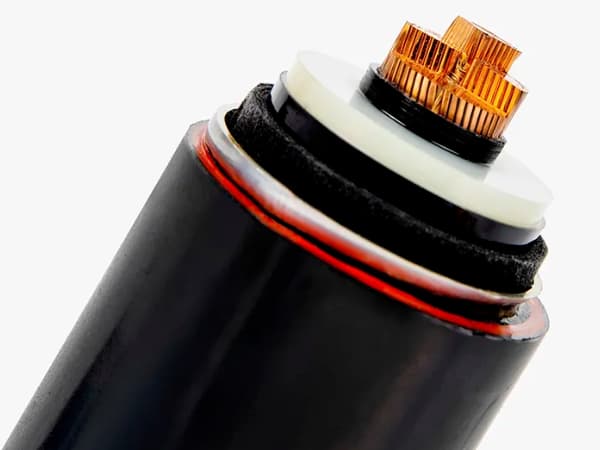
380kV cables generally use XLPE insulation (cross-linked polyethylene), copper or aluminum conductors and advanced metal shielding and exterior protection systems.
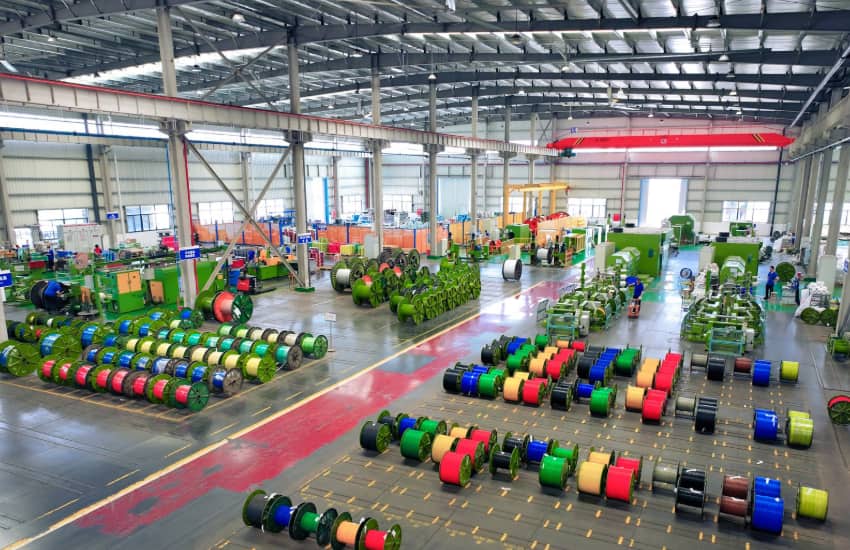
Structure of a 380kV Cable
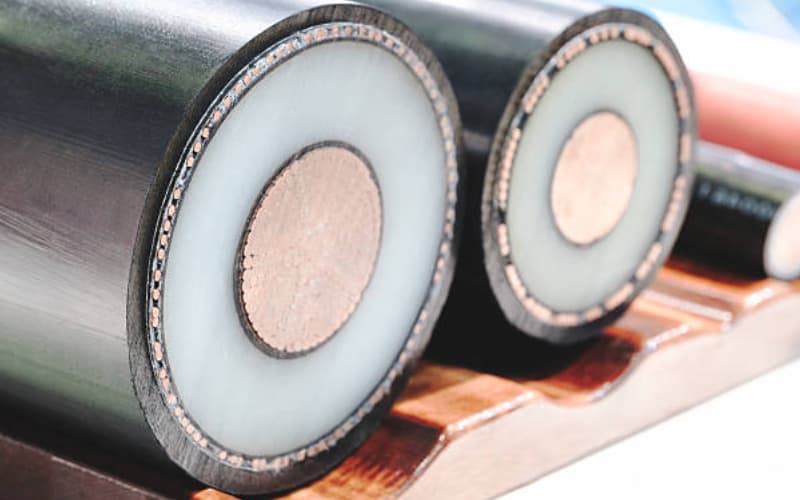
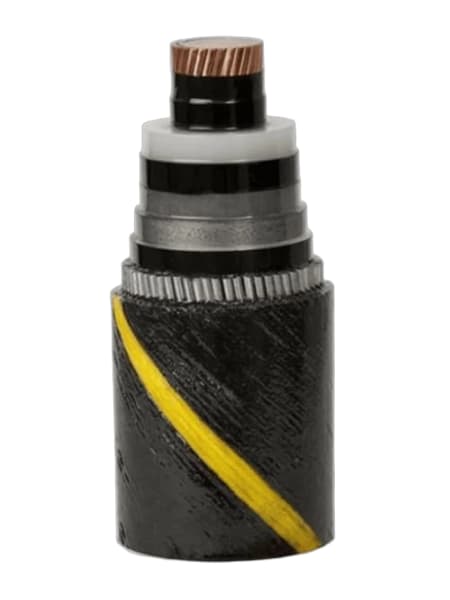
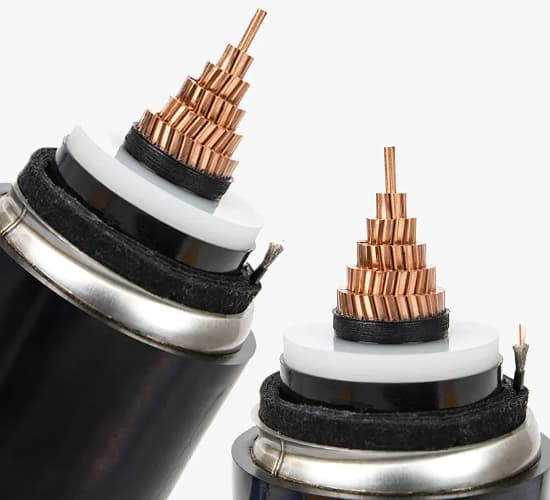
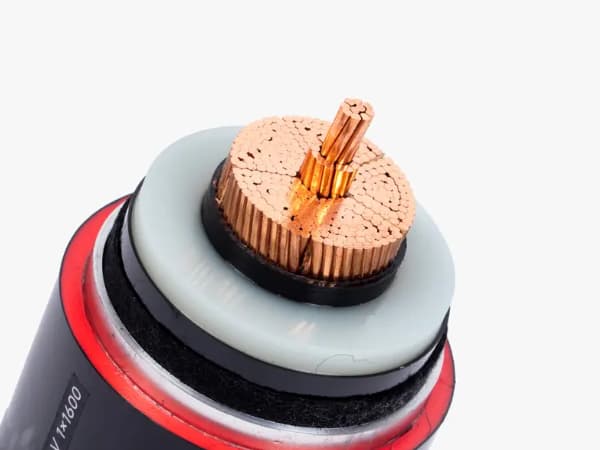
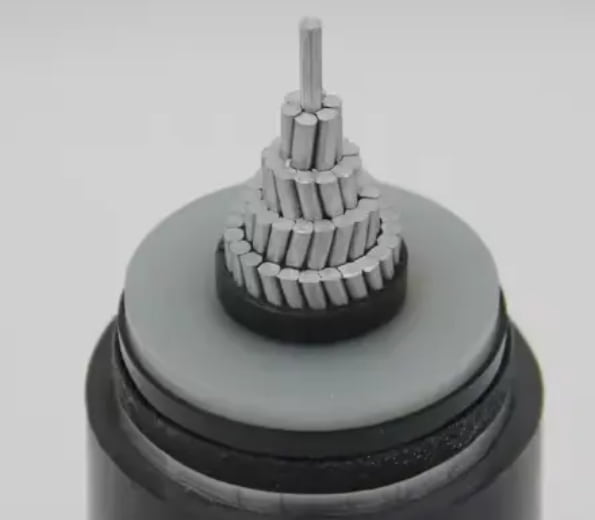
A 380kV high voltage cable is composed of multiple technical layers that guarantee electrical safety, mechanical resistance and long useful life.
Main components
- Copper or aluminum conductor
- Internal semiconductor screen
- XLPE insulation
- External semiconductor screen
- Waterproof layer
- Copper or aluminum metal screen
- Outer cover HDPE or PE
- Optional anti-corrosion coating
Why choose 380kV XLPE cables?
XLPE systems are currently the dominant technology in high voltage cables due to their technical advantages.
Advantages of XLPE Isolation
- Excellent thermal resistance
- High current capacity
- Less dielectric loss
- Longer useful life
- Excellent aging resistance
- Reliable underground installation
- Low maintenance
- High short circuit resistance
Besides, 380kV XLPE cables offer better environmental performance compared to traditional pressurized oil cables.
Main Applications of 380kV Cable
380kV transmission systems are used in numerous energy sectors.
National transmission networks
Power companies use 380kV cables to connect power plants to cities and industrial centers.
GIS Substations
380kV cables are frequently connected to GIS terminals due to their high reliability and space savings.
Renewable energy
Wind and solar farms use 380kV networks to transport energy over long distances.
Urban projects
In modern cities, 380kV underground cables replace overhead lines to improve safety and aesthetics.
Heavy industry
Sectors such as mining, Steel and petrochemical industries require large amounts of energy transmitted through high voltage cables..
Technical Table of Conductors for 380kV Cable
Below is a reference table for copper and aluminum conductor sizes used in electrical systems. 380kV Cable.
| Driver size (mm²) | Material | Approximate conductor diameter (mm) | Approximate current capacity (A) |
|---|---|---|---|
| 50 | Copper | 8.2 | 220 |
| 50 | Aluminum | 8.5 | 180 |
| 70 | Copper | 9.8 | 280 |
| 70 | Aluminum | 10.2 | 230 |
| 95 | Copper | 11.4 | 340 |
| 95 | Aluminum | 11.8 | 280 |
| 120 | Copper | 12.8 | 390 |
| 120 | Aluminum | 13.2 | 320 |
| 150 | Copper | 14.2 | 450 |
| 150 | Aluminum | 14.8 | 370 |
| 185 | Copper | 15.8 | 520 |
| 185 | Aluminum | 16.3 | 430 |
| 240 | Copper | 18.1 | 620 |
| 240 | Aluminum | 18.6 | 510 |
| 300 | Copper | 20.0 | 720 |
| 300 | Aluminum | 20.5 | 590 |
| 400 | Copper | 23.1 | 860 |
| 400 | Aluminum | 23.8 | 710 |
| 500 | Copper | 25.8 | 980 |
| 500 | Aluminum | 26.4 | 810 |
| 630 | Copper | 29.0 | 1120 |
| 630 | Aluminum | 29.8 | 930 |
| 800 | Copper | 32.6 | 1280 |
| 800 | Aluminum | 33.4 | 1060 |
| 1000 | Copper | 36.4 | 1450 |
| 1000 | Aluminum | 37.2 | 1200 |
| 1200 | Copper | 39.8 | 1600 |
| 1200 | Aluminum | 40.7 | 1330 |
| 1400 | Copper | 43.0 | 1730 |
| 1400 | Aluminum | 43.8 | 1440 |
| 1600 | Copper | 45.9 | 1860 |
| 1600 | Aluminum | 46.8 | 1540 |
| 1800 | Copper | 48.6 | 1980 |
| 1800 | Aluminum | 49.5 | 1640 |
| 2000 | Copper | 51.0 | 2100 |
| 2000 | Aluminum | 52.0 | 1740 |
| 2500 | Copper | 57.0 | 2380 |
| 2500 | Aluminum | 58.2 | 1980 |
| 3000 | Copper | 62.5 | 2650 |
| 3000 | Aluminum | 63.8 | 2200 |
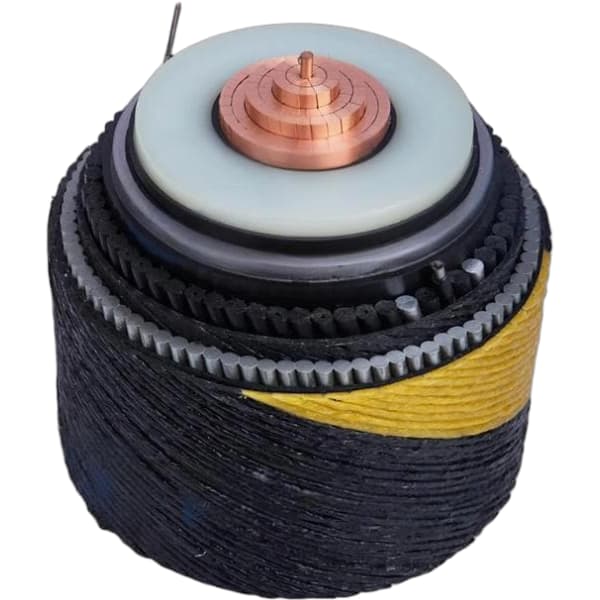
Differences between copper and aluminum conductors
Copper conductors
Advantages:
- Greater electrical conductivity
- Lower resistance
- Better thermal performance
- Greater mechanical resistance
Disadvantages:
- Higher cost
- More weight
aluminum conductors
Advantages:
- Cheaper
- Reduced weight
- Easy installation over long distances
Disadvantages:
- Less conductivity
- Larger diameter for the same capacity
At the moment, many transmission projects use aluminum due to overall cost reduction.
Types of installation of 380kV cables
Underground installation
It is the most common solution for urban areas and industrial projects.
Installation in tunnels
Tunnels allow for easy maintenance and greater safety.
underwater installation
380kV cables can also be used in offshore connections and sea crossings.
Installation in ducts
Widely used in metropolitan areas and substations.
Accessories for 380kV Cable systems
A high voltage cable system requires specialized accessories.
High voltage splices
Allow sections of cable to be connected while maintaining electrical integrity.
GIS Terminals
They are used to connect the cable with compact GIS equipment.
Exterior terminals
They connect the cable to overhead lines or transformers.
Grounding systems
They guarantee electrical safety and control of induced currents.
Tests for 380kV cables
High voltage cable manufacturers carry out strict international tests.
electrical tests
- AC Test
- Partial downloads
- Lightning impulse
- insulation resistance
Mechanical tests
- Flexion
- Impact
- mechanical stress
Thermal tests
- Thermal cycles
- Short circuit
- Accelerated aging
International Standards for 380kV Cable
High voltage cables must comply with international standards.
Main standards
- IEC 60840
- IEC 62067
- IEC 60228
- IEC 60811
- IEC 60502
These standards guarantee safety, performance and reliability.
Global 380kV Cable Market Trends
The global demand for 380kV Cable continues to grow rapidly due to:
- Urban expansion
- Renewable energies
- Industrial electrification
- Smart networks
- International interconnections
Many countries are investing billions of dollars in new electrical transmission infrastructure.
How to Choose a 380kV Cable Manufacturer?
Selecting a reliable supplier is essential for high voltage projects.
Important factors
- High voltage experience
- International certifications
- Production capacity
- Technical support
- Export experience
- Complete type tests
- Accessories quality
Maintenance of 380kV cables
Although XLPE systems require little maintenance, regular inspections are essential.
Recommendations
- Thermal monitoring
- Partial discharge measurement
- Terminal inspection
- Grounding check
- VLF diagnosis
Preventive maintenance helps extend system life.
Future of 380kV transmission systems
Smart grids and renewable energy are driving new technologies for high-voltage cables.
In the future we will see:
- Higher current capacity
- Greener materials
- Digital monitoring systems
- More compact installations
- Better energy efficiency
380kV cables will continue to be critical infrastructure for the global energy transition.
Dosense Cable: Professional Manufacturer of 380kV Cable
At Dosense Cable we specialize in the manufacture of high voltage solutions for international energy projects..
Our products include:
- Cable XLPE de 380kV
- Underground high voltage cable
- GIS Terminals
- High voltage splices
- HV transmission systems
Advantages of Dosense Cable
- Advanced production technology
- Strict quality control
- International technical support
- Experience in EPC projects
- Custom solutions
- Global export
We work with electrical companies, EPC contractors and distributors in multiple countries.
If you are looking for a reliable manufacturer of 380kV Cable, Dosense Cable can offer professional solutions and complete technical support for your project.
380kV Cable Manufacturer
He Manufacturer 380kV Cable represents one of the most important technologies in the modern transmission of electrical energy. Thanks to its high capacity, safety and efficiency, these cables are essential for smart cities, renewable energies and industrial infrastructure.
Choose the right design, The right material and an experienced manufacturer is essential to ensure long-term stability of the electrical system.
With the global growth in energy demand, 380kV transmission systems will continue to play a key role in the future of global electricity.