
Introduction
Modern electrical infrastructure demands increasingly reliable transmission systems, compact and safe. Within this context, GIS cable termination 132 kV has become a fundamental component for high voltage substations used in urban networks, industrial plants, wind farms, railway systems and large-scale energy projects.
The GIS terminations of 132 kV are designed to connect high voltage power cables with GIS equipment (Gas Insulated Switchgear), ensuring safe and stable electrical transfer. Because they work under high levels of electrical voltage, These accessories require advanced engineering, high quality materials and strict testing processes.
At the moment, Numerous electrical accessory manufacturers offer solutions for GIS systems. 132 kV. However, Not all products meet the same international standards or offer the same long-term reliability.. For that reason, EPC contractors, electrical companies and international distributors are looking for manufacturers with proven experience in high voltage accessories.
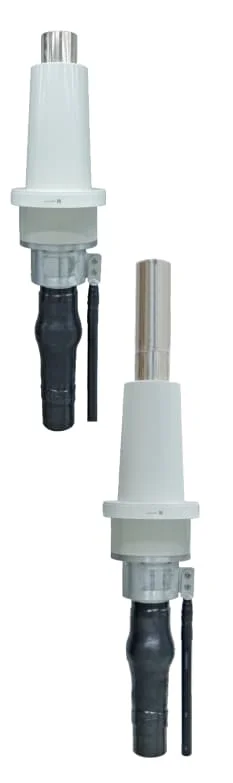
What is a GIS cable termination? 132 kV?
A GIS completion of 132 kV is a high voltage accessory that connects an XLPE power cable with an SF6 gas insulated GIS system. Its main function is to control the electric field and ensure a stable connection between the cable and the GIS equipment..
Unlike traditional AIS terminations, GIS terminations work within closed and compact systems, where the insulation is done using SF6 gas. This makes it possible to reduce the size of substations and significantly improve operational safety..
GIS completions for 132 kV are widely used in:
- Compact urban substations
- Industrial plants
- Renewable energy projects
- Railway networks
- Underground transmission systems
- Petrochemical infrastructure
- Data centers
- International airports
Besides, This type of accessory is essential in projects where available space is limited and high electrical reliability is required..
Differences between GIS and AIS
Many people confuse GIS endings with AIS endings.. Although both have similar functions, there are important differences.
| Feature | GIS | AIS |
|---|---|---|
| insulating medium | SF6 Gas | Aire |
| Substation size | Compact | Grande |
| Maintenance | Low | Half |
| Security | Very high | Alta |
| Urban application | Excellent | Limited |
| Environmental resistance | Very high | Media |
GIS substations are especially popular in densely populated cities because they require less space and offer better pollution protection., humidity and extreme weather conditions.
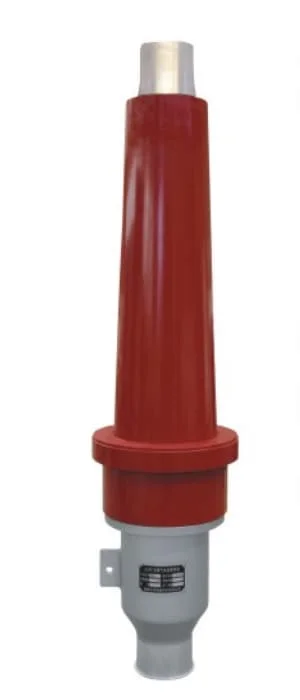
Main components of a GIS completion 132 kV
A high voltage GIS termination is composed of several critical elements. Each component fulfills a specific function within the electrical system.
connecting conductor
The internal conductor carries the electrical current from the cable to the GIS system. It is generally made of high-conductivity copper or aluminum..
stress relief cone
This component controls the distribution of the electric field to avoid partial discharges and dielectric failures..
Composite or porcelain insulator
Insulator provides electrical insulation and mechanical support. Modern models use composite materials due to their lower weight and better impact resistance.
GIS Flange
Flange physically connects termination to SF6 gas sealed GIS compartment.
Sealing system
Sealing prevents gas leaks and protects the system against moisture and external contamination.
Grounding terminal
Grounding protects the system against surges and fault currents.
How does a GIS termination work? 132 kV?
The operating principle is relatively complex but can be summarized in several steps.:
- XLPE cable transmits high voltage electrical energy.
- The GIS termination receives the electrical current.
- The relief cone evenly distributes the electric field.
- The SF6 isolated system prevents electric shocks.
- Power is transferred to GIS switch or busbar.
The entire system must operate without partial discharges, overheating or dielectric losses for decades.
Types of GIS terminations 132 kV
There are different designs depending on the application and manufacturer.
Dry GIS termination
Use solid materials for internal insulation. It has less maintenance and greater environmental cleanliness.
Oil Filled GIS Termination
Use insulating oil to control the electric field. Although it is still used, it is becoming less common.
Pluggable termination
Facilitates quick installation and simplified maintenance.
Premolded finish
Manufactured using pre-molded silicone technology. Offers excellent electrical uniformity.
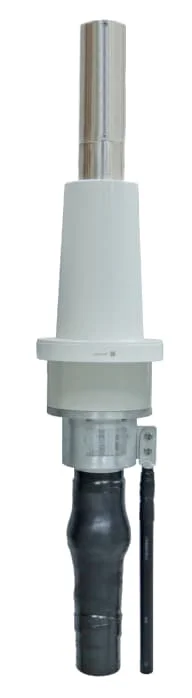
Materials used in high voltage GIS accessories
Quality accessory manufacturers use specialized materials to ensure long life.
High quality silicone
Silicone offers:
- Excellent insulation
- UV resistance
- Moisture resistance
- Mechanical flexibility
- Long lasting
EPDM
EPDM rubber is resistant to aging and is frequently used in seals and covers.
aluminum alloys
They are used to reduce weight without compromising mechanical strength.
electrolytic copper
Guarantees excellent electrical conductivity.
International standards for GIS terminations of 132 kV
A professional manufacturer must meet strict international standards.
IEC 60840
Fundamental standard for power cables higher than 30 kV and even 150 kV.
IEC 62271
Regulates GIS equipment and gas-insulated systems.
IEC 62067
Applicable to high voltage systems greater than 150 kV.
IEEE Standards
Some markets use IEEE specifications for international projects.
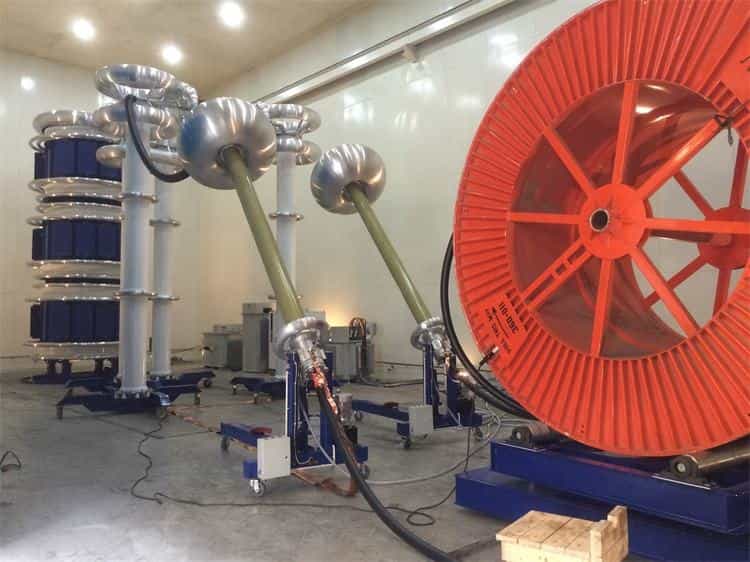
Testing required for GIS accessories 132 kV
Electrical testing is essential to ensure safety and reliability.
Withstand voltage test
Check the isolation capacity against surges.
Partial download test
Detects internal imperfections in the insulation.
Thermal cycles
They simulate real operating conditions.
Lightning impulse test
Evaluates resistance against atmospheric discharges.
Short circuit test
Confirms thermal and mechanical stability.
Importance of electric field control
Control of the electric field is one of the most critical aspects in high voltage accessories.
If the electric field is concentrated excessively at one point, can occur:
- Partial downloads
- Insulation degradation
- Overheating
- Catastrophic failures
For this reason, manufacturers use FEM simulations (Finite Element Method) to optimize the internal design of GIS terminations.
Industrial applications of GIS terminations 132 kV
Urban substations
Modern cities require compact and secure systems.
wind energy
Offshore wind farms widely use GIS due to its environmental resilience.
Solar plants
High voltage connections need reliable accessories for continuous operation.
petrochemical industry
Explosive areas require highly safe electrical equipment.
Railway systems
Electric trains demand stable and compact infrastructure.
Advantages of using GIS terminations 132 kV
Compact design
GIS substations take up much less space.
Greater reliability
SF6 insulation protects against environmental contamination.
Less maintenance
Sealed systems require less intervention.
Improved security
Reduces risks of accidental contact.
Excellent performance in harsh environments
Ideal for coastal areas, industrial or wet.
Common problems in GIS completions
Although they are very reliable systems, Problems may arise if installation is not proper.
Partial downloads
Generally caused by installation defects or contamination.
SF6 gas leaks
They can affect the isolation of the system.
Overheating
It occurs due to poor electrical connections.
Internal humidity
Moisture contamination reduces dielectric strength.
Alignment defects
Improper installation can generate mechanical stress.
GIS termination installation process 132 kV
Installation must be carried out by specialized technicians.
Cable preparation
XLPE cable must be carefully stripped following exact dimensions.
Cleaning the area
Pollution is one of the biggest enemies of high voltage.
Relief Cone Installation
Must be placed with millimeter precision.
Insulator assembly
Correct alignment is essential.
Connection with GIS
It is done using special flanges.
Final essays
Before energizing, complete electrical tests are carried out.
Factors for choosing a GIS accessories manufacturer
Selecting a reliable manufacturer is essential to guarantee the useful life of the system.
High voltage experience
The manufacturer must have a history in projects 132 kV and above.
International certifications
IEC certificates and test reports are essential.
Engineering capacity
Custom designs are important for special projects.
Testing laboratory
Advanced manufacturers have in-house laboratories.
Technical support
Assistance during installation and commissioning adds great value.
Reference cases
International projects demonstrate real reliability.
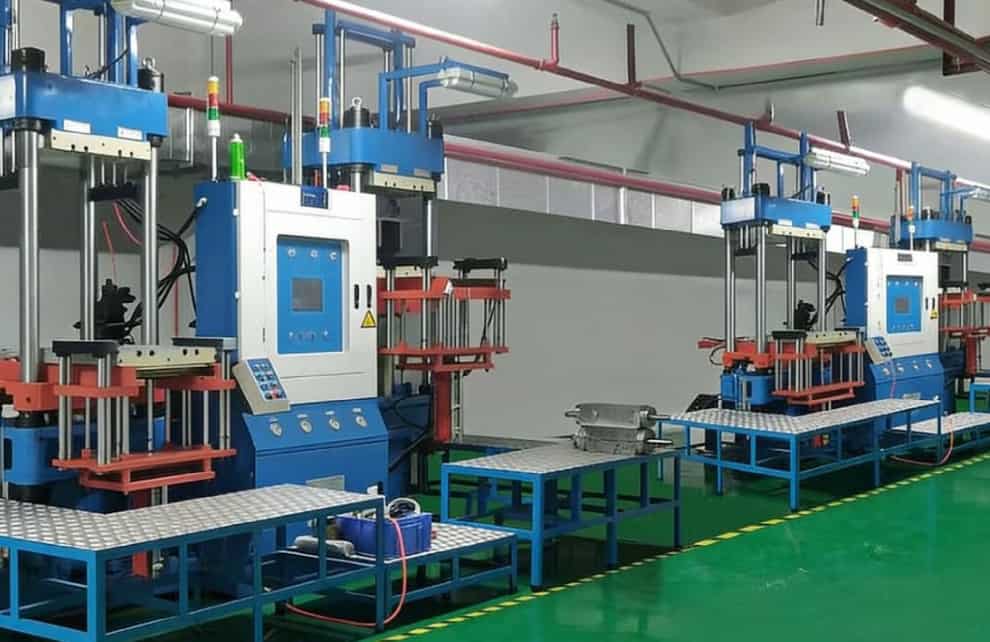
GIS Aftermarket Trends
Global High Voltage Accessories Market Continues to Grow Rapidly.
Expansion of renewable energies
Solar and wind farms drive demand.
Modernization of electrical networks
Many countries are renovating old infrastructure.
Urban development
Cities require compact GIS substations.
Railway projects
Railway electrification increases consumption of GIS accessories.
Premolded finish technology
Precast finishes have become the preferred solution in many projects.
Main benefits
- Faster installation
- Better quality consistency
- Lower risk of errors
- Excellent electrical control
- Longer useful life
Besides, precast solutions significantly reduce on-site installation time.
Comparison Between Porcelain and Composite Finishes
Porcelain
Advantages:
- Excellent UV resistance
- Traditional technology
- High mechanical rigidity
Disadvantages:
- Higher weight
- Fracture risk
- More difficult installation
Composite
Advantages:
- Lightweight
- Better seismic resistance
- Easy transport
- Greater security
Disadvantages:
- Slightly higher cost in some cases
At the moment, most modern projects prefer composite insulators.
Importance of anti-pollution design
Coastal and industrial areas have high levels of pollution.
For this reason, modern GIS accessories include:
- Hydrophobic designs
- Salinity resistant surfaces
- Anti tracking materials
- Advanced seals
These features greatly improve system reliability..
Useful life of a GIS termination 132 kV
A high-quality accessory can operate for more than 30 years yes:
- Installation is correct
- Maintenance is adequate
- The materials are of high quality
- Operating conditions are met
Durability depends greatly on the manufacturer and the quality of the internal design.
GIS Accessories Maintenance
Although maintenance is relatively low, some inspections are necessary.
Visual inspection
Check external damage or contamination.
Partial discharge measurement
Allows early defects to be detected.
Gas pressure check
SF6 must be kept within adequate parameters.
Infrared thermography
Detects hot spots and faulty connections.
International GIS Accessories Manufacturers Market
Currently there are manufacturers in:
- China
- Germany
- Japan
- South Korea
- Italia
- India
Many international buyers seek out Asian manufacturers due to the combination of competitive quality and reasonable costs..
However, quality can vary significantly between suppliers. That's why, It is always advisable to verify test reports, project references and technical capacity.
Technological innovations in GIS accessories
The electrical industry continues to evolve rapidly.
Advanced digital simulation
Optimizes complex electrical designs.
Ecological materials
Alternatives to SF6 are being investigated to reduce environmental impact.
Smart monitoring
Online sensors allow continuous monitoring.
Automated manufacturing
Improves production consistency and precision.
How to reduce failures in GIS systems 132 kV
Failures can be minimized through good practices.
Reliable manufacturer selection
Initial quality is the most important factor.
Technical training
Installers must be certified.
Clean installation environment
Pollution can cause partial discharge.
Appropriate tests
Final tests are mandatory before energizing.
Preventive monitoring
Early monitoring prevents serious failures.
Future trends in GIS substations
GIS substations will continue to grow due to multiple advantages.
Major trends include:
- Greater compaction
- Digitization
- Reduction of environmental emissions
- Integration with smart grids
- Greater automation
This will create even greater demand for high quality GIS completions.
GIS cable termination 132 kV – Accessories manufacturer
GIS cable termination 132 kV accessories manufacturer It is one of the most important components within modern electrical transmission systems.. Its critical function requires advanced designs, specialized materials and strict quality controls.
At the moment, International energy projects demand reliable accessories capable of operating for decades under extreme conditions. For that reason, Choosing a professional GIS accessories manufacturer is a strategic decision for any electrical company, EPC contractor or international distributor.
Besides, global urbanization trends, Renewable energy and network modernization will continue to drive GIS market growth in the coming years.
Manufacturers that invest in innovation, International certifications and quality control will have a privileged position within the global market for high voltage electrical accessories.