
Introduction
At the moment, Global electricity demand continues to increase due to urban growth, industrial expansion and the development of renewable energies. For this reason, Power grids need safer transmission systems, efficient and capable of transporting large amounts of energy for long periods of time.
He Cable 138 kV represents an advanced solution for high voltage networks, since it allows electrical energy to be transmitted with great stability and low losses. Besides, This type of cable is widely used in connections between substations, power plants, wind farms, solar plants and large industrial facilities.
Unlike traditional airlines, he underground cable 138 kV offers important advantages in areas where there are space limitations, strict environmental requirements or special safety needs. In addition, Provides greater protection against adverse weather conditions such as storms, strong winds and pollution.
Thanks to the development of XLPE insulation technology, he XLPE cable 138 kV has become one of the most used solutions for modern electrical transmission systems. This design allows for excellent dielectric resistance., high thermal stability and long service life.
What is a Cable 138 kV?
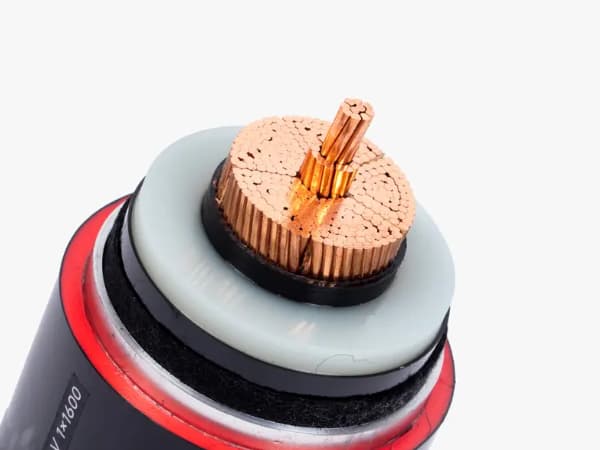
And Cable 138 kV is an electrical cable designed to operate with a nominal voltage of 138 kilovolts. Mainly, It is used in transmission and subtransmission networks where high electrical transport capacity and maximum reliability are required..
Compared to medium voltage cables, the cables of 138 kV have a more complex structure to correctly control the internal electric field. Besides, They incorporate special materials capable of withstanding electrical stress, thermal and mechanical for decades.
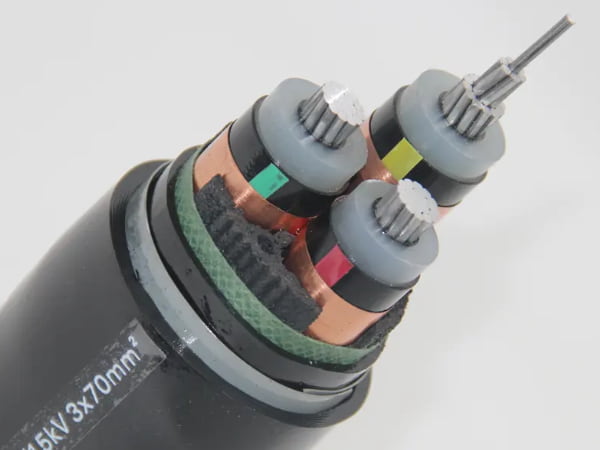
Normally, A complete system is composed of:
- Copper or aluminum conductor.
- inner semiconducting layer.
- XLPE insulation.
- Outer semiconducting layer.
- copper metal screen.
- Moisture barrier.
- Outer protective cover.
Each layer performs a specific function. For example, insulation prevents electrical losses, while the metal screen controls the electric field and improves the security of the system.
Current capacity of copper and aluminum conductors (50–2500 mm²)
| Driver section (mm²) | copper conductor (A) | aluminum conductor (A) |
|---|---|---|
| 50 mm² | 220 A | 170 A |
| 70 mm² | 280 A | 215 A |
| 95 mm² | 350 A | 270 A |
| 120 mm² | 415 A | 320 A |
| 150 mm² | 480 A | 370 A |
| 185 mm² | 550 A | 425 A |
| 240 mm² | 650 A | 500 A |
| 300 mm² | 760 A | 590 A |
| 400 mm² | 890 A | 690 A |
| 500 mm² | 1020 A | 790 A |
| 630 mm² | 1180 A | 920 A |
| 800 mm² | 1400 A | 1090 A |
| 1000 mm² | 1600 A | 1250 A |
| 1200 mm² | 1800 A | 1400 A |
| 1400 mm² | 2000 A | 1550 A |
| 1600 mm² | 2200 A | 1700 A |
| 1800 mm² | 2400 A | 1850 A |
| 2000 mm² | 2600 A | 2000 A |
| 2500 mm² | 3100 A | 2400 A |
Main characteristics of XLPE Cable 138 kV
He XLPE cable 138 kV stands out for its excellent electrical and mechanical properties. At the moment, This technology progressively replaces old systems due to its greater efficiency and lower need for maintenance.
Excellent electrical performance
First of all, XLPE insulation has a high dielectric strength. Therefore, can withstand high levels of stress without premature degradation.
Besides, This material has a low dielectric loss, allowing to improve energy efficiency and reduce losses during transmission.
High thermal resistance
In addition, XLPE cables can work continuously at elevated temperatures. Normally, The maximum temperature of the conductor can reach approximately 90 °C in continuous operation.
For this reason, he High tension cable 138 kV can carry higher levels of current while maintaining safe and stable operation.
Long lifespan
Another important advantage is its durability.. When the design, Manufacturing and installation meet technical requirements, a high tension cable can exceed the 40 years of service.
Besides, XLPE's excellent resistance to thermal aging allows it to maintain its electrical properties for long periods.
Construction of the high tension cable 138 kV
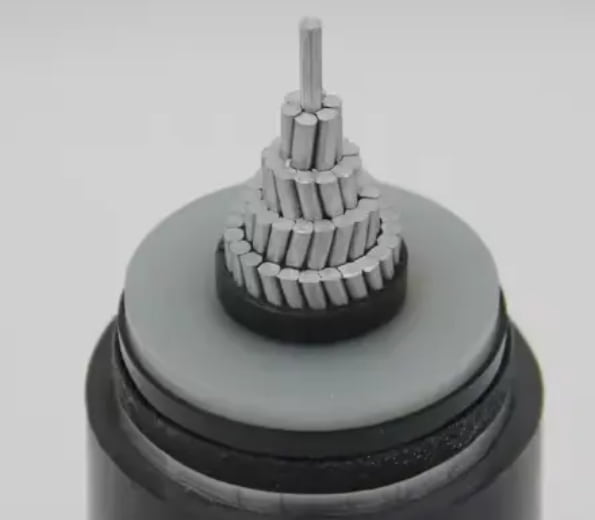
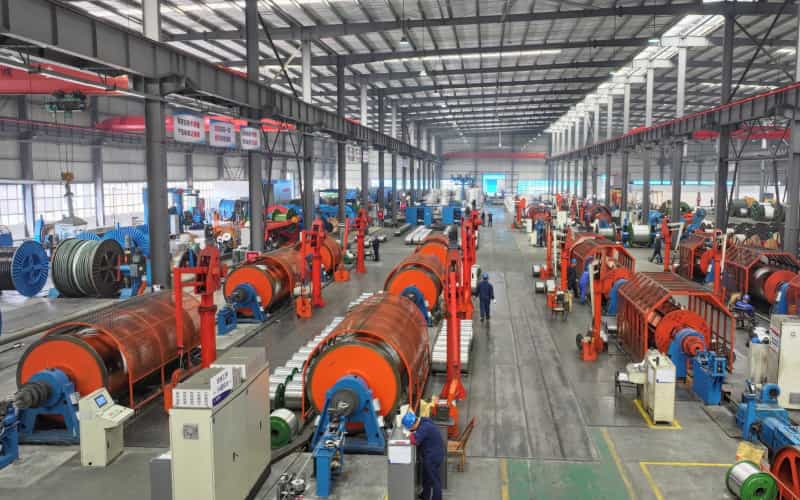
The design of a High tension cable 138 kV requires highly controlled manufacturing processes. Especially, Insulation production must be carried out in clean environments to avoid any contamination that may affect electrical performance..
electric driver
The conductor can be made mainly of copper or aluminum.
On the one hand, copper conductor offers:
- Greater electrical conductivity.
- Lower resistance.
- Excellent current capacity.
On the other hand, aluminum conductor provides:
- Lower weight.
- Ease of transportation.
- More competitive cost.
Therefore, Driver selection depends on factors such as transmission distance, the required capacity and economic conditions of the project.
insulation system
XLPE insulation is one of the most important components of the cable. Its main function is to prevent electrical leakage and ensure uniform distribution of the electric field..
Besides, through advanced triple extrusion processes, manufacturers can produce insulation layers with high uniformity and excellent quality.
Metal screen and exterior protection
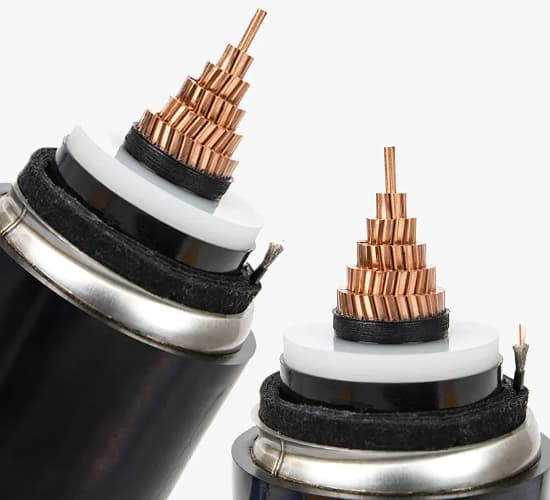
Metal shield provides a safe path for induced currents and fault currents. In addition, helps control the electric field around the insulation.
Finally, Outer jacket protects cable from moisture, mechanical impacts and environmental agents.
Underground Cable Applications 138 kV
He underground cable 138 kV It is increasingly used in projects where security, Reliability and environmental protection are priority factors. At the moment, Many electric companies opt for underground systems due to their advantages over traditional overhead lines.
First of all, These cables are widely used in urban electrical networks. Due to the lack of available space in large cities, Underground facilities allow increasing transmission capacity without affecting the urban landscape.
In addition, he Cable 138 kV plays an important role in connecting electrical substations. For example, allows energy to be transported from generation centers to regional distribution points, guaranteeing a stable supply for residential and industrial consumers.
Besides, This type of cable is a common solution in renewable energy projects. Wind farms and photovoltaic plants require high voltage systems capable of transmitting the generated energy to the main grid efficiently..
Besides, industries such as mining, petrochemistry, steel, Rail transportation and data centers need highly reliable power grids. In these sectors, An electrical failure can cause significant economic losses; for this reason, the cables of 138 kV offer a safe and long-lasting solution.
International standards for cables 138 kV
The manufacturing of a High tension cable 138 kV must meet strict technical requirements to guarantee its operation throughout its useful life.
At the moment, The main standards used in international projects include:
- IEC 60840 for high voltage extruded insulated power cables.
- IEC 60228 for electrical conductors.
- IEC 60811 for testing insulating materials and covers.
- AEIC CS8 used in numerous North American projects.
- ICEA S-108-720 for high voltage power cables.
In addition to complying with these standards, a professional manufacturer must carry out internal controls throughout the production process. This way, Each cable is guaranteed to deliver stable performance under different operating conditions.
Therefore, When a customer selects a Cable supplier 138 kV, You must verify not only the price of the product, but also technical experience, manufacturing processes and the ability to perform full testing.
Cable quality tests 138 kV
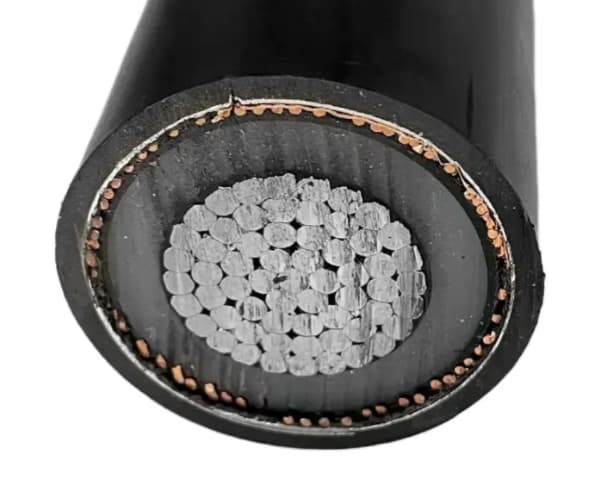
The quality of a XLPE cable 138 kV It depends directly on the controls carried out during manufacturing. For this reason, specialized manufacturers apply numerous tests before delivering the product.
Among the main controls are:
Conductor resistance test
This test verifies that the conductor complies with the established electrical values. Besides, allows you to confirm that the transmission capacity of the cable corresponds to the requested design.
Partial discharge test
Partial discharge measurement is one of the most important tests for high voltage cables. Through this test, small internal insulation defects can be detected before they cause serious failures..
Withstand voltage test
During this test, the cable is subjected to tension greater than its normal operating level. In this way, the resistance of the insulating system is checked.
electrical impulse test
In addition, Impulse tests are carried out to simulate possible surges caused by lightning or power grid maneuvers.
Outer shell test
Finally, The cover is tested for water resistance, mechanical impacts and environmental conditions.
Thanks to these controls, and cable manufacturer 138 kV can offer products with high levels of security and reliability.
Cable terminal 138 kV and system accessories
A complete transmission system is not made up of cable alone. Besides, requires specialized accessories that guarantee a secure connection between different electrical equipment.
He Cable terminal 138 kV It is one of the most important components of the system. Its main function is to connect the cable with equipment such as:
- AIS substations.
- GIS Substations.
- power transformers.
- High voltage switching equipment.
At the moment, There are different types of terminals depending on the installation conditions:
Terminal exterior
Mainly used in outdoor installations. These terminals must resist contamination, humidity, solar radiation and temperature changes.
GIS terminal for cable 138 kV
In gas-encapsulated substations, The GIS terminal allows the cable to be connected to compact equipment where available space is limited.
Besides, Modern terminals incorporate advanced electric field control systems to reduce the risk of partial discharges.
Splice for cable 138 kV
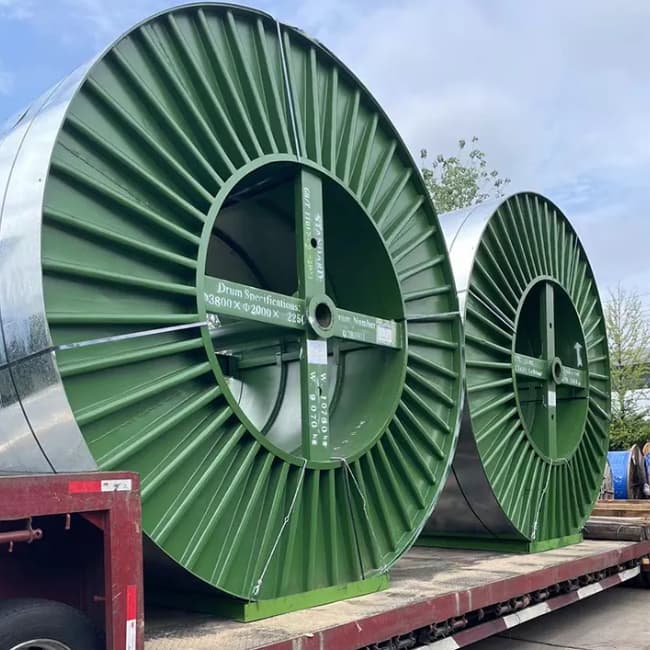
He Splice for cable 138 kV allows different cable sections to be joined during installation. This accessory is especially important on projects where the total length exceeds the maximum manufacturing or transportation capacity..
A high voltage connection must guarantee:
- Conductor electrical continuity.
- Correct connection of the metal screen.
- Moisture protection.
- Mechanical strength.
- Uniform control of the electric field.
In addition, Modern splices use high-precision prefabricated materials that facilitate installation and reduce the risk of errors during assembly.
For this reason, Selecting accessories compatible with the main cable is essential to ensure the reliability of the entire system.
Why choose a cable manufacturer 138 kV professional?
Select a cable manufacturer 138 kV with experience allows you to reduce technical risks and guarantee better results throughout the project.
A specialized manufacturer can provide:
- Custom design according to customer needs.
- Proper conductor and insulation selection.
- Production under international standards.
- Complete testing before delivery.
- Detailed technical documentation.
- Support during installation and commissioning.
Besides, A professional supplier understands that each electrical project has different conditions. Therefore, the solution must be adapted to factors such as power required, circuit length, installation method and environmental conditions.
Dosense Cable: Reliable solutions for Cable 138 kV
Dosense Cable offers high voltage solutions designed to meet the needs of modern electrical networks. Thanks to a combination of advanced technology, industrial experience and quality control, the company provides cables suitable for international projects.
The main advantages include:
- Manufacture of high voltage cables with XLPE insulation.
- Use of high quality copper and aluminum conductors.
- Strict control of electrical parameters.
- Complete testing before shipment.
- Development of customized solutions.
- Compatibility with high voltage terminals and splices.
In addition, Dosense Cable pays attention to each stage of the project, from initial design to final delivery. This way, customers receive not only a product, but also a complete solution for electric transmission.
Frequently Asked Questions about Cable 138 kV
What is a Cable 138 kV?
It is a high voltage cable designed to transport electrical energy to 138 kilovolts, mainly used in transmission and subtransmission networks.
What is the advantage of XLPE Cable 138 kV?
Offers excellent electrical insulation, Thermal resistance, low energy loss and long life.
Where is an underground cable normally installed? 138 kV?
It is installed in cities, substations, renewable plants, industries and other projects where high reliability is required.
What accessories does a system need? 138 kV?
Typically includes terminals, splices, screen connection systems and other specialized accessories.
How long can a cable run? 138 kV?
With proper design and professional installation, can operate for more than 40 years.
Conclusion
He Cable 138 kV It is an essential solution for modern electrical networks that require high transmission capacity, safety and efficiency. Thanks to the development of XLPE insulation and advanced manufacturing processes, These cables can offer stable performance for decades.
Besides, the combination between a high quality cable, and Cable terminal 138 kV suitable and a Splice for cable 138 kV reliable guarantees the safe operation of the entire electrical system.
For this reason, choose a cable manufacturer 138 kV with international experience is a key factor for the success of any electrical transmission project.