
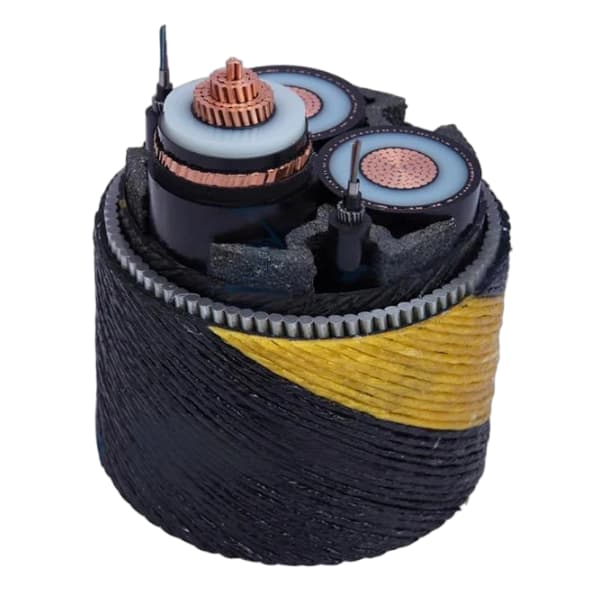
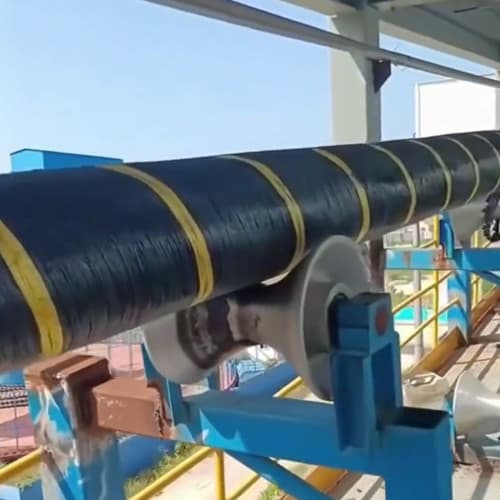
Kabel dasar selam 20kV, 22kV y 24kV son fundamentales para la transmisión de energía eléctrica en entornos marinos y costeros, seperti ladang angin luar pesisir, pulau dan pelantar minyak. Dan cable submarino de media tensión 20-24 kV debe garantizar seguridad, durabilidad y cumplimiento de normas internacionales, ofreciendo soluciones confiables durante décadas.
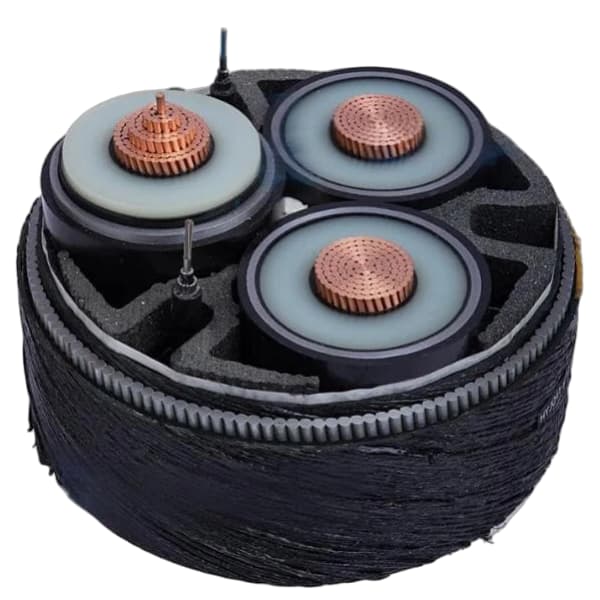
Apakah kabel dasar selam 20-24 kV?
Los cables submarinos de media tensión de 20kV, 22kV y 24kV se utilizan para transmitir energía entre generadores y subestaciones, interconectar islas o suministrar energía a plataformas marinas. Selain itu, deben resistir condiciones marinas extremas, como presión del agua, arus, abrasión y corrosión.
Estos cables cumplen estándares internacionales como IEC 60228, IEC 60502, IEC 60840 y ASTM, garantizando compatibilidad global y seguridad en la operación.

Struktur kabel dasar selam 20-24 kV
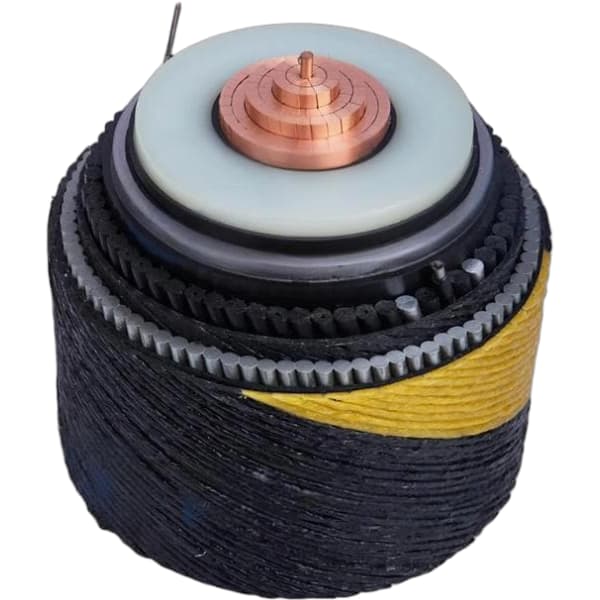
Un cable submarino típico de 20-24 kV incluye:
Konduktor
Pemandu boleh tembaga atau aluminium, y su sección se selecciona según la corriente nominal y normativa IEC o ASTM. Esto influye en la resistencia eléctrica y la eficiencia energética del sistema.
Pengasingan
penebat digunakan XLPE atau EPR, ofreciendo alta resistencia eléctrica, haba dan kimia, protegiendo contra descargas parciales y cortocircuitos.
Skrin dan penutup logam
The skrin semikonduktor dan penutup plumbum impiden la entrada de agua, asegurando integridad eléctrica durante toda la vida útil del cable.
Perisai
Perisai boleh keluli tergalvani atau dawai aluminium, proporcionando resistencia mecánica frente a impactos, tracción y manipulaciones durante la instalación.
Penutup luar
The penutup luar daripada Fri o pvc protege contra abrasión, corrosión y factores ambientales, garantizando durabilidad y fiabilidad en entornos marinos exigentes.
Saiz konduktor IEC (25 mm² – 2000 mm²)
Los fabricantes producen cables de 20-24 kV con las siguientes secciones según IEC 60228:
| Bahagian IEC (mm²) | Konduktor | Pengasingan | penutup plumbum | Perisai | Penutup luar |
|---|---|---|---|---|---|
| 25 | Cu / Al | XLPE / EPR | Ya | Keluli / Al | PE / PVC |
| 35 | Cu / Al | XLPE / EPR | Ya | Keluli / Al | PE / PVC |
| 50 | Cu / Al | XLPE / EPR | Ya | Keluli / Al | PE / PVC |
| 70 | Cu / Al | XLPE / EPR | Ya | Keluli / Al | PE / PVC |
| 95 | Cu / Al | XLPE / EPR | Ya | Keluli / Al | PE / PVC |
| 120 | Cu / Al | XLPE / EPR | Ya | Keluli / Al | PE / PVC |
| 150 | Cu / Al | XLPE / EPR | Ya | Keluli / Al | PE / PVC |
| 185 | Cu / Al | XLPE / EPR | Ya | Keluli / Al | PE / PVC |
| 240 | Cu / Al | XLPE / EPR | Ya | Keluli / Al | PE / PVC |
| 300 | Cu / Al | XLPE / EPR | Ya | Keluli / Al | PE / PVC |
| 400 | Cu / Al | XLPE / EPR | Ya | Keluli / Al | PE / PVC |
| 500 | Cu / Al | XLPE / EPR | Ya | Keluli / Al | PE / PVC |
| 630 | Cu / Al | XLPE / EPR | Ya | Keluli / Al | PE / PVC |
| 800 | Cu / Al | XLPE / EPR | Ya | Keluli / Al | PE / PVC |
| 1000 | Cu / Al | XLPE / EPR | Ya | Keluli / Al | PE / PVC |
| 1200 | Cu / Al | XLPE / EPR | Ya | Keluli / Al | PE / PVC |
| 1600 | Cu / Al | XLPE / EPR | Ya | Keluli / Al | PE / PVC |
| 2000 | Cu / Al | XLPE / EPR | Ya | Keluli / Al | PE / PVC |
Saiz Konduktor ASTM / AWG (20 AWG – 1000 MCM)
Untuk projek antarabangsa, también se utilizan conductores siguiendo ASTM / AWG:
| Saiz pemandu | Konduktor | Pengasingan | penutup plumbum | Perisai | Penutup luar |
|---|---|---|---|---|---|
| 20 AWG | Cu / Al | XLPE / EPR | Ya | Keluli / Al | PE / PVC |
| 18 AWG | Cu / Al | XLPE / EPR | Ya | Keluli / Al | PE / PVC |
| 16 AWG | Cu / Al | XLPE / EPR | Ya | Keluli / Al | PE / PVC |
| 14 AWG | Cu / Al | XLPE / EPR | Ya | Keluli / Al | PE / PVC |
| 12 AWG | Cu / Al | XLPE / EPR | Ya | Keluli / Al | PE / PVC |
| 10 AWG | Cu / Al | XLPE / EPR | Ya | Keluli / Al | PE / PVC |
| 8 AWG | Cu / Al | XLPE / EPR | Ya | Keluli / Al | PE / PVC |
| 6 AWG | Cu / Al | XLPE / EPR | Ya | Keluli / Al | PE / PVC |
| 4 AWG | Cu / Al | XLPE / EPR | Ya | Keluli / Al | PE / PVC |
| 2 AWG | Cu / Al | XLPE / EPR | Ya | Keluli / Al | PE / PVC |
| 1 AWG | Cu / Al | XLPE / EPR | Ya | Keluli / Al | PE / PVC |
| 1/0 AWG | Cu / Al | XLPE / EPR | Ya | Keluli / Al | PE / PVC |
| 2/0 AWG | Cu / Al | XLPE / EPR | Ya | Keluli / Al | PE / PVC |
| 3/0 AWG | Cu / Al | XLPE / EPR | Ya | Keluli / Al | PE / PVC |
| 4/0 AWG | Cu / Al | XLPE / EPR | Ya | Keluli / Al | PE / PVC |
| 250 MCM | Cu / Al | XLPE / EPR | Ya | Keluli / Al | PE / PVC |
| 300 MCM | Cu / Al | XLPE / EPR | Ya | Keluli / Al | PE / PVC |
| 350 MCM | Cu / Al | XLPE / EPR | Ya | Keluli / Al | PE / PVC |
| 400 MCM | Cu / Al | XLPE / EPR | Ya | Keluli / Al | PE / PVC |
| 500 MCM | Cu / Al | XLPE / EPR | Ya | Keluli / Al | PE / PVC |
| 600 MCM | Cu / Al | XLPE / EPR | Ya | Keluli / Al | PE / PVC |
| 750 MCM | Cu / Al | XLPE / EPR | Ya | Keluli / Al | PE / PVC |
| 1000 MCM | Cu / Al | XLPE / EPR | Ya | Keluli / Al | PE / PVC |
Jadual teknikal lengkap kabel dasar selam 20-24 kV
| Bahagian (mm² / AWG) | Konduktor | Diameter konduktor (mm) | Ketebalan penebat (mm) | Ketebalan perisai (mm) | Diameter luaran (mm) | PESO (kg/m) | Rintangan DC (Ω/km) | Nilai semasa (A) |
|---|---|---|---|---|---|---|---|---|
| 25 | Cu | 5,64 | 3,5 | 4,0 | 21,0 | 2,7 | 0,727 | 125 |
| 50 | Cu | 7,98 | 3,8 | 4,0 | 24,2 | 4,5 | 0,386 | 185 |
| 95 | Cu | 11,0 | 4,2 | 4,5 | 30,8 | 7,9 | 0,206 | 265 |
| 120 | Cu | 12,2 | 4,5 | 4,5 | 33,4 | 9,8 | 0,153 | 310 |
| 185 | Cu | 15,3 | 5,0 | 5,0 | 39,0 | 14,2 | 0,099 | 390 |
| 240 | Cu | 17,5 | 5,0 | 5,0 | 44,0 | 18,0 | 0,076 | 450 |
| 300 | Cu | 19,6 | 5,5 | 5,0 | 48,5 | 22,0 | 0,064 | 520 |
| 400 | Cu | 22,5 | 6,0 | 5,5 | 56,0 | 31,0 | 0,048 | 600 |
| 500 | Cu | 25,2 | 6,0 | 5,5 | 61,5 | 37,5 | 0,038 | 710 |
| 630 | Cu | 28,3 | 6,5 | 6,0 | 67,0 | 43,0 | 0,030 | 780 |
| 800 | Cu | 31,9 | 6,5 | 6,0 | 74,5 | 53,0 | 0,024 | 870 |
| 1000 | Cu | 35,7 | 7,0 | 6,0 | 82,5 | 63,0 | 0,019 | 980 |
| 1200 | Cu | 39,6 | 7,0 | 6,5 | 89,0 | 72,0 | 0,015 | 1020 |
| 1600 | Al | 45,0 | 7,5 | 7,0 | 100,0 | 75,0 | 0,012 | 1100 |
| 2000 | Al | 50,3 | 7,5 | 7,0 | 112,0 | 92,0 | 0,009 | 1220 |
Aplikasi kabel dasar laut 20-24 kV
- Ladang angin luar pesisir: interconexión de turbinas y subestaciones.
- Islas y comunidades costeras: suministro confiable de energía.
- Platform minyak dan gas: alimentación de equipos críticos.
- Redes de distribución y subestaciones costeras: interconexión y distribución eficiente.
Un cable submarino de 20-24 kV confiable asegura eficiencia, keselamatan dan ketahanan.
Pruebas y normas
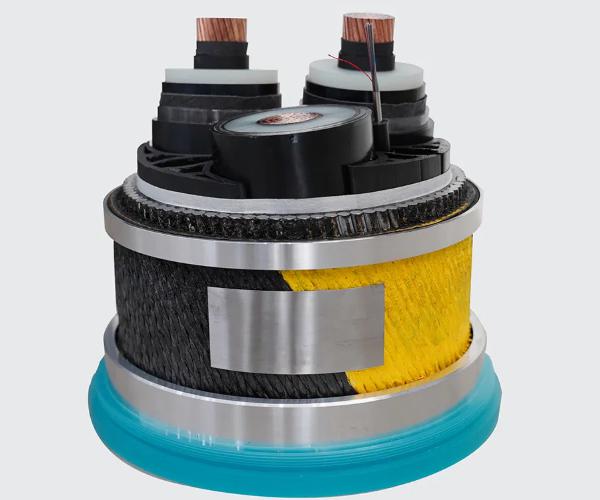
Los cables pasan pruebas rigurosas:
- Elektrik: ketegangan, muat turun separa, Rintangan DC.
- mekanikal: daya tarikan, lenturan, kesan.
- alam sekitar: resistencia a agua, kakisan, envejecimiento térmico.
Cumplen normas IEC 60228, IEC 60502, IEC 60840, ASTM B3, ASTM B8 y IEEE, garantizando seguridad y compatibilidad global.
Cómo elegir un cable submarino 20-24 kV
Al seleccionar un cable submarino 20-24 kV, pertimbangkan:
- Experiencia del fabricante en entornos marinos.
- Cumplimiento de normas IEC y ASTM.
- Calidad de conductores, pengasingan, perisai dan penutup.
- Certificaciones de pruebas eléctricas, mekanikal dan alam sekitar.
- Soporte técnico y referencias de proyectos offshore.
De esta manera, se garantiza la seguridad y eficiencia en sistemas eléctricos submarinos de media tensión.
Respecto a cables submarinos de 5kV, por favor consulte…