
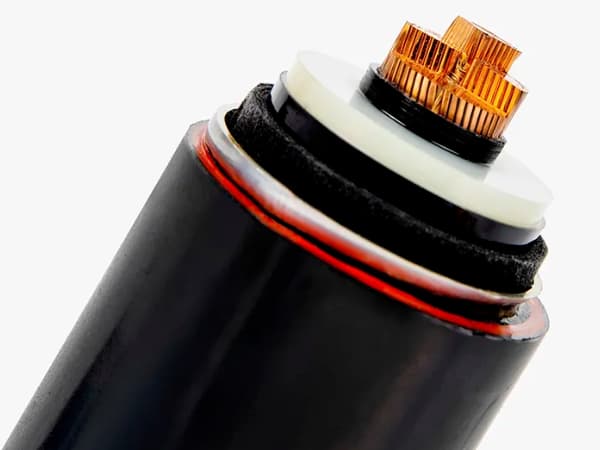
The importance of high voltage wiring in modern infrastructure
The growth of cities, Renewable energy projects and smart grids have increased demand for safer and more efficient electrical systems. In this context, 115kV XLPE cable has become one of the most used solutions for high voltage underground electrical transmission.
At the moment, electric companies, industrial plants, solar projects, Wind farms and railway systems use 115kV cables to transport large amounts of energy with high operational stability.
Thanks to its excellent cross-linked polyethylene insulation, XLPE cable offers:
- Greater transmission capacity
- Better thermal resistance
- Less maintenance
- High service life
- Excellent dielectric behavior
- Greater environmental safety
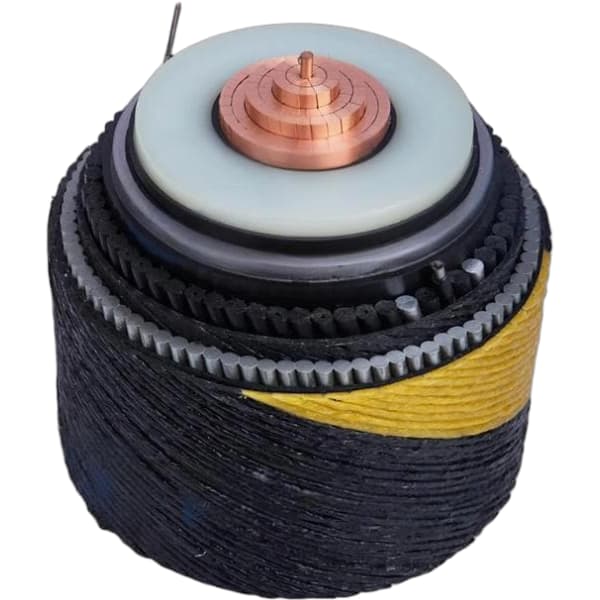
What does XLPE mean in a 115kV cable?
XLPE significa “Cross Linked Polyethylene”, known in Spanish as cross-linked polyethylene. This material is used as the main insulation in medium and high voltage electrical cables..
The cross-linking of polyethylene considerably improves the physical and electrical properties of the insulation, allowing operation in extreme conditions of temperature and electrical load.
115kV XLPE cables are typically designed for systems:
- 64/110kV
- 69/115kV
and can work at both 50Hz and 60Hz frequency.
Main applications of 115kV XLPE cable
Underground Transmission Systems Require Strong, Reliable Cables. For this reason, 115kV cable is widely used in:
Underground urban networks
Large cities replace overhead lines with buried systems to:
- Reduce visual pollution
- Improve public safety
- Reduce climate failures
Renewable energy projects
Solar and wind farms use high-voltage cables to transport electricity to substations and national grids..
Industrial plants
Sectors like:
- mining
- steel
- petrochemistry
- heavy manufacturing
require stable electrical power through high capacity cables.
Transportation infrastructure
115kV cables are also used in:
- airports
- railway systems
- urban metro
- sea ports
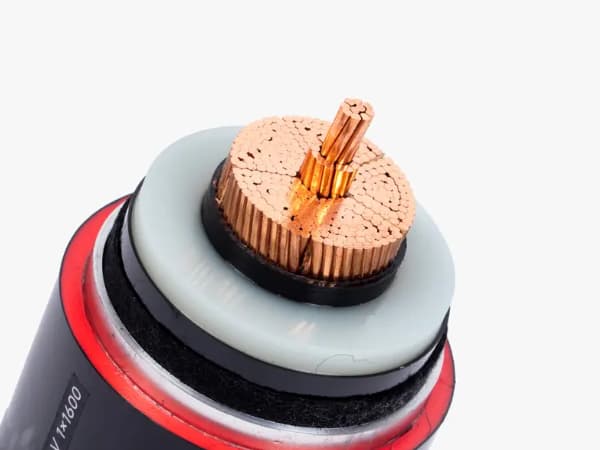
Internal structure of a 115kV XLPE cable
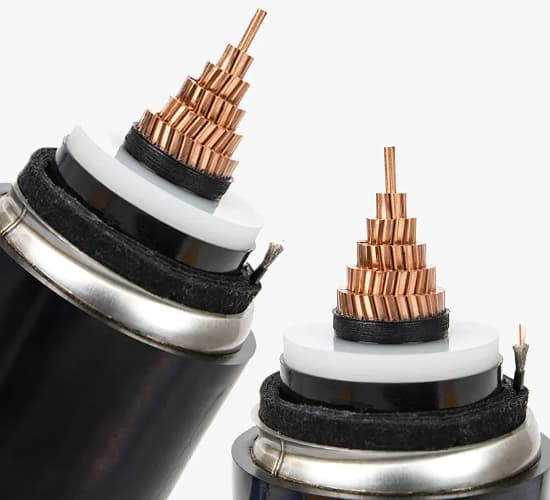
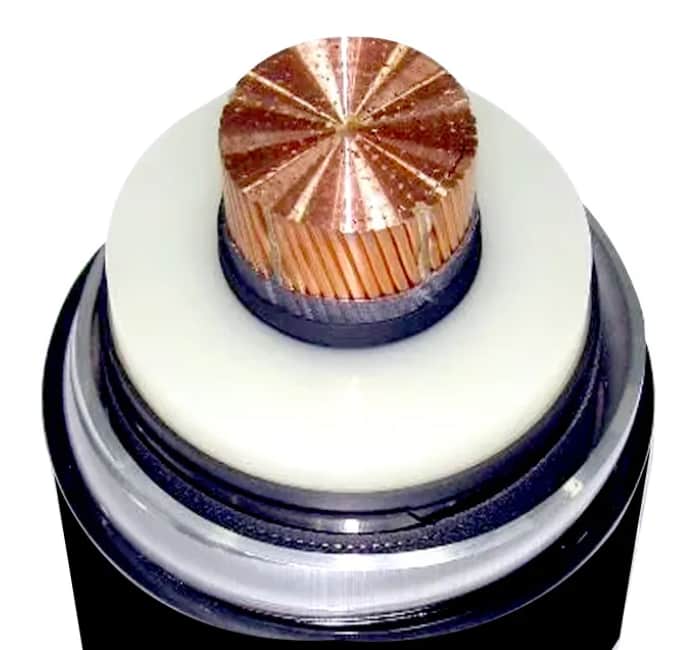
A high voltage cable is made up of several layers designed to withstand electrical stress., thermal and mechanical.
Main components
| Component | Function |
|---|---|
| Conductor | current transport |
| Driver screen | Electric field control |
| XLPE insulation | Main insulation |
| Insulation screen | Dielectric uniformity |
| Metal screen | Fault current path |
| Water blocking layer | Moisture protection |
| Armor | Mechanical protection |
| External cover | Environmental protection |
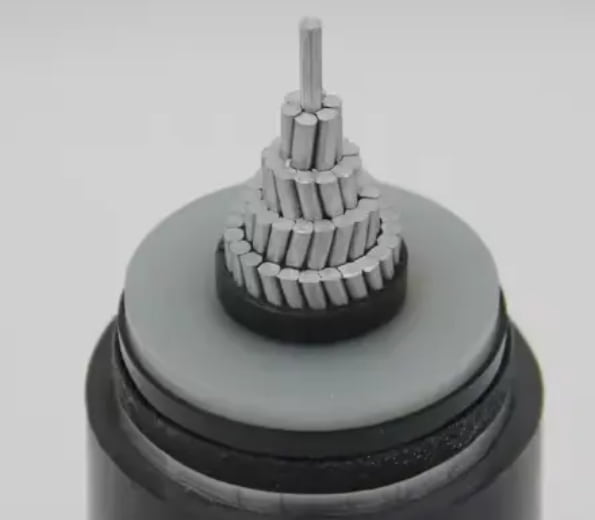
Advantages of XLPE cable over other types of cables
Excellent thermal resistance
XLPE insulation can withstand:
| Condition | Temperature |
|---|---|
| Continuous operation | 90°C |
| emergency overload | 130°C |
| Short circuit | 250°C |
This allows more current to be transmitted without affecting the life of the cable..
Lower electrical losses
XLPE has low dielectric losses, which improves energy efficiency.
Long lifespan
A properly installed system can operate for more than 40 years.
Less maintenance
Unlike old oil cables, XLPE cable does not need:
- pressure monitoring
- fluid maintenance
- complex sealing systems
Differences between copper and aluminum conductor
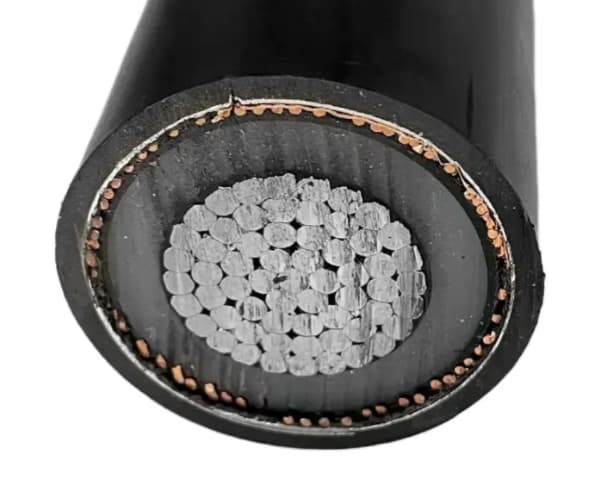
Driver selection depends on the project, budget and required capacity.
Advantages of copper
- Higher conductivity
- Smaller diameter
- Lower energy losses
- Better mechanical resistance
Advantages of aluminum
- Lower cost
- Reduced weight
- More economical installation
- Suitable for long distances
American AWG and MCM table for 115kV cable
AWG and MCM sizes are used in the United States and some international markets..
Tabla AWG/MCM
| Size | approximate mm² |
|---|---|
| 12 AWG | 3.31 |
| 10 AWG | 5.26 |
| 8 AWG | 8.37 |
| 6 AWG | 13.3 |
| 4 AWG | 21.1 |
| 2 AWG | 33.6 |
| 1 AWG | 42.4 |
| 1/0 AWG | 53.5 |
| 2/0 AWG | 67.4 |
| 3/0 AWG | 85 |
| 4/0 AWG | 107.2 |
| 250 MCM | 126.7 |
| 300 MCM | 152 |
| 350 MCM | 177.3 |
| 400 MCM | 202.7 |
| 500 MCM | 253.4 |
| 600 MCM | 304 |
| 750 MCM | 380.1 |
| 800 MCM | 405.4 |
| 1000 MCM | 506.7 |
IEC table of metric sections from 50mm² to 3000mm²
In Europe, Asia and Latin America use IEC sizes expressed in square millimeters.
IEC board
| IEC Section | Typical application |
|---|---|
| 50 mm² | Light distribution |
| 70 mm² | Industrial networks |
| 95 mm² | Urban food |
| 120 mm² | Commercial networks |
| 150 mm² | Half capacity |
| 185 mm² | High demand |
| 240 mm² | Substations |
| 300 mm² | Urban transmission |
| 400 mm² | Industrial energy |
| 500 mm² | power networks |
| 630 mm² | Electrical projects |
| 800 mm² | High capacity |
| 1000 mm² | Heavy transmission |
| 1200 mm² | Energy infrastructure |
| 1400 mm² | Sistemas HV |
| 1600 mm² | Large substations |
| 2000 mm² | Transmission networks |
| 2500 mm² | Utility projects |
| 3000 mm² | Ultra high capacity |
Most used installation methods
Direct buried installation
It is one of the most economical and common methods.
Normally includes:
- sand bed
- warning tape
- protective plates
Installation in ducts
Widely used in urban areas where future maintenance is important.
Installation in tunnels
Large cities and critical electrical systems use tunnels to:
- multiple circuits
- better ventilation
- maintenance access
Accessories used in 115kV systems
A complete system includes different specialized accessories.
| Accessory | Function |
|---|---|
| Terminal exterior | Connection to substation |
| Terminal GIS | Connection to GIS |
| straight splice | cable union |
| Insulated splice | Sectioning |
| Link box | Grounding management |
Electrical tests carried out in the factory
Manufacturers conduct multiple tests to ensure cable quality.
Routine tests
- Driver resistance
- Partial download
- AC voltage test
- Dimensional verification
Type tests
- atmospheric impulse
- Thermal cycles
- Short circuit test
- Bending test
Important factors for selecting a 115kV cable
Before purchasing high voltage XLPE cable, It is important to consider:
Current capacity
Conductor size must support the required load.
Environmental conditions
It must be evaluated:
- room temperature
- humidity
- soil type
- mechanical risk
Installation method
The thermal capacity changes depending on:
- directly buried
- ducts
- tunnels
Technical regulations
The cable must meet international standards such as:
- IEC 60840
- IEC 62067
- AEIC
- ICEA
- IEEE
Current trends in high voltage cables
The global HV cables market continues to grow due to:
- urban sprawl
- renewable energies
- industrial electrification
- smart networks
- transportation infrastructure
Modern manufacturers are developing:
- higher capacity cables
- ecological materials
- intelligent monitoring systems
- better moisture barriers
Future Outlook of 115kV XLPE Cable
Global energy transition will continue to drive demand for underground high-voltage cables.
Future projects will require:
- higher reliability
- less electrical loss
- quick installation
- greater thermal capacity
- advanced digital monitoring
For this reason, 115kV XLPE cable will continue to be a fundamental solution for modern electrical transmission.
Cable XLPE de 115kV
The 115kV XLPE cable represents one of the most important technologies in high voltage underground electrical transmission.. Thanks to its excellent insulation, long life and high current capacity, These cables are widely used in modern electrical projects around the world..
Whether using American sizes from 12AWG to 1000MCM or IEC sections from 50mm² to 3000mm², Correct cable selection is essential to guarantee energy efficiency, operational safety and reliability.
The electric companies, EPC contractors and industrial projects continue to rely on XLPE cables due to their long-term technical and economic advantages.