
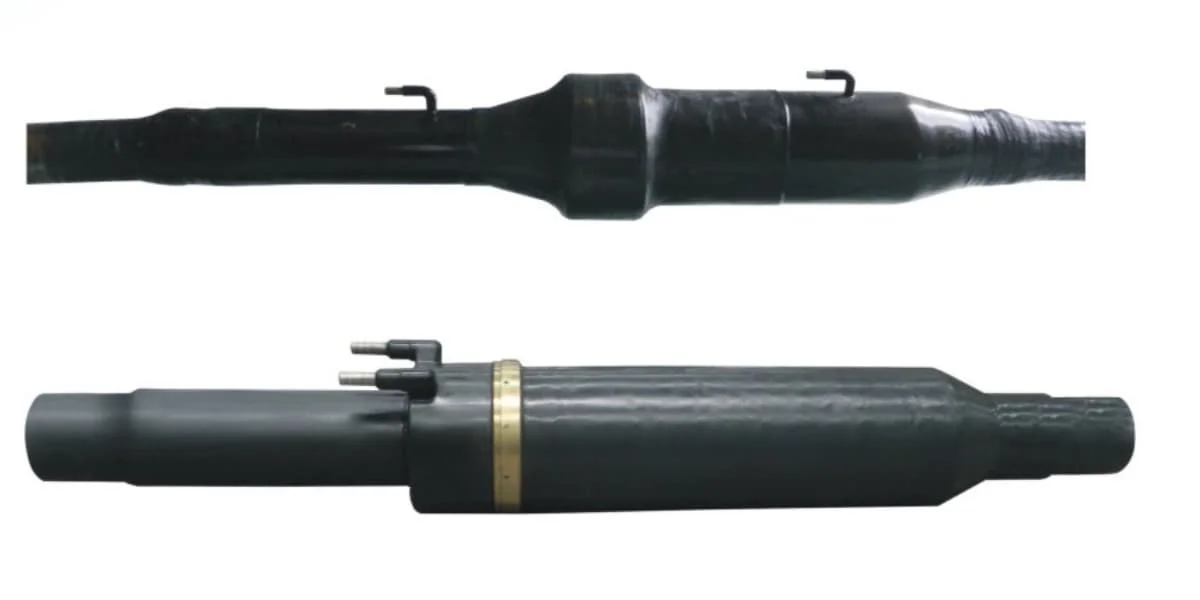
Electrical transmission systems 115 kV They play a fundamental role in the distribution of energy between substations, industrial plants, wind farms, photovoltaic installations and large urban centers. To ensure continuity of supply, Every system component must deliver reliable performance for decades. Among them, he cable splice 115 kV It is one of the most important accessories, since it allows two sections of cable to be joined without compromising the electrical behavior or the mechanical resistance of the assembly.
Modern XLPE insulated power cables offer high current carrying capacity and excellent dielectric properties. However, when the length of the run exceeds the manufacturing or transport capacity of a single cable, it is necessary to make a splice. If this accessory is not properly designed or installed, can become the most vulnerable point of the entire line.
Specialized manufacturers develop splices capable of reproducing the electrical structure of the original cable, restoring control of the electric field and providing effective protection against moisture, mechanical stress and thermal variations. Thanks to it, The system maintains its reliability even under demanding operating conditions.
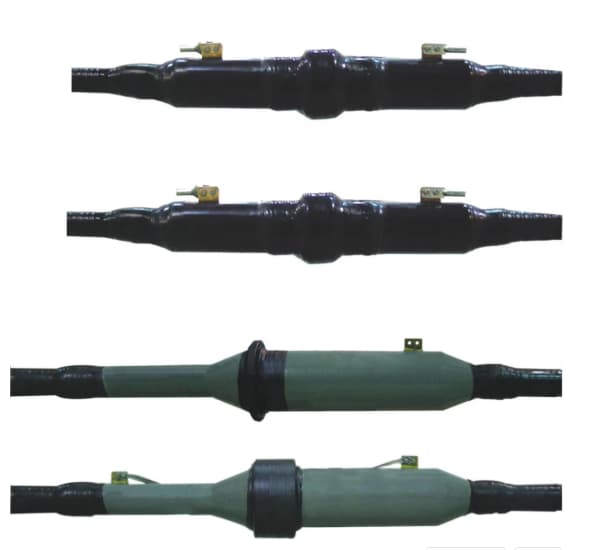
What is a cable splice 115 kV?
And cable splice 115 kV is an accessory designed to permanently connect two high voltage cables while maintaining the same electrical characteristics, mechanical and environmental than the cable itself.
Its main function is to:
- Restore electrical insulation.
- Control the distribution of the electric field.
- Ensure driver continuity.
- Rebuild the metal screen.
- Protect the assembly against humidity, dust and chemical agents.
- Support the expansion produced by thermal cycles.
When the splice is correctly installed, Its behavior is practically equivalent to that of a continuous section of cable, allowing decades of operation with minimal maintenance.
Main components
Although the design may vary depending on the manufacturer, Most XLPE cable splices 115 kV incorporate the following elements:
driver connector
Electrically joins both conductors using high-precision compression or mechanical connectors, guaranteeing low contact resistance and reducing losses due to the Joule effect.
Electric field control material
Semiconductor tubes and electrical stress control materials evenly distribute the voltage gradient, avoiding field concentrations that can cause partial discharges.
Main insulation
It is generally manufactured with pre-molded liquid silicone or high-performance EPDM., materials that offer excellent dielectric strength and thermal stability.
Metal screen
The continuity of the screen is achieved through copper meshes, metallic tapes or specific conductors, ensuring correct circulation of induced and fault currents.
Moisture barrier
heat shrink tubes, Polymeric covers and sealing systems prevent water entry, one of the main aging factors of high voltage accessories.
External cover
Protects the splice against impacts, abrasion, ultraviolet radiation and environmental agents.
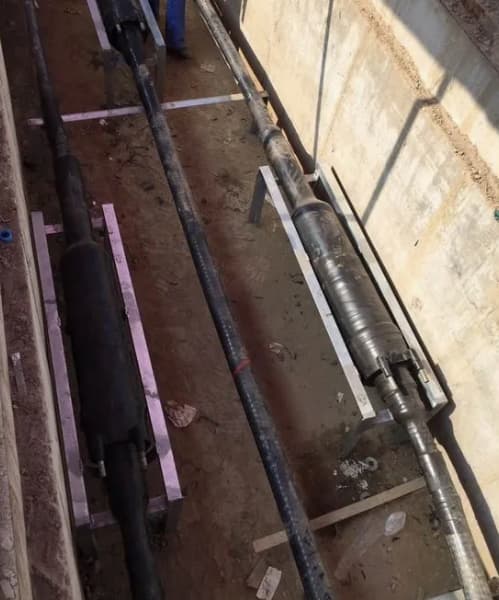
Working principle
The design of a splice 115 kV goes far beyond connecting two conductors. The objective is to completely rebuild the cable structure.
During cable manufacturing, Each layer performs a specific function in controlling the electric field. When cutting the cable to make a joint, that structure is disrupted and must be carefully restored.
Semiconductor materials smooth equipotential lines, while the main insulation supports the applied voltage. Metal shield resets potential reference and outer covers ensure environmental protection.
Thanks to this multi-layer design, The joint withstands both the nominal voltage and temporary overvoltages produced during maneuvers or atmospheric discharges.
Types of cable splices 115 kV
Depending on the project, different solutions can be used.
Premolded splices
They are the most used in modern projects due to their high reliability and speed of installation..
Its main advantages include:
- excellent control of the electric field;
- less dependence on installer skill;
- high repeatability;
- reduction of assembly time;
- lower risk of errors during installation.
Heat Shrink Splices
They use special heat-shrinkable tubing to form insulation and outer protection..
Although they continue to be used in certain projects, They are currently less common in voltages of 115 kV because they require very precise control during heating.
Hybrid splices
They combine premolded components with heat-shrinkable elements, seeking a balance between ease of installation and adaptability to different cable configurations.
Installation process
The quality of the installation directly influences the useful life of the system.
Typical stages include:
- Preparation of the work area.
- Cable type verification.
- Cut and peel according to technical instructions.
- Complete cleaning of all surfaces.
- Connector Installation.
- Installation of main insulation.
- Reconstruction of the metal screen.
- Exterior sealing.
- Final electrical tests.
Even a high-quality accessory can fail prematurely if mounting tolerances are not met or if contamination occurs during installation..
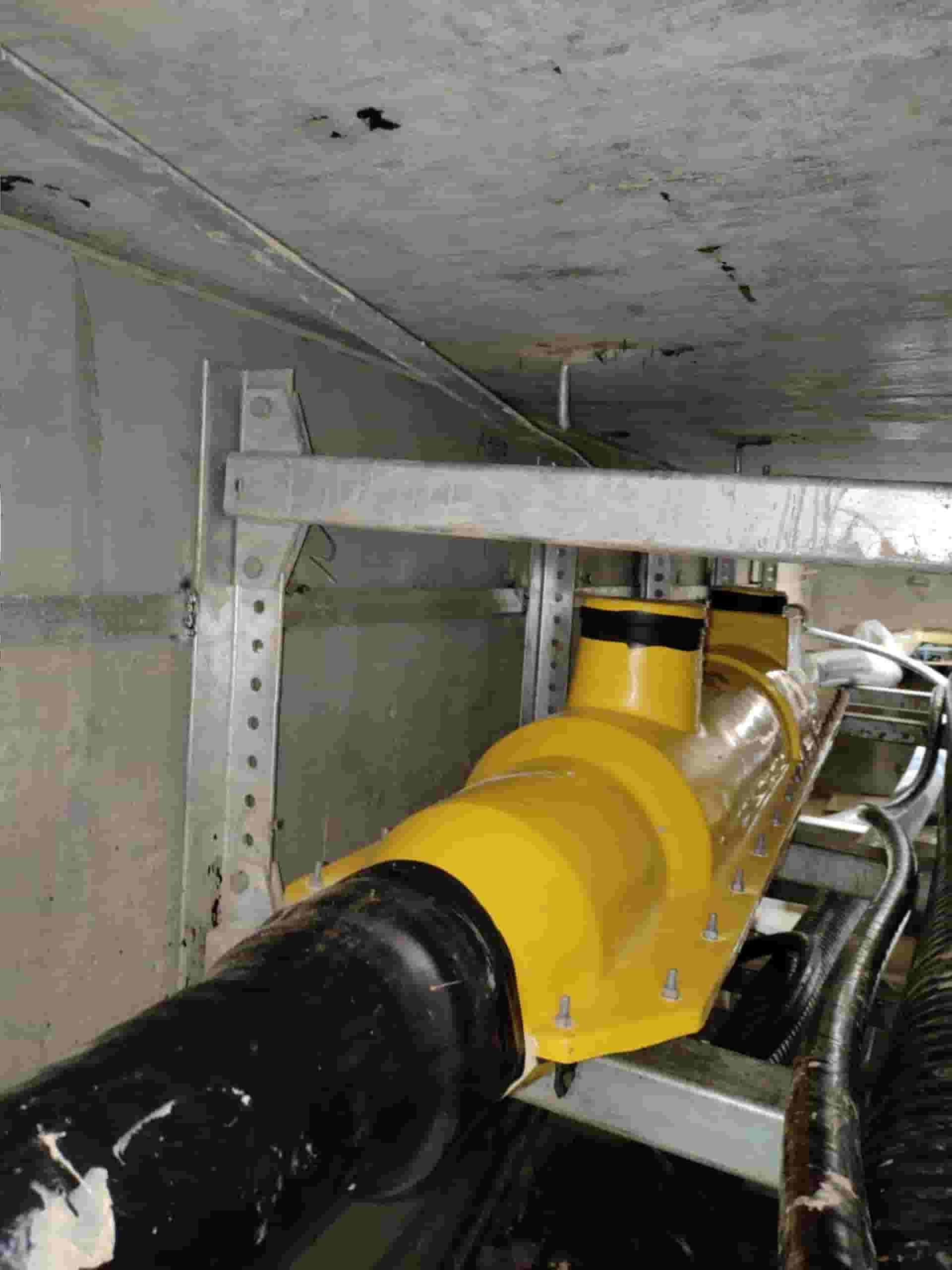
Applicable international standards
Manufacturers of accessories for high voltage cables develop their products in accordance with widely recognized international standards.
Among the most important are:
- IEC 60840, for cable systems with tensions higher than 30 kV and even 150 kV.
- IEEE 404, Widely used in North America for power cable splicing.
- IEC 60228, relating to electrical conductors.
- IEC 60229, regarding protective covers.
- IEC 60502, used as a reference for various medium voltage cable technologies.
- IEC 60270, applied to partial discharge tests.
In addition to these standards, numerous electrical operators establish their own specifications to guarantee compatibility with their transmission networks.
Applications
Splices for cables 115 kV are used in a wide variety of electrical infrastructure projects, Among them:
- urban underground lines;
- connections between substations;
- onshore and offshore wind farms;
- large capacity solar plants;
- petrochemical industries;
- mining;
- airports;
- data centers;
- industrial complexes;
- railway projects with high energy demand.
In all these cases, The continuity of electrical service is critical, so the reliability of the splice is a determining factor.
Advantages of a high quality splice
Choose a splice designed specifically for applications 115 kV offers significant benefits:
- high dielectric strength;
- excellent performance against partial discharges;
- long lifespan, superior a 30 years under normal service conditions;
- great thermal stability;
- resistance to vibrations and mechanical stress;
- effective protection against moisture and corrosion;
- maintenance cost reduction;
- increased network availability.
Besides, Modern materials maintain their properties even after thousands of heating and cooling cycles caused by load variations.
Maintenance and testing
Although high voltage joints are designed to operate for long periods without intervention, It is advisable to carry out periodic inspections as part of the network maintenance program.
Among the most common tests are:
- partial discharge measurement;
- applied stress test;
- conductor resistance measurement;
- Infrared thermography inspection;
- metal screen continuity check;
- verification of the condition of the exterior seals.
These evaluations allow anomalies to be detected before they evolve into a breakdown., improving system availability and security.
How to choose the right splice?
Before selecting a splice for a construction project 115 kV it is advisable to analyze various factors:
- cable insulation type;
- driver section;
- driver material (copper or aluminum);
- system voltage level;
- service current;
- environmental conditions;
- buried installation, in tunnel or gallery;
- electric company requirements;
- compliance with IEC or IEEE standards.
Working with a specialized manufacturer ensures that the accessory is compatible with the cable design and project demands.
Frequently asked questions
Does a splice reduce the capacity of the cable?
No. When properly designed and installed, maintains the same current carrying capacity as the original cable.
What is the useful life of a cable splice? 115 kV?
Under normal conditions and with proper installation, can exceed the 30 years of service.
Which technology offers greater reliability?
Premolded splices are currently the preferred choice in many transmission projects due to their excellent electrical field control and consistency of installation..
Is it necessary to carry out tests after assembly?
Yeah. Voltage tests and partial discharge measurements are essential to verify that the splice meets the technical requirements before commissioning.
cable splice 115 kV – Cable Accessories Manufacturer
He cable splice 115 kV constitutes an essential element in modern electrical transmission networks. Its design must guarantee continuity of insulation, control of the electric field and protection against the most demanding environmental conditions. The selection of high quality materials, Compliance with international standards and installation carried out by qualified personnel allow you to obtain a reliable system, Safe and ready to deliver stable performance for decades. In projects where network availability is a priority, Investing in high-tech splices represents a key decision to maximize efficiency and reduce long-term operating costs..
Dosense Cable is a manufacturer specialized in cable splices 115 kV with XLPE insulation. Its solutions are designed to offer excellent control of the electric field, high reliability and long service life. The splices comply with applicable international standards and are suitable for electrical transmission projects, substations, wind farms and industrial networks, providing secure installation and stable performance even under demanding operating conditions.