
Introduction
In modern high voltage electrical transmission projects, GIS substations have become an essential solution to improve reliability, reduce footprint and increase operational safety. Within these systems, the GIS cable termination 230 kV plays a critical role, as it connects high voltage power cables to GIS equipment safely and efficiently.
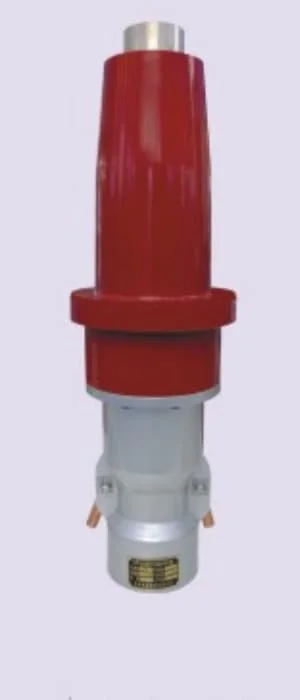
At the moment, electric companies, EPC contractors and equipment manufacturers look for solutions terminal GIS para cable XLPE 230kV, especially in projects:
- Electrical transmission networks
- Renewable energy
- Compact urban substations
- Solar and wind parks
- High voltage industrial infrastructure
In this complete article you will learn:
- What is a GIS termination? 230 kV
- How it works
- Types of GIS terminals
- Main components
- Technical advantages
- Differences between GIS and AIS
- Installation process
- Applicable IEC standards
- Selection factors
- Global market trends
What is a GIS cable termination? 230 kV?
A GIS cable termination 230 kV is a high voltage accessory designed to connect an XLPE cable of 230 kV directly to a GIS substation (Gas Insulated Switchgear).
Its main function is:
- Transfer electrical energy safely
- Maintain electrical insulation
- Control the electric field
- Avoid partial downloads
- Ensure mechanical and thermal stability
These terminations are used in high voltage transmission systems where maximum reliability and minimum space are required..
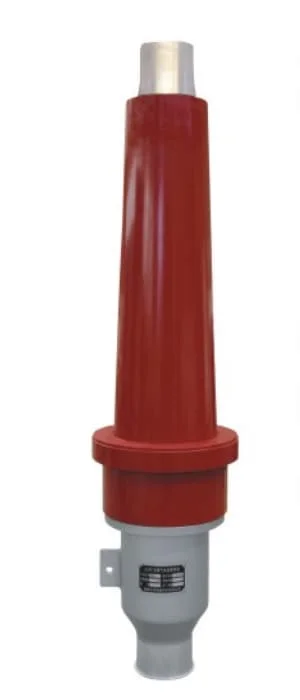
What does GIS mean?
GIS means:
Gas Insulated Switchgear
In Spanish:
Gas Encapsulated Substation
This type of substation uses SF6 gas as an insulating medium instead of air.
GIS substations offer multiple advantages:
- Compact design
- Greater security
- Less maintenance
- Better behavior against contamination
- High reliability
For this reason, the GIS terminations of 230 kV are widely used in:
- Big cities
- Industrial zones
- Power plants
- Offshore projects
- Railway infrastructure
How does a 230kV GIS termination work??
GIS termination connects the XLPE cable conductor to the GIS equipment using a sealed and insulated connection system.
Basic operation includes:
- The conductor of the cable transmits the electric current
- XLPE insulation protects against electrical leakage
- The relief cone controls the electric field
- GIS terminal connects cable to SF6 compartment
- The system maintains thermal and mechanical stability
The design must support:
- High levels of tension
- Atmospheric surges
- short circuit currents
- Temperature changes
- mechanical vibrations
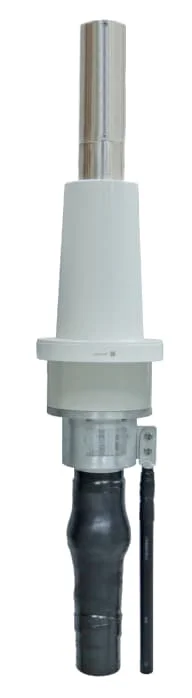
Main components of a GIS terminal for 230kV XLPE cable
connecting conductor
Electrically connect the cable with the GIS system.
It is generally manufactured in:
- Copper
- Aluminium alloy
Stress relief cone
It is one of the most important components.
Its function is:
- Evenly distribute the electric field
- Reduce voltage concentration
- Avoid partial downloads
main insulator
Provides high voltage electrical insulation.
Common materials:
- Silicone
- EPDM
- Epoxy resin
Metal flange
Allows mechanical attachment to GIS compartment.
must endure:
- mechanical pressure
- Vibrations
- Extreme temperatures
Sealing system
Prevents entry of:
- Humidity
- Dust
- Contaminants
Also prevents SF6 gas leakage.
Types of high voltage GIS terminations
Terminal GIS premoldeado
It is the most used currently.
Advantages:
- Quick installation
- Excellent electrical control
- High reliability
- Lower risk of errors
Related searches include:
- terminal premoldeado GIS 230kV
- precast GIS termination
- silicone GIS terminal
Dry type GIS terminal
Does not use insulating oil.
Benefits:
- Greater environmental safety
- Less maintenance
- Better thermal performance
Widely used in:
- Urban substations
- Renewable energy
- Industrial projects
Conventional GIS Terminal
Uses manually assembled components.
Although it is still used, Today the market prefers premolded solutions.
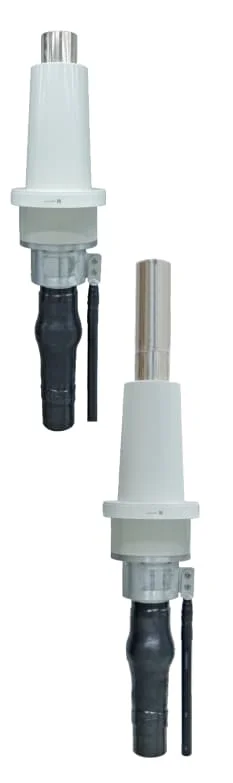
Difference between GIS terminal and AIS terminal
One of the most popular searches is:
difference between GIS and AIS
AIS (Air Insulated Switchgear)
Use air as an insulating medium.
Characteristics:
- Greater space required
- Lower initial cost
- Simpler design
GIS (Gas Insulated Switchgear)
US gas SF6.
Characteristics:
- Compact design
- Greater reliability
- Better performance in contaminated environments
- Less maintenance
GIS vs AIS Comparison
| Feature | GIS | AIS |
|---|---|---|
| insulating medium | SF6 | Aire |
| Required space | Low | Alto |
| Maintenance | Low | Half |
| Reliability | Very high | Alta |
| Initial cost | Higher | Lower |
| Environmental resistance | Excellent | Media |
For this reason, the GIS terminations of 230 kV are increasingly used in modern projects.
Applications of GIS 230kV terminations
Urban substations
Cities need compact solutions.
GIS substations allow:
- Save space
- Reduce noise
- Improve security
Renewable energy
Solar and wind farms require reliable transmission systems.
That is why searches are common:
- GIS terminal for renewable energy
- cable accessories for solar parks
Power plants
Power plants use GIS terminals to:
- High reliability
- Equipment protection
- Continuous operation
Industrial infrastructure
Large industries use GIS systems in:
- Mining
- Petrochemistry
- Steelworks
- Refineries
International standards for 230kV GIS terminals
GIS terminations must comply with international IEC standards.
IEC 60840
Applicable to cables between:
- 30 kV y 150 kV
IEC 62067
Applicable to cables larger than:
- 150 kV hasta 500 kV
Most GIS completions of 230 kV are manufactured under IEC 62067.
Tests carried out on high voltage GIS terminals
AC voltage test
Verify behavior under nominal voltage.
impulse test
Simulates atmospheric discharges.
Partial discharge test
Detects internal defects.
It is one of the most important tests.
thermal test
Evaluate performance under high temperature.
short circuit test
Check mechanical and thermal resistance.
Installation of a 230kV GIS termination
Installation requires highly trained personnel.
Cable preparation
Includes:
- Cover removal
- Driver preparation
- Insulation cleaning
Relief Cone Installation
It must be done carefully to avoid electrical defects..
Mechanical assembly
Includes:
- Flanges
- Screws
- Sealed
Connection to GIS
The terminal connects to the SF6 compartment.
Final tests
Before energizing:
- Partial discharge measurement
- insulation test
- Visual inspection
Advantages of GIS termination 230 kV
High reliability
Reduces electrical failures.
Compact design
Ideal for cities and industrial areas.
Excellent electrical insulation
Thanks to SF6 and advanced materials.
Less maintenance
GIS substations require less maintenance than AIS.
Long lifespan
can overcome 30 years of operation.
Factors for choosing a 230kV GIS terminal
Voltage level
Must match electrical system.
Cable type
Compatible con:
- XLPE
- EPR
- Special cables
Environmental conditions
Important to consider:
- Humidity
- Temperature
- altitude
- Pollution
Technical standards
Check IEC compliance.
Manufacturer experience
A reliable manufacturer guarantees:
- Quality
- Technical support
- Certified tests
Global market trends
Global demand for 230kV GIS terminals continues to grow.
Main factors:
- Expansion of renewable energies
- Modernization of electrical networks
- Urbanization
- Railway infrastructure
- International interconnections
Markets with the greatest growth:
- Latin America
- Middle East
- Southeast Asia
- Africa
GIS terminal for EPC projects
EPC contractors look for:
- High reliability
- Fast delivery
- International certifications
- Technical support
That's why the most common searches include:
- GIS terminal for EPC projects
- GIS terminal supplier in China
- 230kV accessories manufacturer
Common problems in GIS terminals
Partial downloads
Caused by:
- Bad installation
- Pollution
- Internal defects
Overheating
It can occur due to:
- Poor connections
- Overload
- Bad contact
SF6 leaks
Require immediate maintenance.
GIS terminal maintenance
Preventive maintenance includes:
- Thermal inspection
- Partial discharge measurement
- SF6 pressure check
- Mechanical verification
Good maintenance prolongs the life of the system.
230kV GIS Terminal Manufacturers Market
There are recognized international manufacturers of high voltage accessories..
Among them stand out:
- Henan Dosense Cable Co., Ltd.
Many international projects also look for Chinese manufacturers for:
- Competitive price
- Production capacity
- Personalization
- Fast delivery
How to improve the useful life of a GIS terminal
Professional installation
Reduces human errors.
Use of certified materials
Guarantees better performance.
Periodic tests
They allow problems to be detected early.
Moisture protection
Moisture is one of the main enemies of insulation.
Future of high voltage GIS terminations
New trends include:
- Ecological materials
- Reduction of SF6 use
- Intelligent monitoring systems
- Real-time sensors
- Predictive diagnosis
Besides, The global expansion of renewable energy will continue to drive the market for:
- terminal GIS para cable XLPE 230kV
- high voltage cable accessories
- GIS terminal for electrical substations
GIS cable termination 230 kV
The GIS cable termination 230 kV It is a fundamental component in modern electrical transmission networks. Its ability to offer reliable insulation, compact design and high security make it an indispensable solution for high voltage GIS substations.
At the moment, Power companies and EPC contractors seek advanced solutions that meet international standards and ensure stable operation for decades.
When selecting a high voltage GIS termination, It is important to consider:
- Voltage level
- Cable type
- Environmental conditions
- IEC Certifications
- Manufacturer experience
With the global growth of renewable energies and the modernization of electrical networks, the demand for terminales GIS 230kV, XLPE cable accessories y high voltage GIS terminations will continue to increase in the coming years.